This post contains affiliate links. I may earn a small commission at no extra cost to you. Your support helps support the site, and I’m truly thankful!
Through thousands of miles on trail, I’ve learned what works and what doesn’t when it comes to hiker foot care. Blisters, hot spots, and black toe nails from long hikes are all avoidable with a little preparation. This is my go-to strategy on every trip.
I used this exact system on the Alta Via 1 over 8 days, 75 miles, and zero blisters.
Shoes and Socks
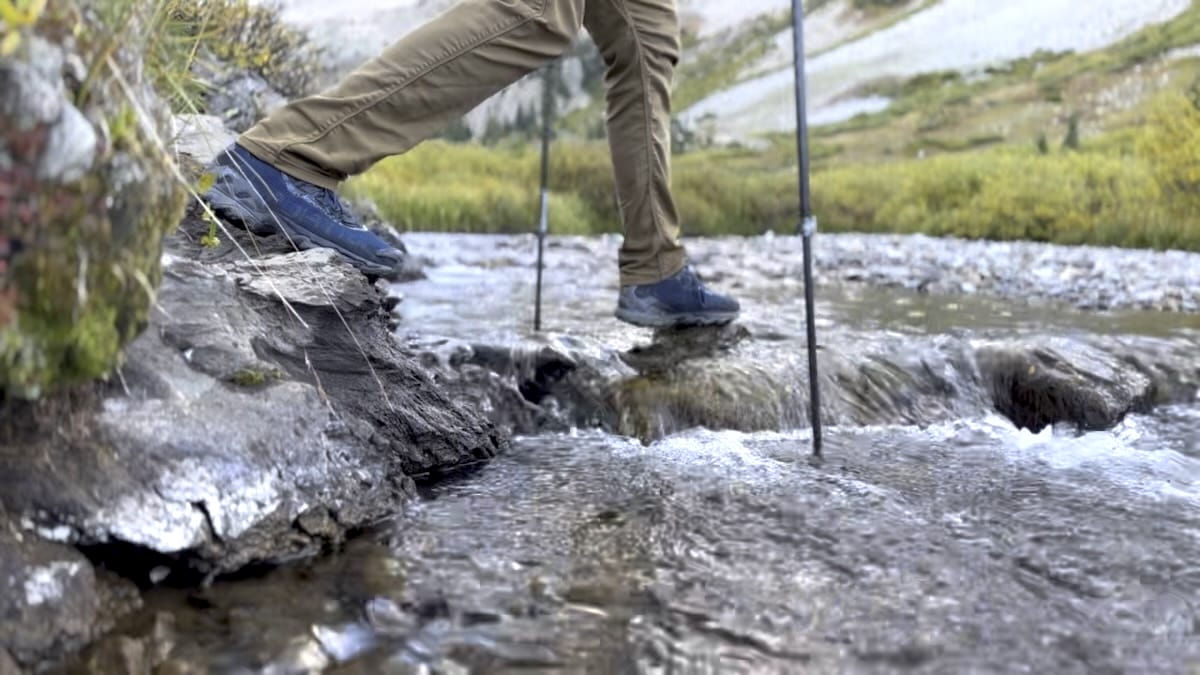
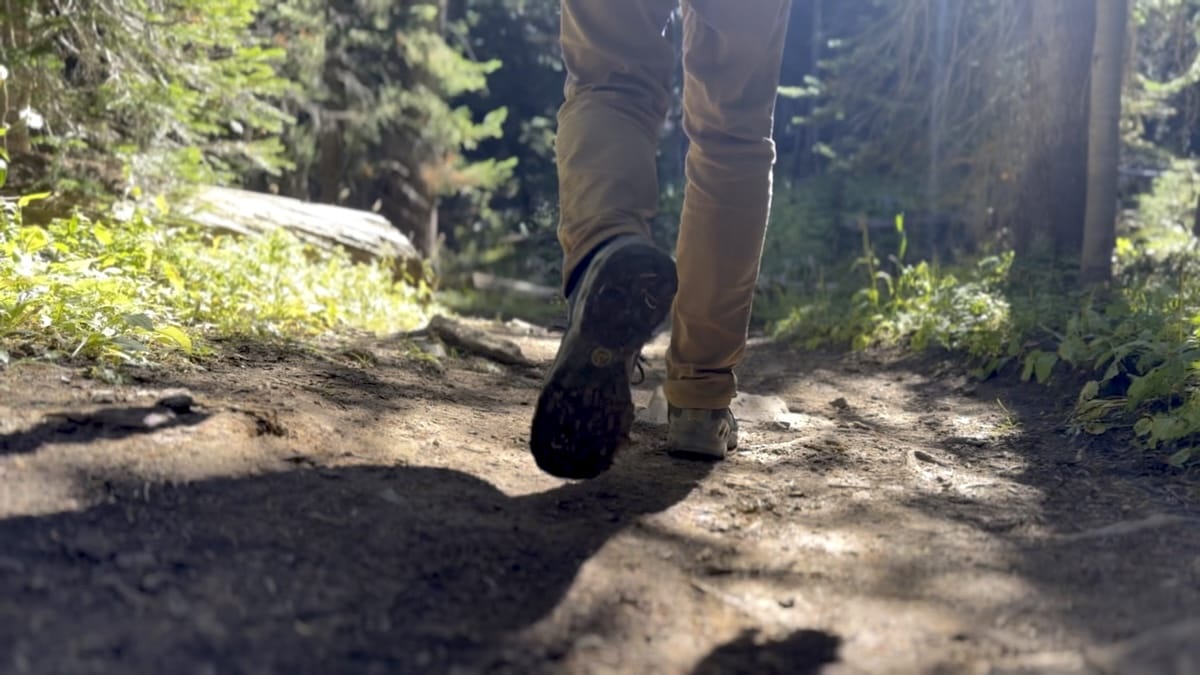
Non-waterproof trail runners. On any multi-day hike you will get wet feet at some point, whether from rain, dew, sweat or a stream crossing. A shoe that drains quickly and dries out beats a heavy Gore-Tex boot every time. Waterproof membranes trap moisture from the inside too, which makes things worse the longer you walk. The only time I go for hiking boots is for winter or snow conditions.
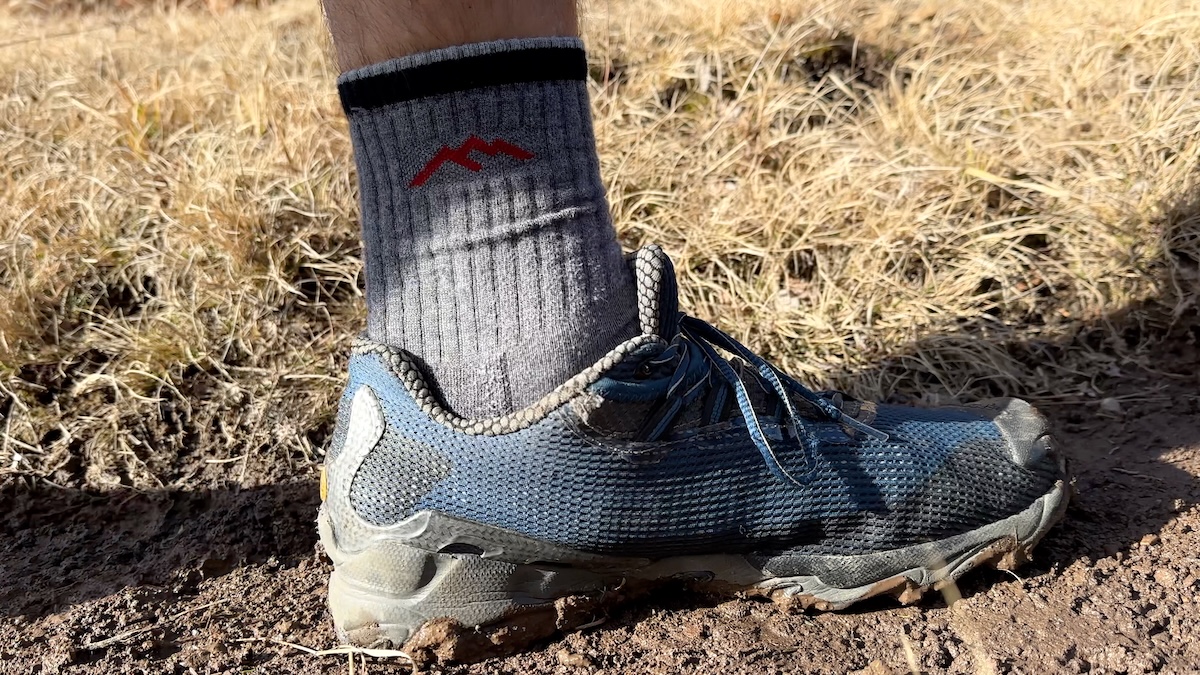
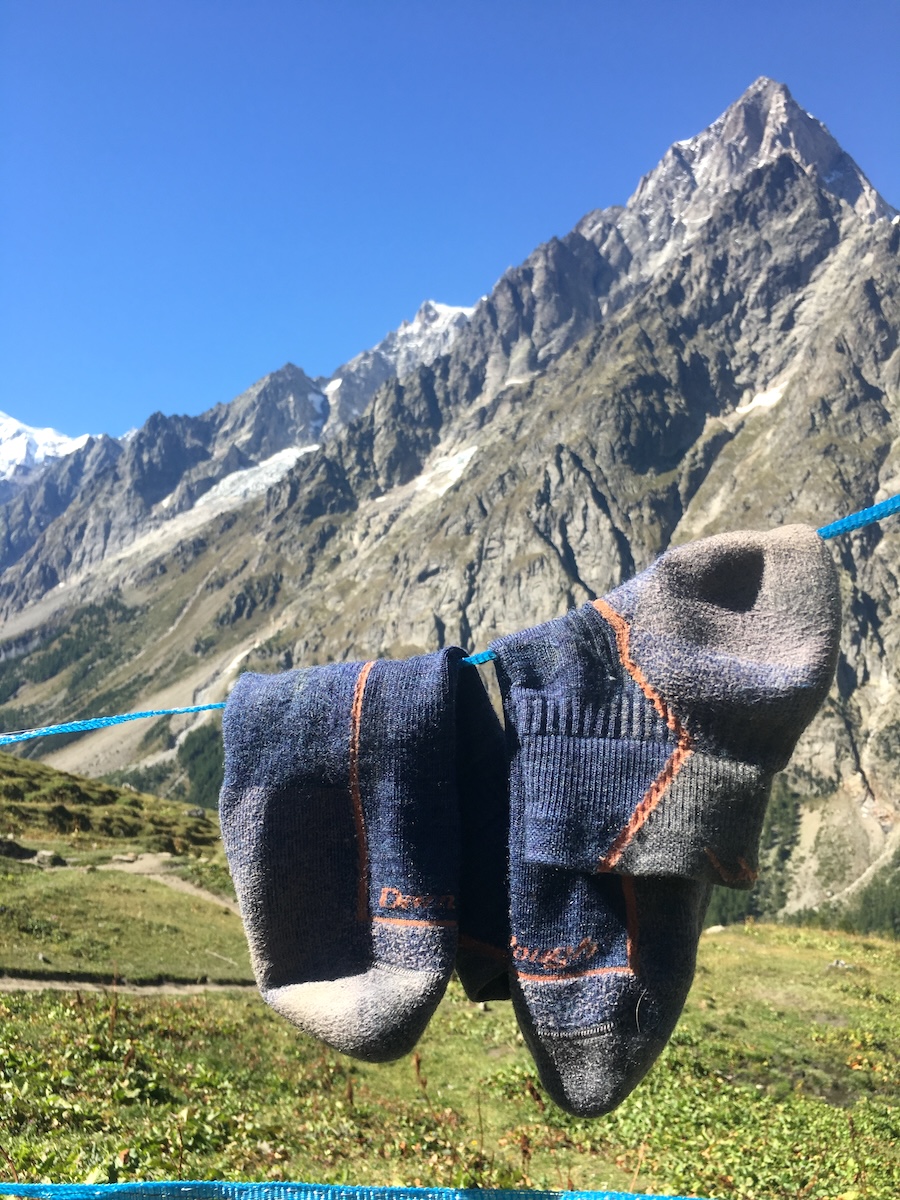
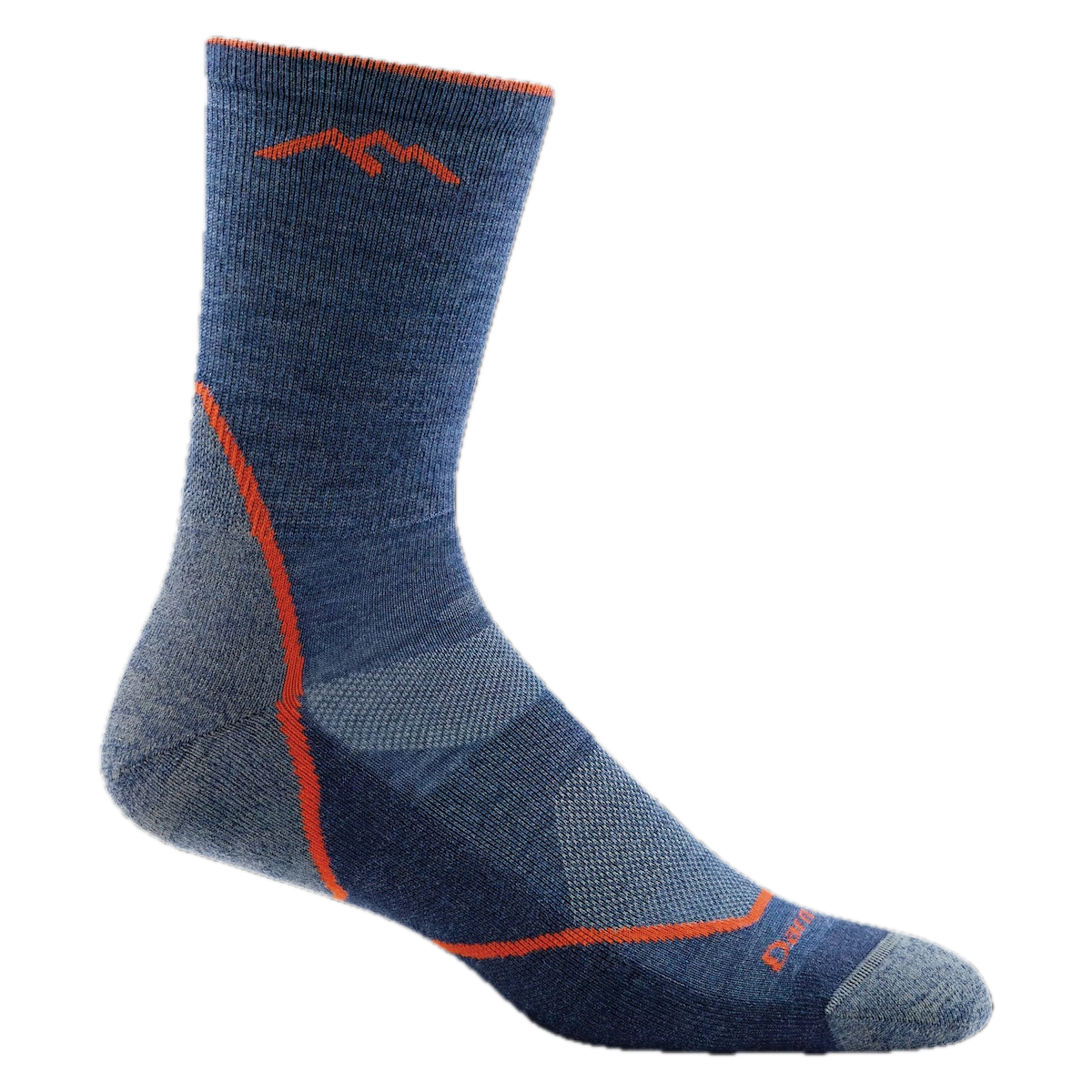
Pair them with quality wool socks like the Darn Tough Merino Wool Socks and you’ll be off to a good start. They are expensive but they are totally worth it. They come with a life time warranty, which I’ve used numerous times and had mine replaced after they developed holes. The merino construction manages moisture and odor well, and the cushioning holds up over long days. For good weather multi day hikes, I’ll carry two pairs and rotate them daily. For hikes in cold or wet weather, I’ll carry 3. The third of which is a dedicated sleep or camp sock that I store in a dry bag.
Pre-Tape Your Known Hot Spots
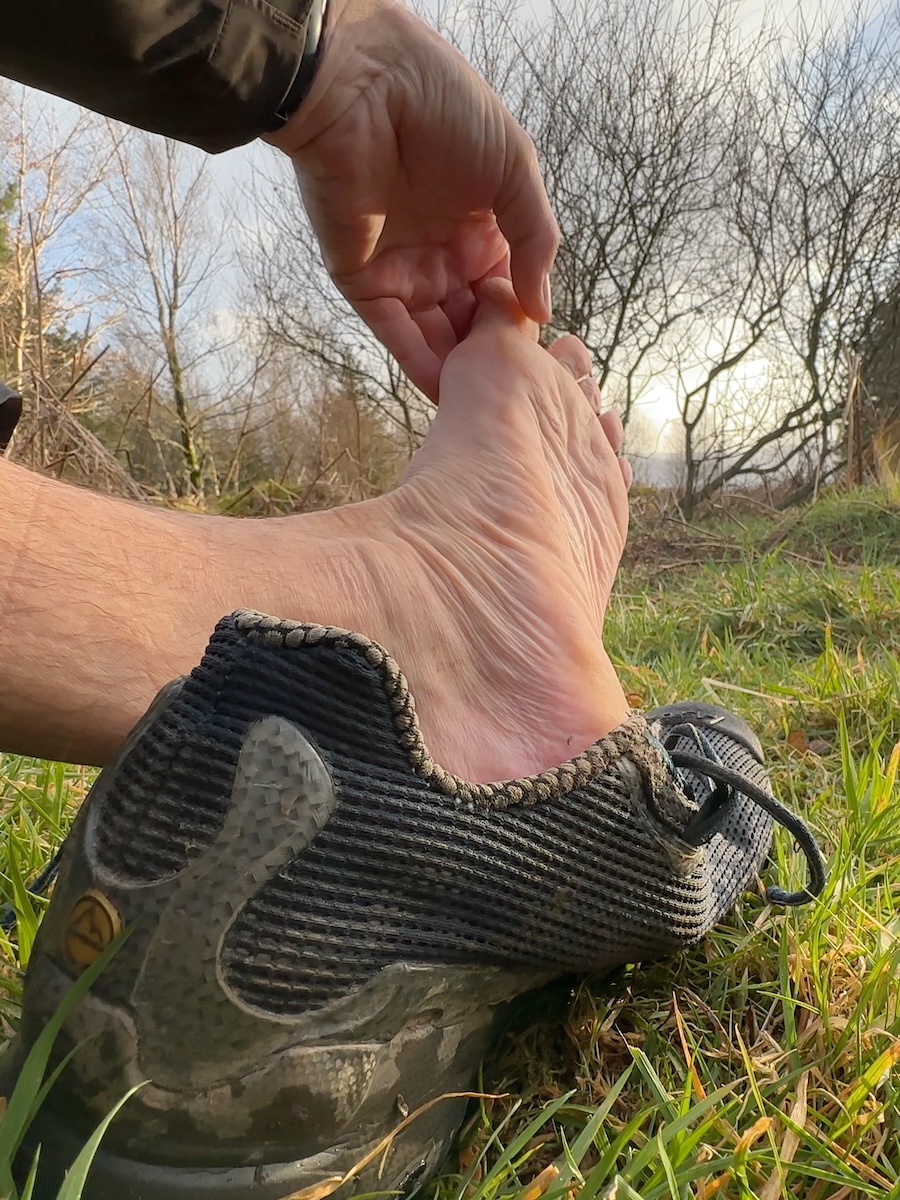
Before you start walking, apply tape to any area that has given you trouble before: heels, the back of your ankle, the outside of your pinky toe. My feet tend to rub and blister on the bottoms of my big toes. I’ll wrap those spots prior to traveling or the morning before I set foot on trail.
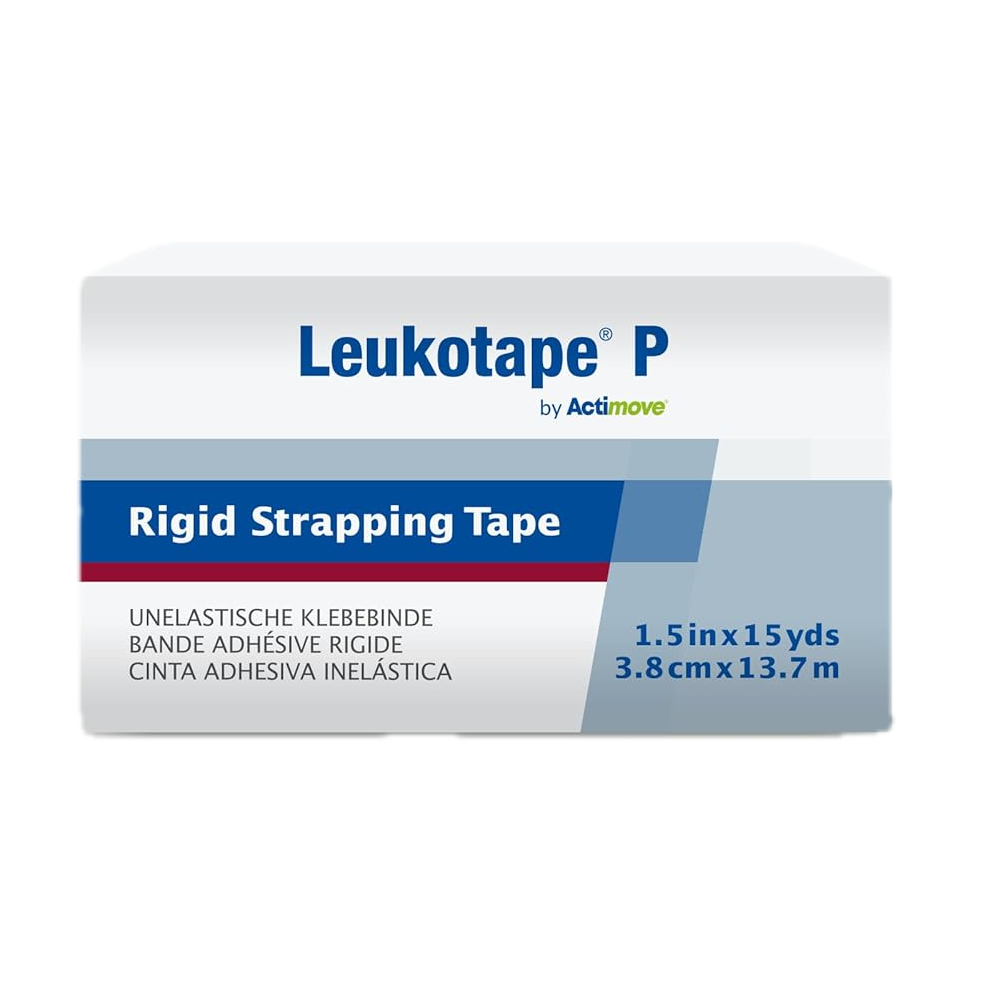
Leukotape P is what most of the long distance hikers and trail runners are using these days. It sticks well even in wet conditions and stays put for days when applied to clean, dry skin. This stuff is seriously sticky. I do not recommend applying it to areas after they’ve become a problem. For that, I’ll use Compeed.
Compeed is a great if you already have a developing blister, since it provides cushioning as well as coverage. It will help prevent further damage to your skin and alleviate some of the pain from the friction.
Lacing
Proper lacing matters most on big descents, where your toes jam forward into the front of the shoe with every step. Over a long day, that adds up to black toenails, blisters under the toes, and real discomfort.
Use a heel lock lace: when you reach the second-to-last eyelet, thread the lace back down through the same-side eyelet to create a small loop, then cross over and thread the end through the newly created loops. Tighten firmly before finishing. This locks your heel back in the shoe and stops forward movement on downhills. It takes thirty seconds and makes a meaningful difference.
Here is a good video that demonstrates that lacing technique well.
Air Your Feet Out
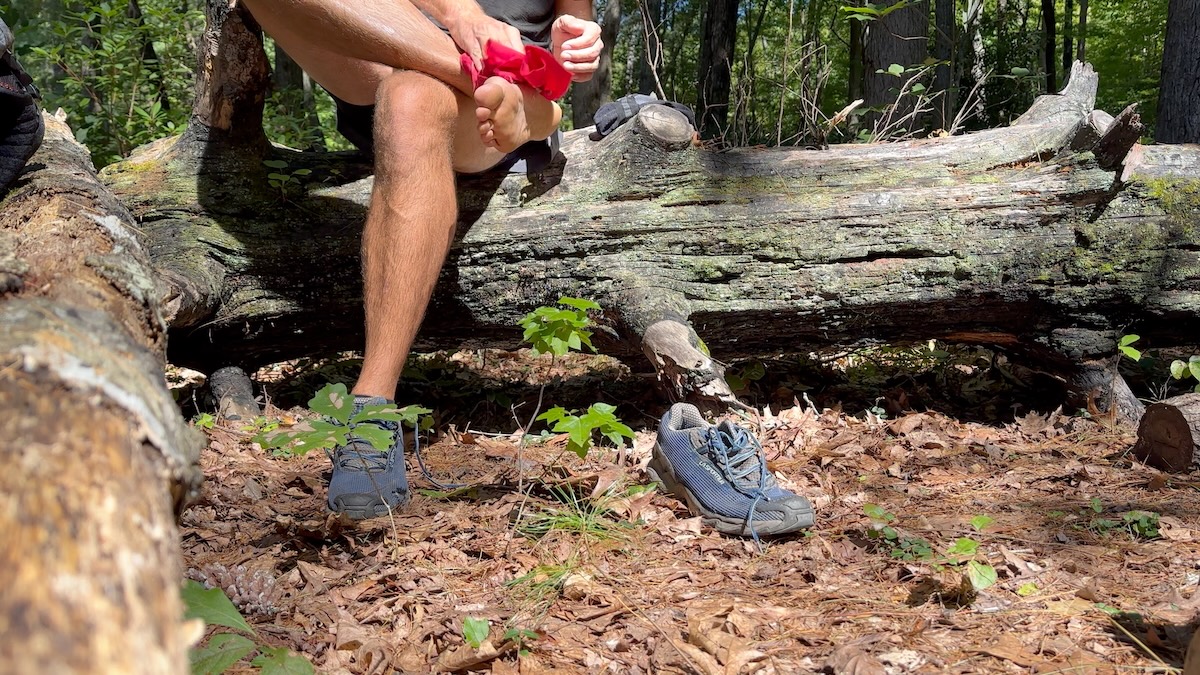
This is the most underrated hiker foot care habit on the trail… and its free. Every few hours, take your shoes and socks off. Let the heat and moisture escape. If the sun is out, lay your socks on a rock for ten minutes while you eat or rest. It takes almost no extra time and most people skip it entirely until they already have a problem.
Moisture softens skin and accelerates blistering. The drier you can keep your feet during the day, the more resistant they are to friction damage. Taking regular breaks to air out gives your skin a chance to recover and reduces the cumulative damage that turns a small irritation into something worse. This habit alone has made a bigger difference for me than any product.

To keep it simple you want to avoid heat, moisture, and friction. Its not particularly hard to do but you want to make sure you take the time to care for your feet, rather than scrambling to fix a problem two painful days later. Build up the routine before you start walking and your feet will be happy til the end of your dream hike.
What I Use
Three things I never start a multi-day hike without.

Related Articles

Through thousands of miles on trail, I've learned what works and what doesn't when it comes to hiker foot care. Blisters, hot spots, and black toe nails ...

I’ve been using trekking poles for a number of years including on 3 long trails and numerous “shorter” hikes. The Black Diamond Alpine Cork Trekking Poles in particular have ...

In 2009, my girlfriend gifted me the REI Flash backpack, which after a test run in the Linville Gorge Wilderness, just didn't feel quite right. I discovered it was ...
Have you ever noticed that the vast majority of long distance hikers use a very specific tall, skinny water bottle with a blue label on the side? ...

The best way to stay hiker fit is to hike, but that’s not always possible. A lot of us have full time jobs, school, children, or don’t live ...