Hyberg Bandit Lite Aluula Review
Specs
Price: €269.65 (Aluula) / €224.95 (Dyneema)
Weight: 410g total (355g pack body, 40g hip belt, 15g chest strap)
Capacity: 40L total (29L body + 11L external pockets)
Torso Fit: 45 to 65cm
Hip Belt: 80 to 130cm waist
Fits: 160 to 195cm
Dimensions: 49 to 70cm H x 27cm W x 14cm D
Material: Aluula Graflyte V-98 / V-52 + Spandex stretch mesh
Specs
Price: €269.65 (Aluula) / €224.95 (Dyneema)
Weight: 410g total (355g pack body, 40g hip belt, 15g chest strap)
Capacity: 40L total (29L body + 11L external pockets)
Torso Fit: 45 to 65cm
Hip Belt: 80 to 130cm waist
Fits: 160 to 195cm
Dimensions: 49 to 70cm H x 27cm W x 14cm D
Material: Aluula Graflyte V-98 / V-52 + Spandex stretch mesh
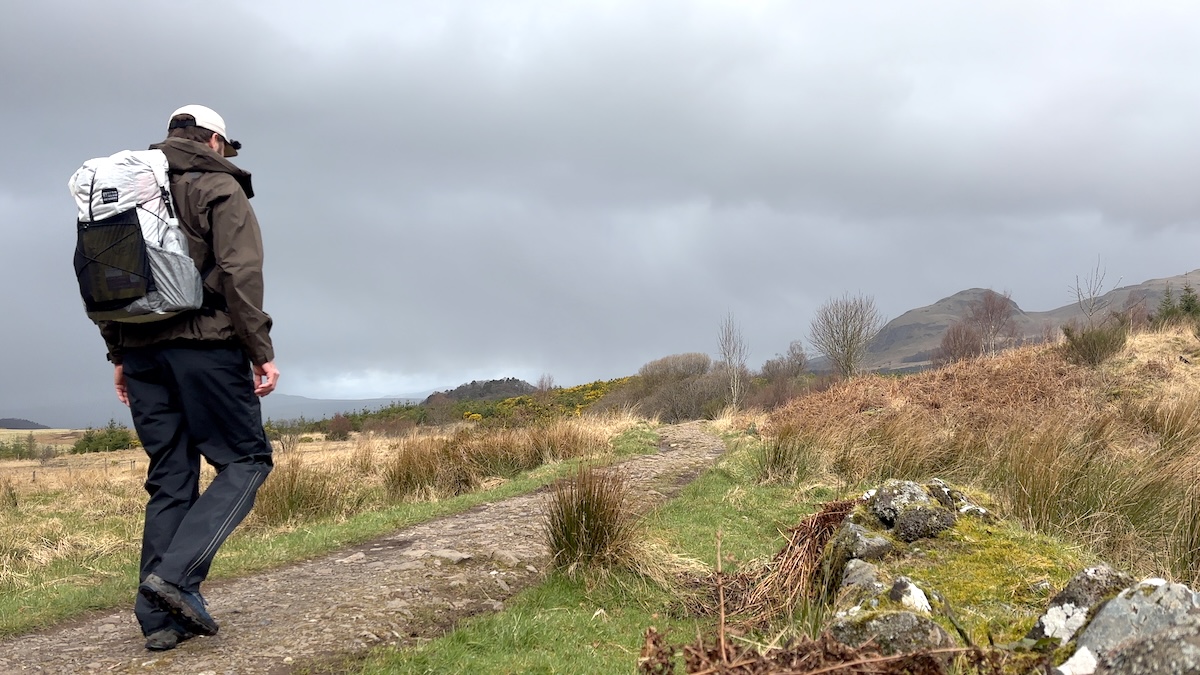
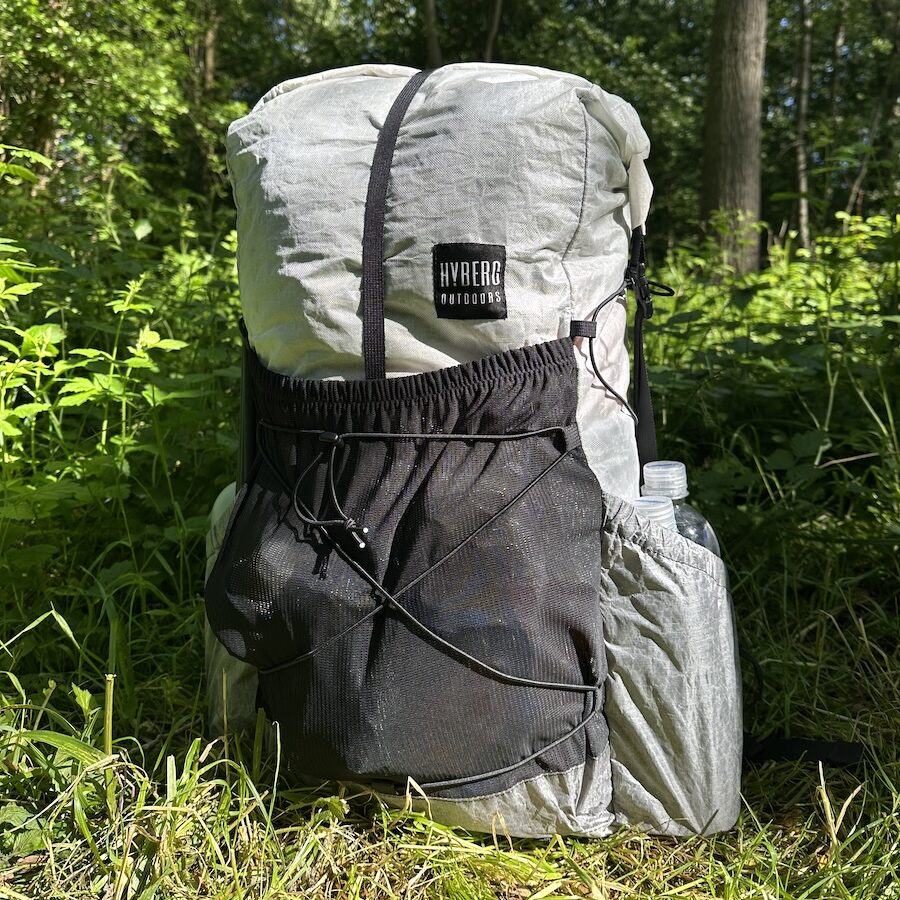
The Hyberg Bandit Lite is a simple, frameless, 410g pack with enough volume to accommodate an ultralight kit. It proved to be more than capable during a six-day wild camping trip along the West Highland Way. Below I’ll go over why I purchased this pack, features, the pros and cons, who I think this pack is for, and whether or not I would buy it again.
Why I purchased this pack
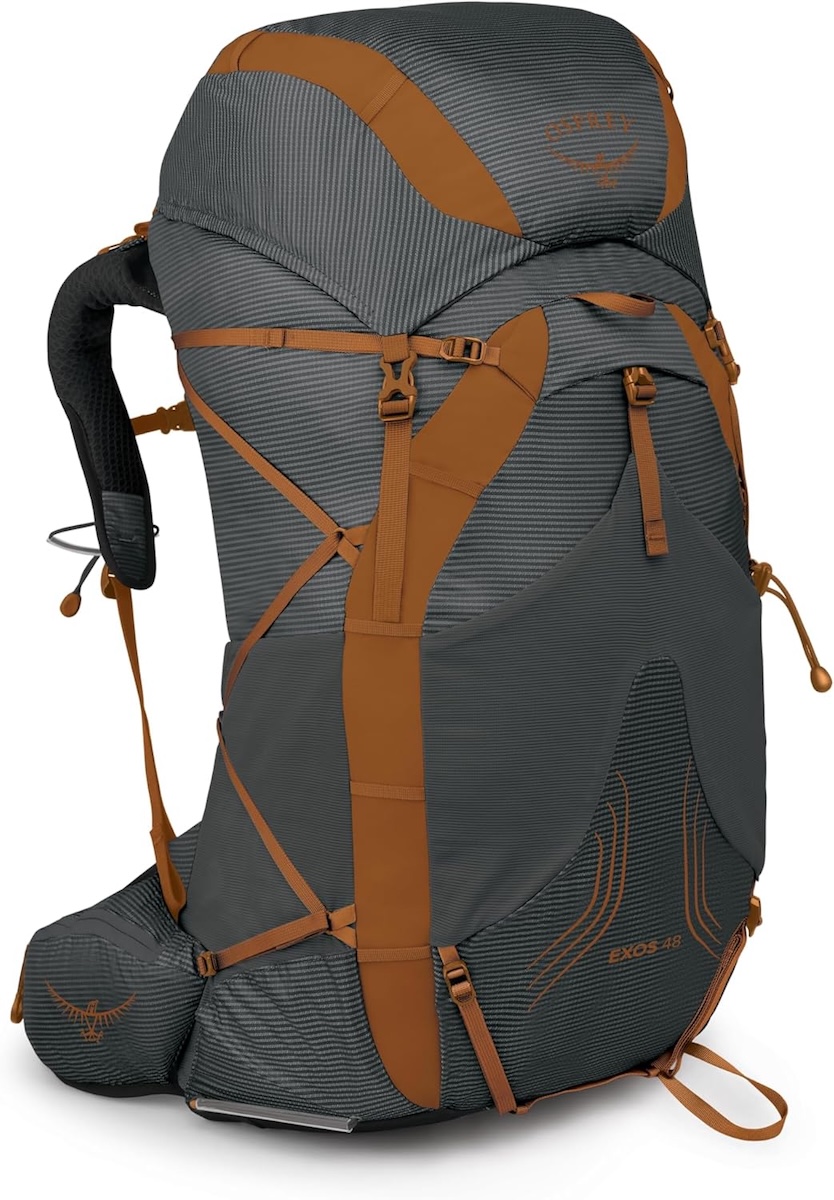
I’ve been an Osprey fan for years and still recommend and use the Exos / Eja 48 for a lot of trips. However, I was looking for something to fill a gap: a smaller, lighter pack that would work for shorter trips, a daypack for hut-to-hut hiking, and as a carry-on to avoid airline fees.
More recently, I’ve been hiking the iconic hut-to-hut routes across the Alps, including the Alta Via 1, Alta Via 2, and the Tour du Mont Blanc. For hut-to-hut hiking, hikers only need to carry the essentials like layers, snacks, water and a sleeping bag liner. Something that is comfortable, moves well and has around 30 liters is ideal.
Next, I wanted something for 3-season wild camping treks where I could resupply every couple of days. Hikes where I wouldn’t need to haul too much food, water, or heavy layers. This would give me the ability to cover more miles in a shorter period.
Lastly, I wanted to be able to fly to places like Chamonix or Venice while keeping my pack with me on board an airplane. Partly to avoid airline fees but also for convenience during checkin and at my arrival destination. As my pack has become lighter, I’ve mostly ditched my trekking poles so that’s no longer an issue in my carry on.
After a few weeks of research, it came down to the Hyberg Bandit Lite, Atom Packs Atom or the Durston Wapta 30. All 3 packs checked those boxes but the Atom didn’t come in the Aluula fabric and my wife pointed out that the Wapta looked more like a garbage bag. Generally, I like function over looks but she was definitely right about this one.
The decision was made and I ordered the Bandit Lite Aluula in translucent white.
Aluula Graflyte vs Dyneema Composite Fabric
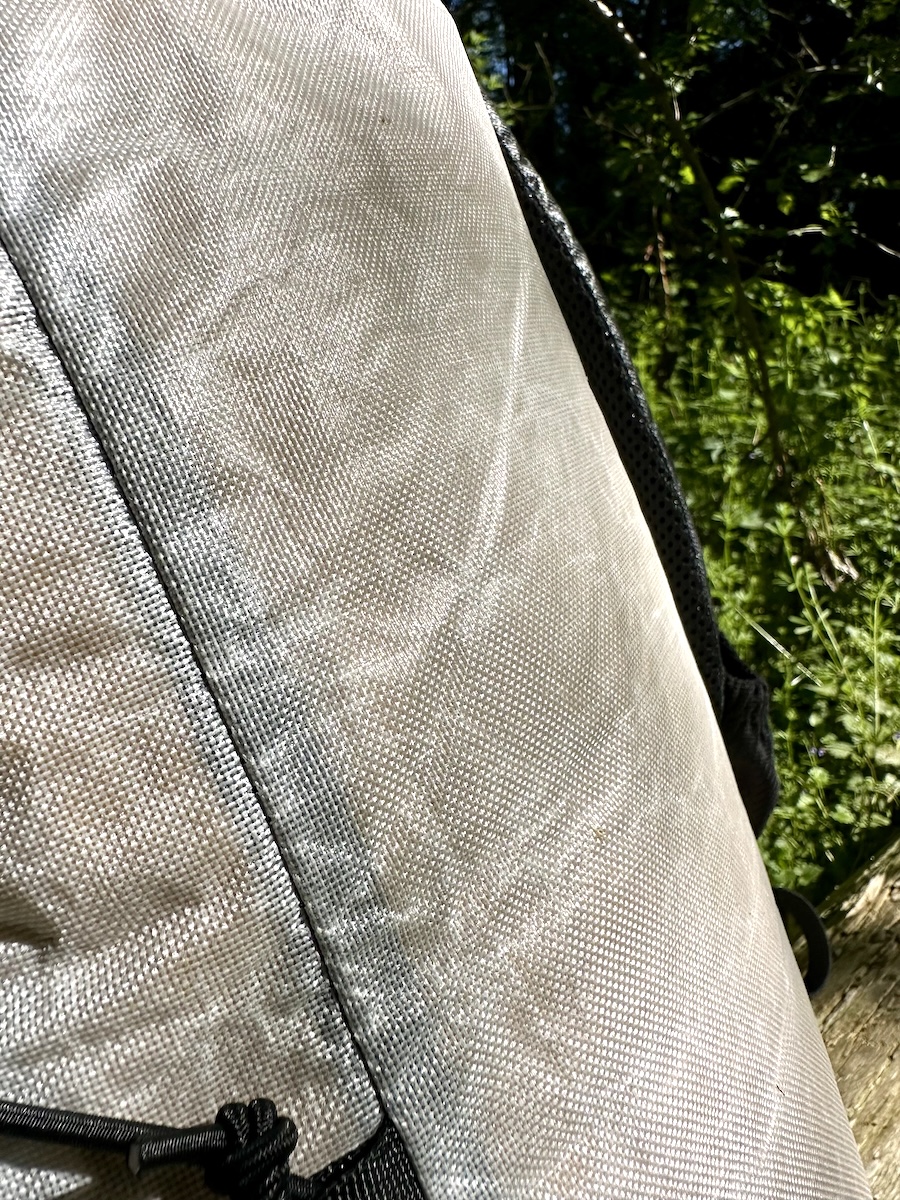
The Hyberg Bandit Lite comes in two fabric options: Aluula Graflyte and Dyneema Composite Fabric (DCF). Aluula Graflyte is a high-performance composite built from ultra-high molecular weight polyethylene (UHMWPE) fibers that are fused together with protective film layers, while DCF sandwiches a Dyneema fiber grid between polyester films using a laminated construction.
Both materials are extremely light, strong, and waterproof. A key advantage of Aluula is its fusion-based, largely mono-material construction, which reduces reliance on adhesives and lowers the risk of traditional delamination over time. This can also contribute to improved abrasion resistance.
DCF is the more established material with a long track record in ultralight gear, but as a laminate, it can experience delamination after extended use, heavy flexing, or abrasion.
Features
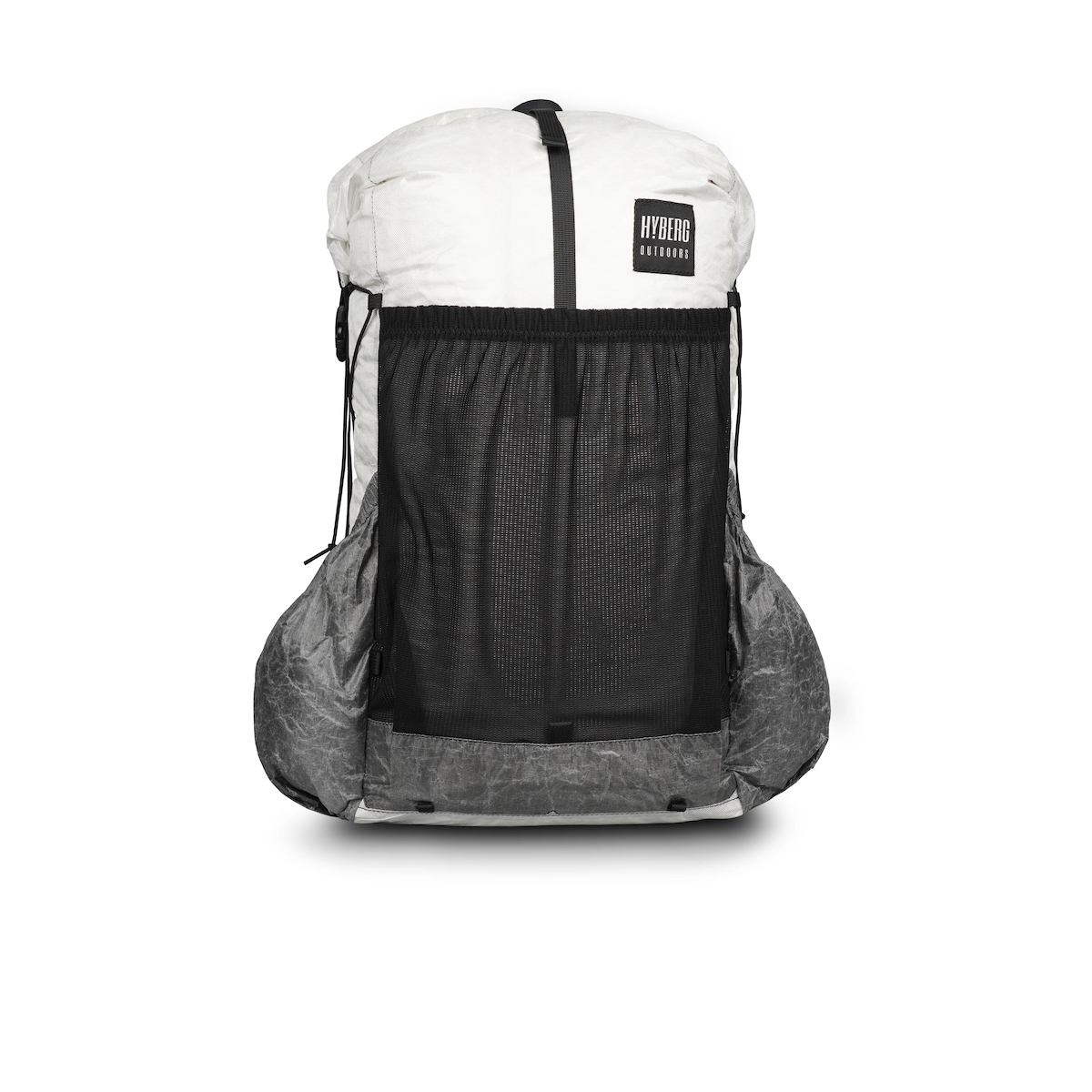
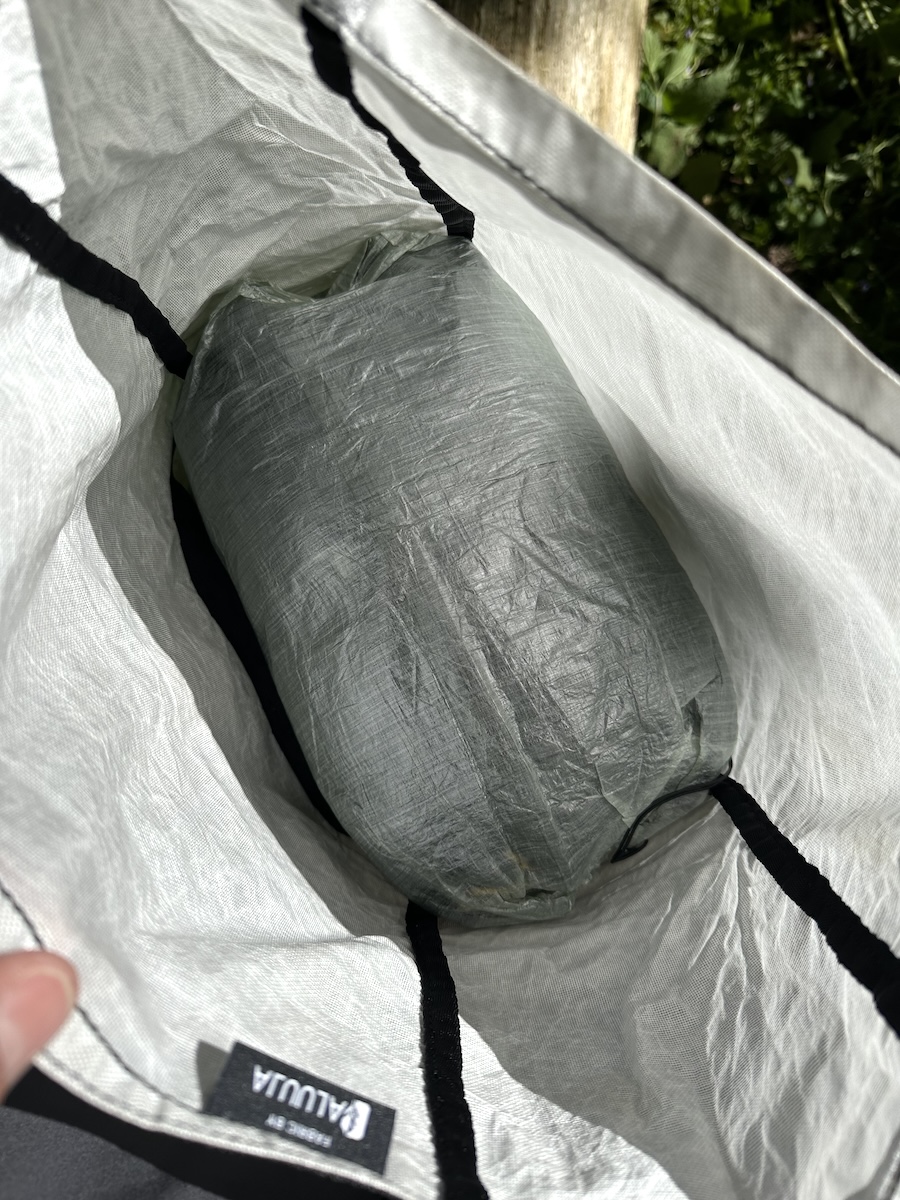
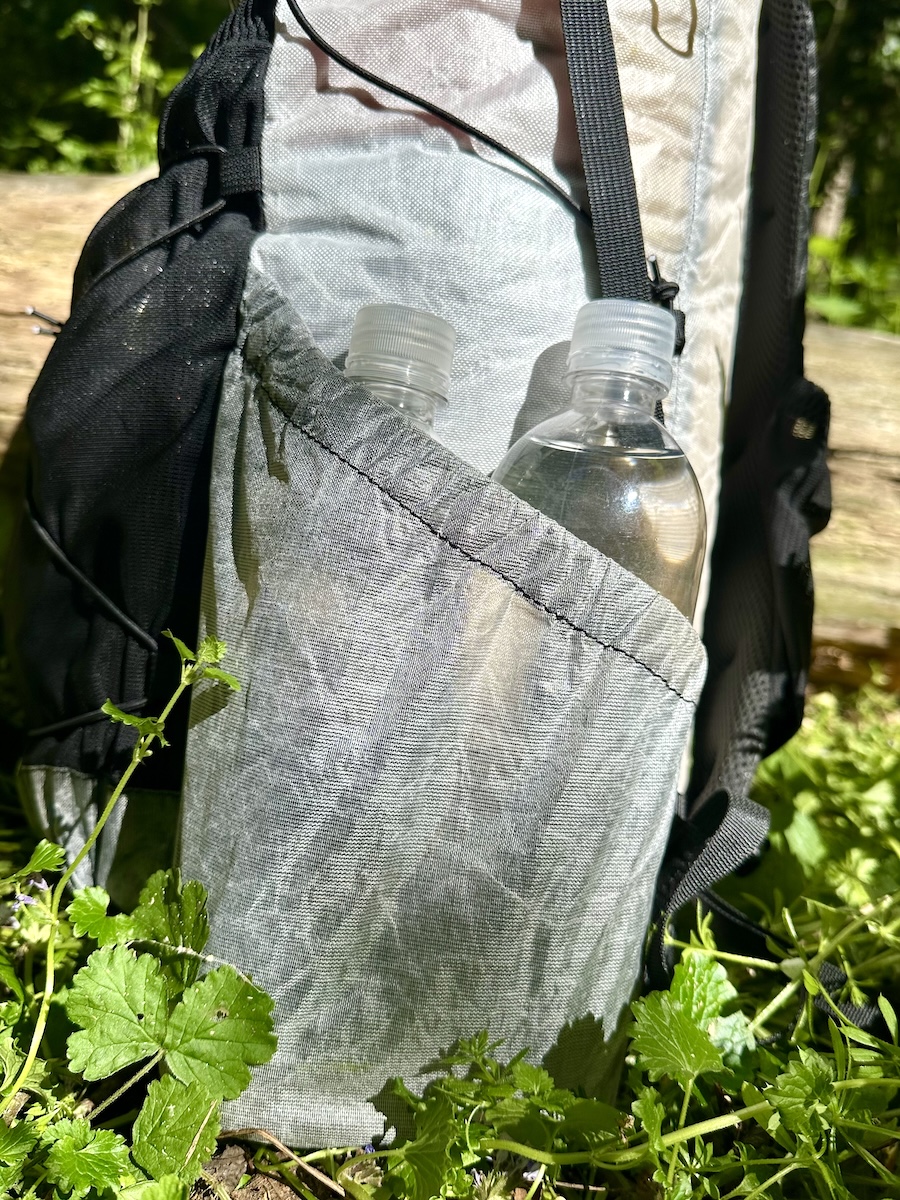
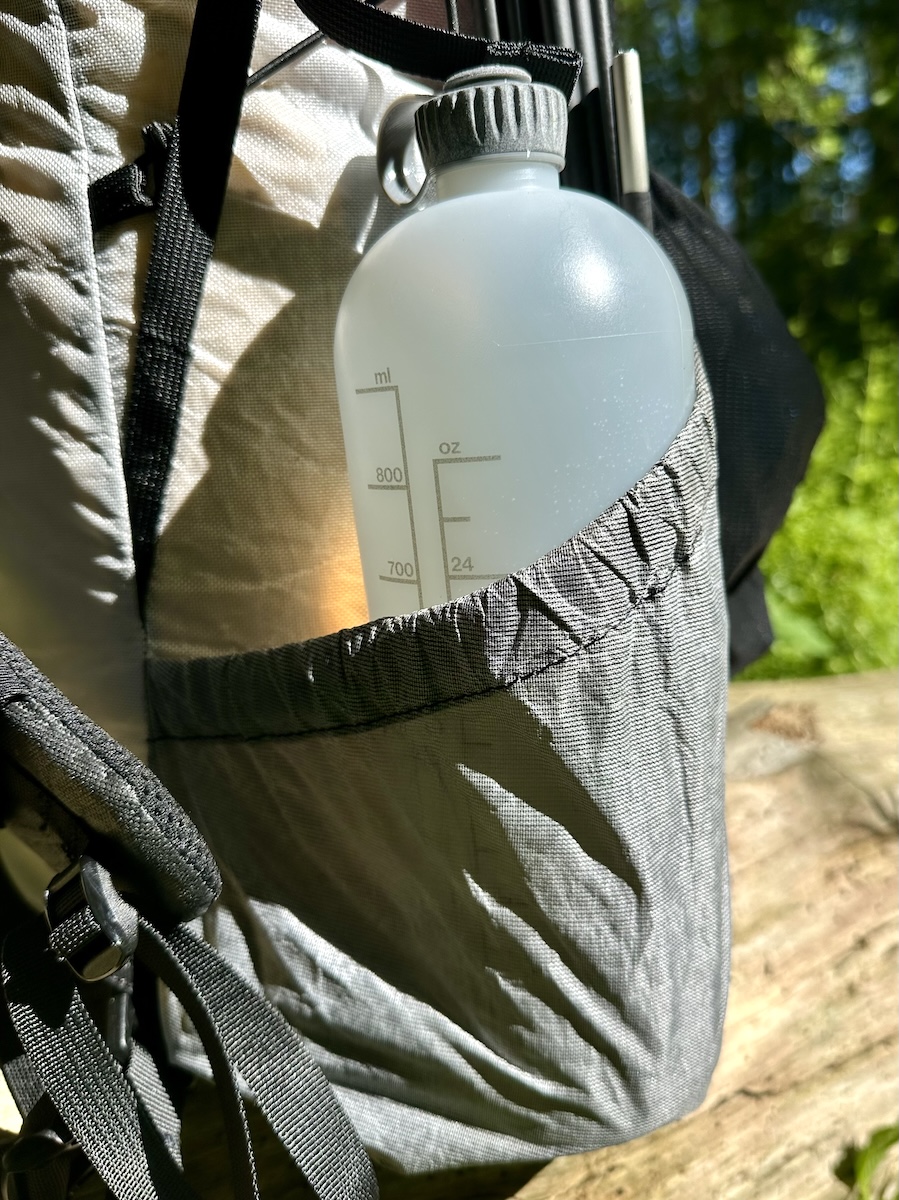
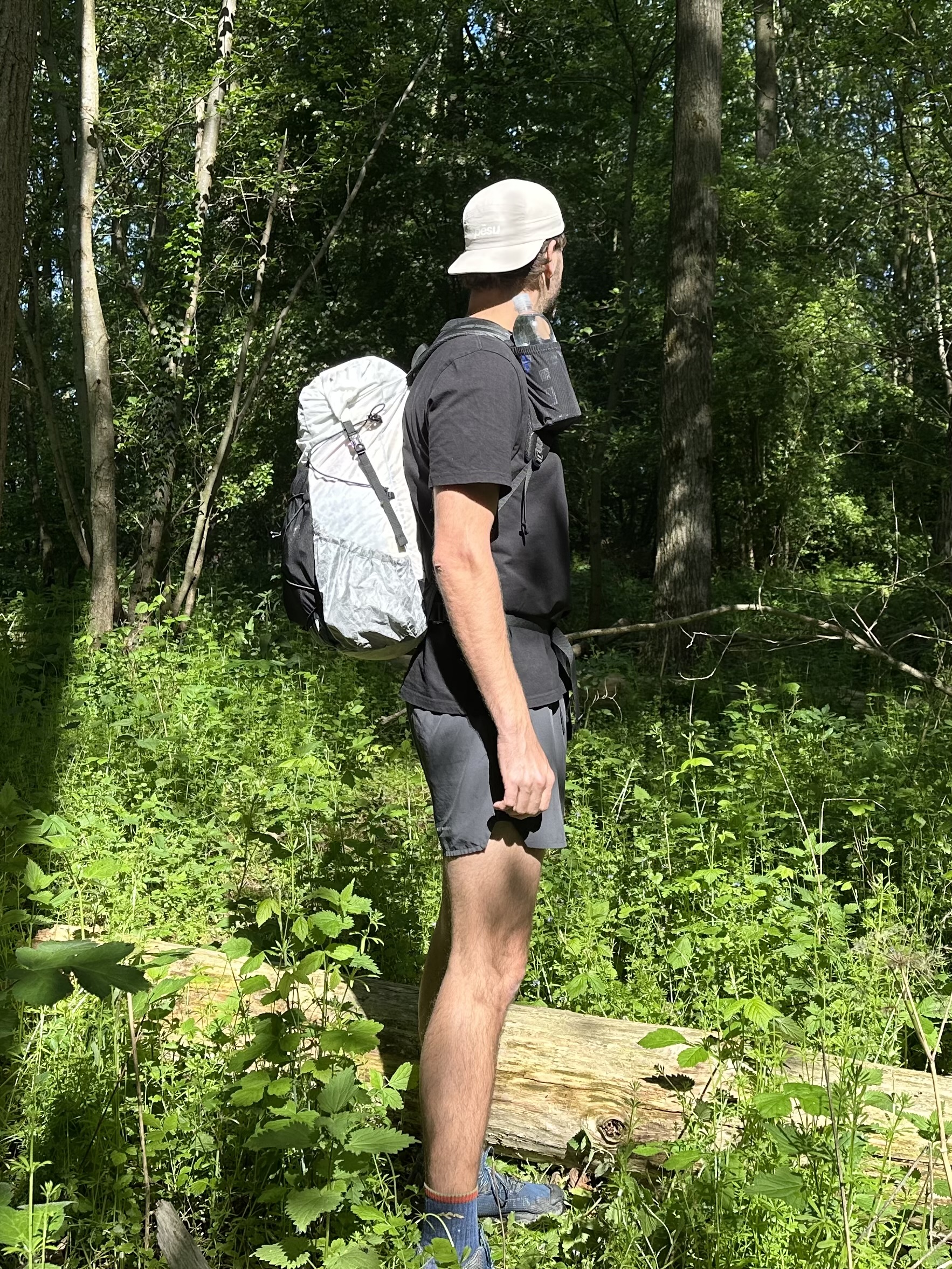
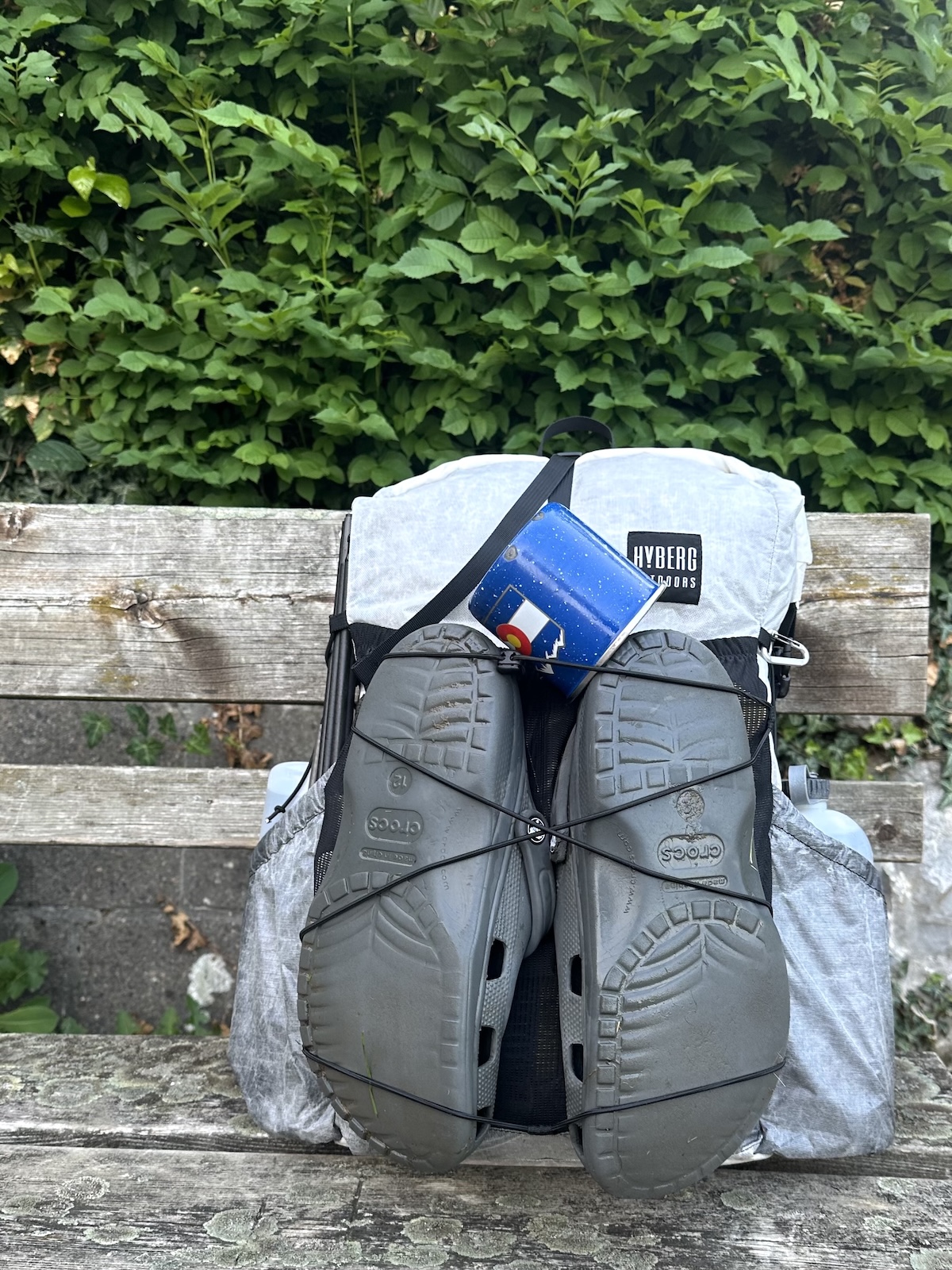
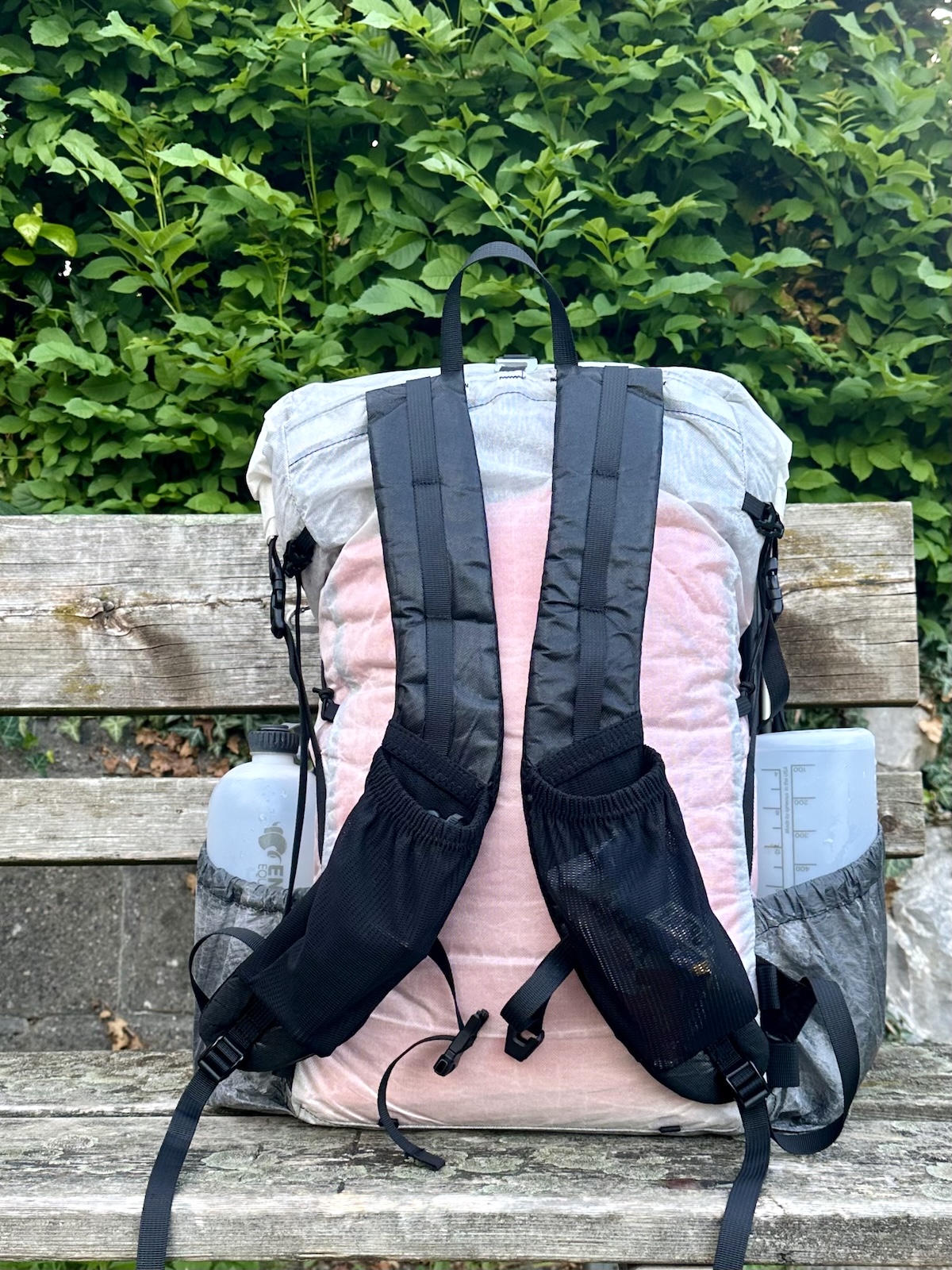
The Bandit Lite has a 29-liter main compartment, which handled my camp gear and extra food supplies comfortably. The stretchy back “catch-all” pocket with elastic lashings became my go-to for items I wanted quick access to on the trail: my poop kit, water filter, spoon, and down jacket. There are two large side pockets that can each accommodate 2 Smart Water bottles. The two shoulder pockets can also handle a bottle or smaller items like a phone, snacks, or water filter.
The total volume adds up to 40 liters, which is a lot of pack for 410 grams.
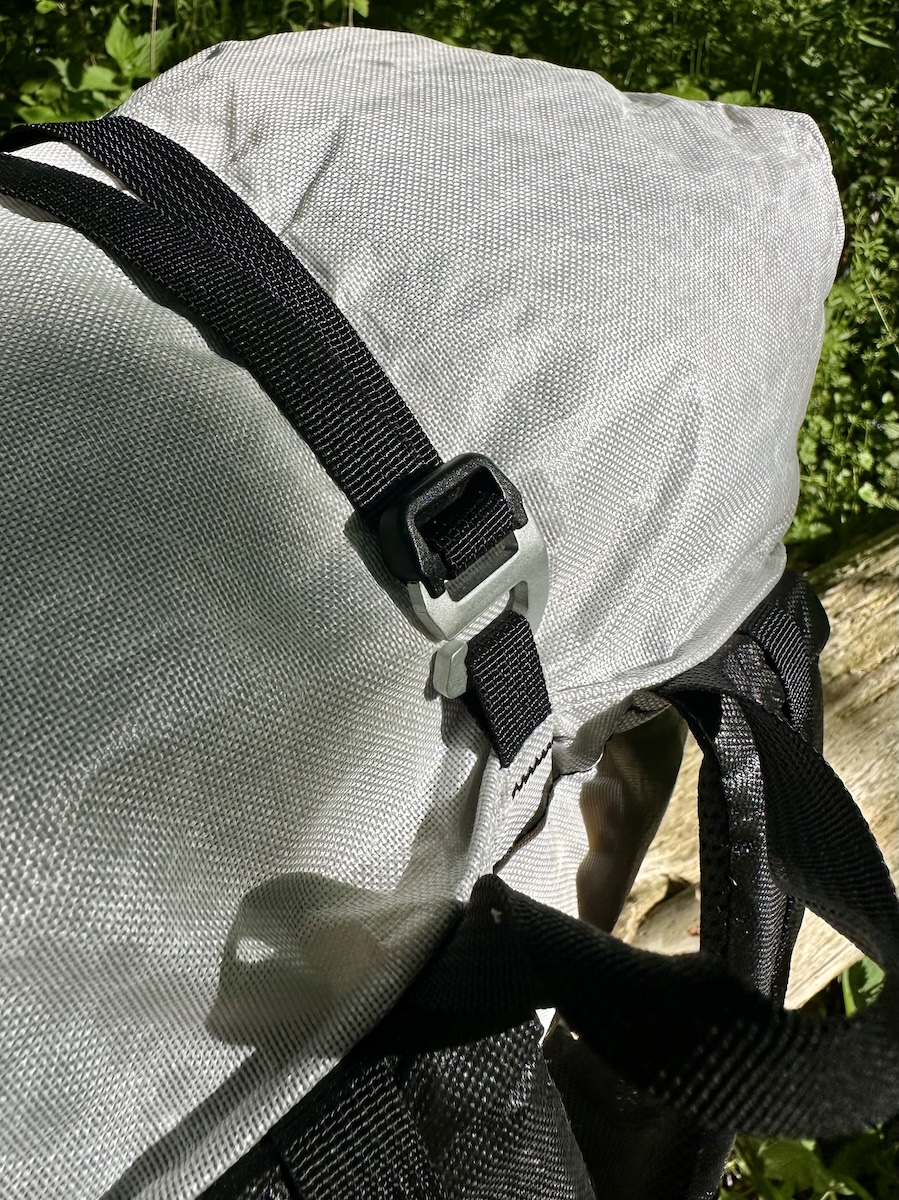
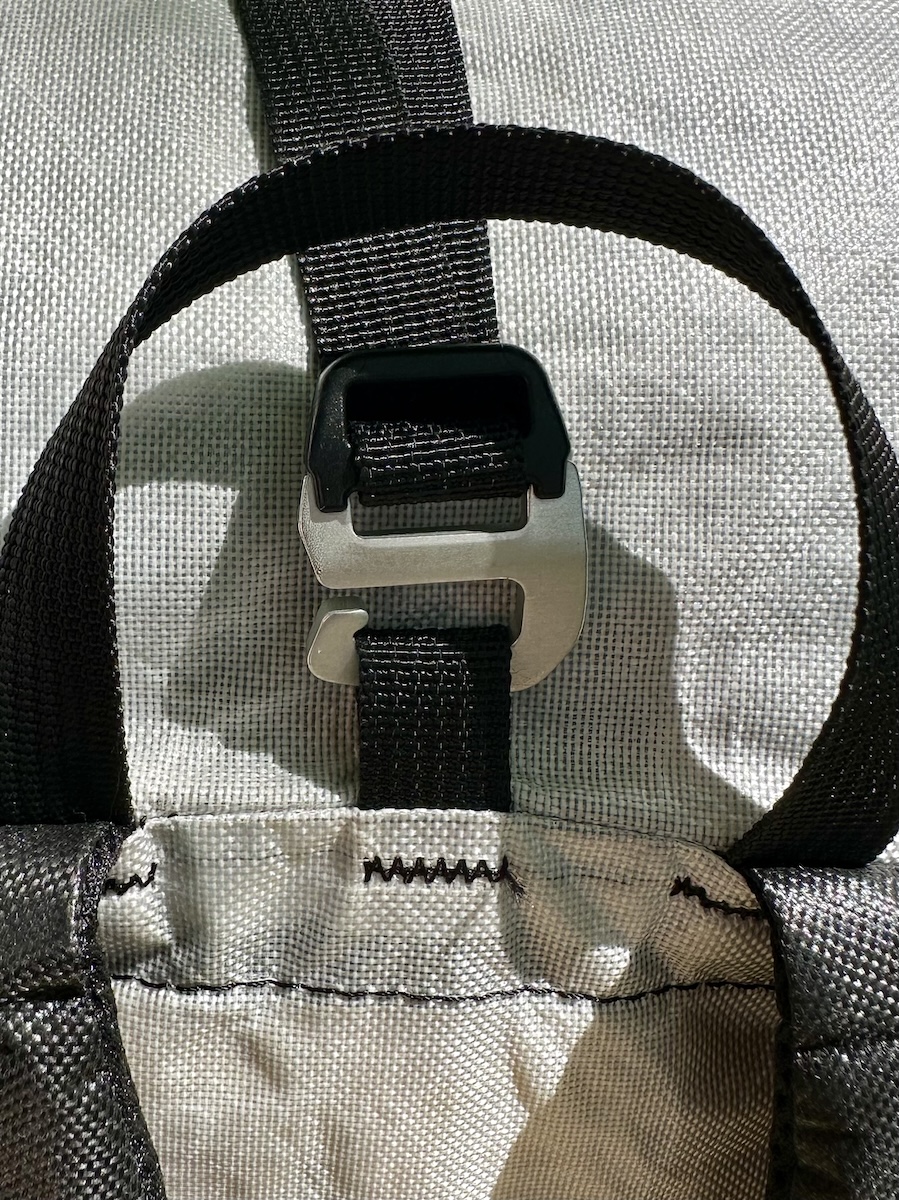
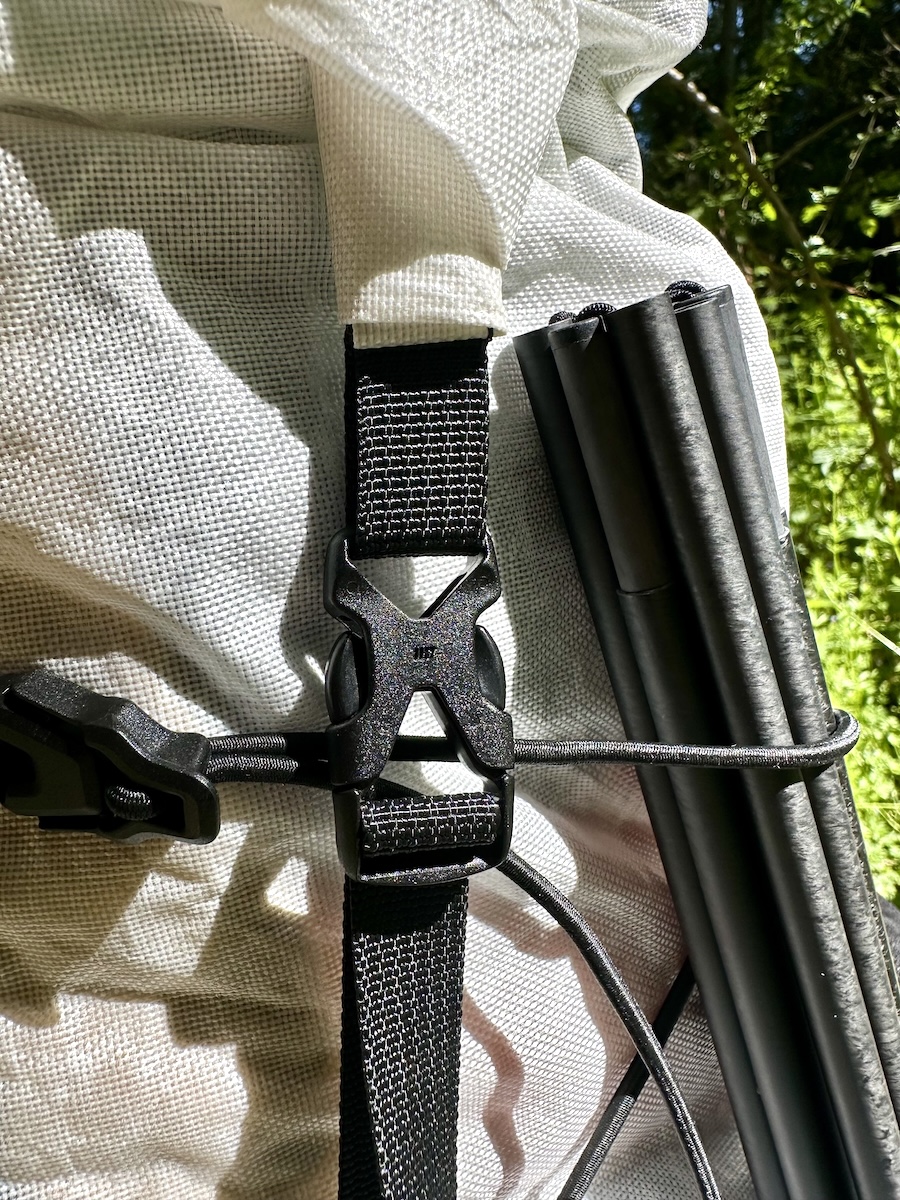
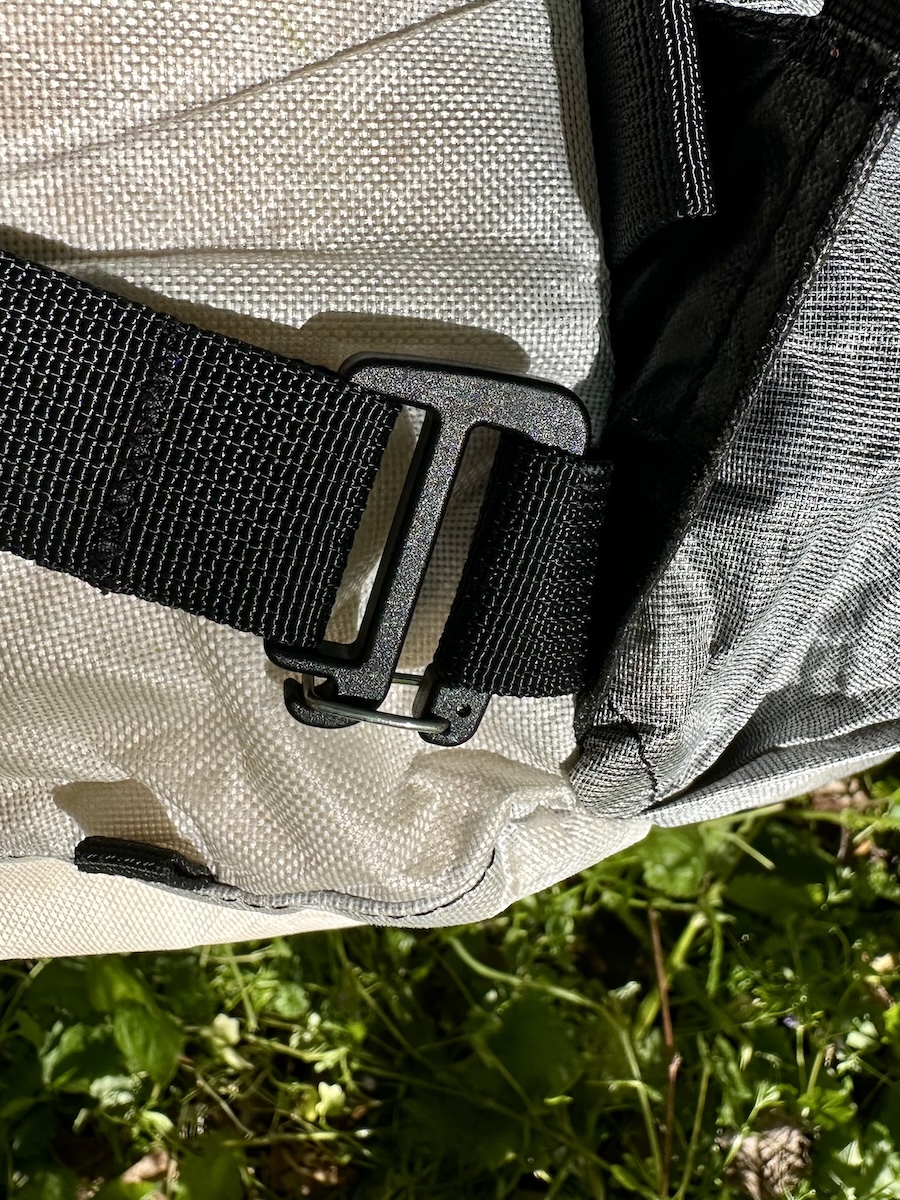
The pack closes with a roll-top closure secured by a nylon strap and a quality metal S-hook. I found it easy to use and felt confident securing the load. The pack has a webbing hip belt that adjusts for shorter torsos or can be quickly removed entirely. The sternum strap uses a unique integrated whistle buckle. It took me a minute to unclip it as it didn’t feel as natural, but I got there.
What I like about this pack
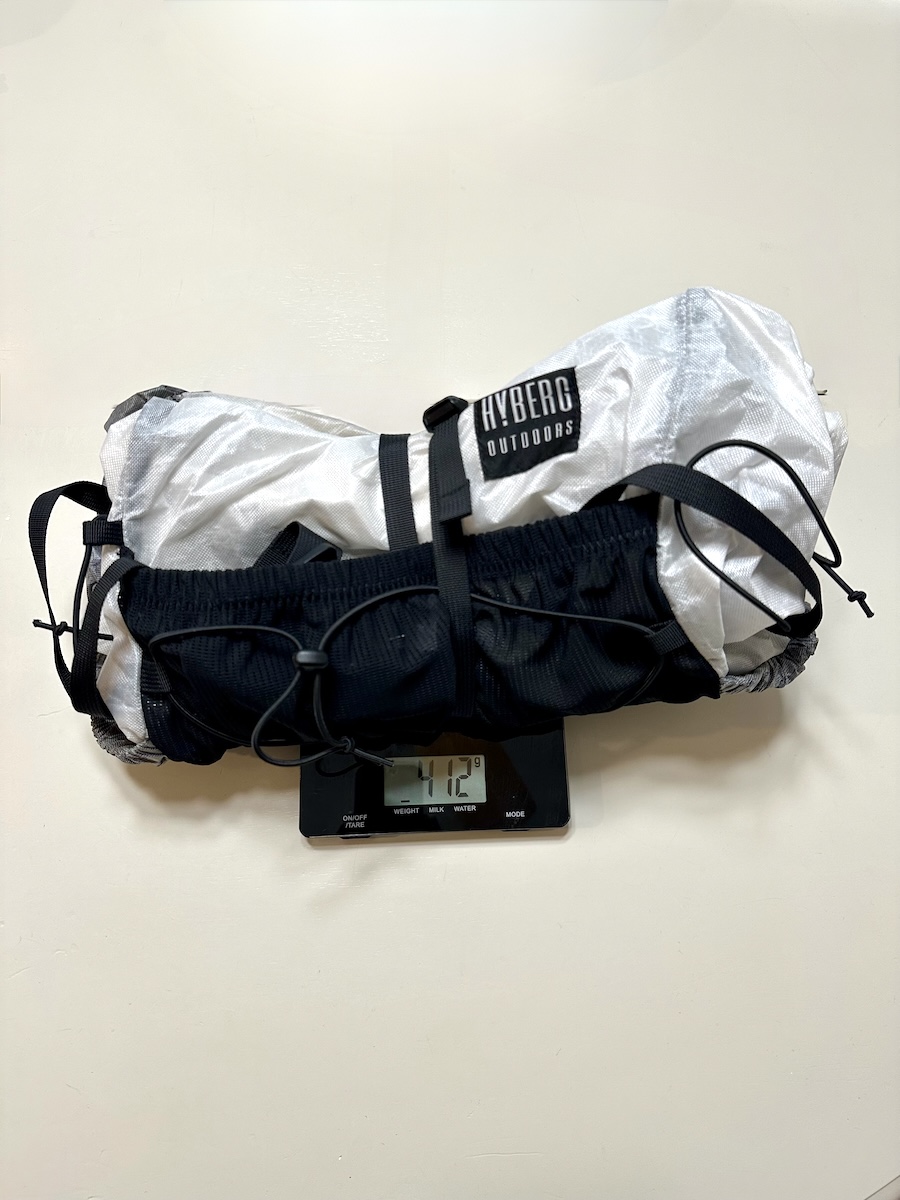
This thing is seriously light. At an advertised 410g, I had to double-check, and indeed it came out to 412g on my scale. When compared to similar packs like the Atom Packs Atom 30 (408g), Durston Wapta 30 (510g), HMG Contour 35 (451g), and Zpacks Nero 40 (333g with belt) the Bandit Lite stacks up pretty well while still offering useful features that packs like the Zpacks Nero strip down.
Next, the Aluula fabric feels smooth and durable. I immediately liked how the pack felt to the touch, straight out of the box. After 6 days on the West Highland Way I didn’t notice any holes or scrapes on the fabric. Long-term use will prove how durable it actually is, but so far, so good.
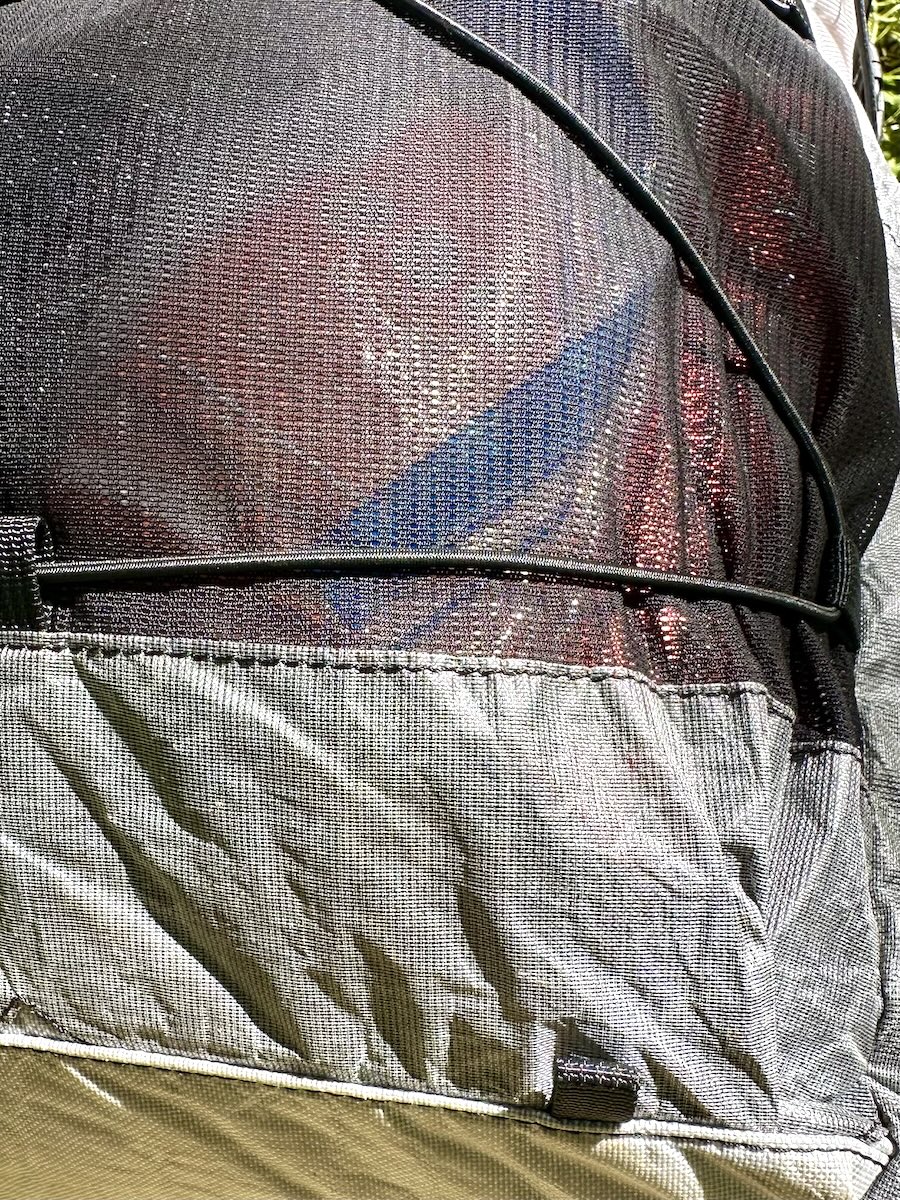
Another small detail that I think will add to long-term durability is on the stretchy back pocket. The bottom of it is not secured directly to the main compartment like other packs. Instead Hyberg uses a 3cm wide piece of Aluula that adds extra support to the bottom of the pocket.
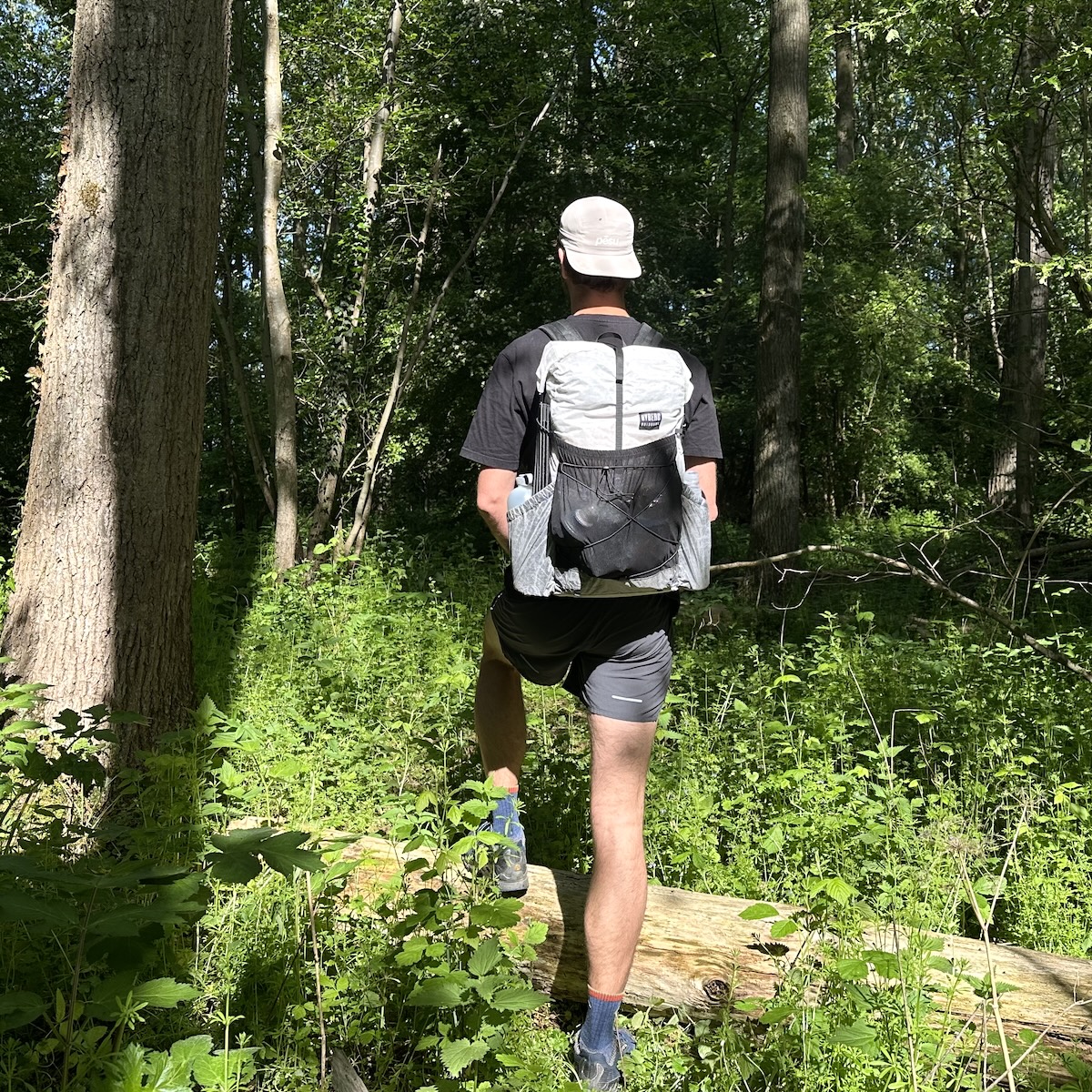
Comfort-wise, it fit pretty well for a 410g pack. It did take me a minute to get used to as the frameless pack fit much differently than my internal framed Osprey. The shoulder straps are padded enough, and the sternum strap was nice to have. I actually found the sternum strap more useful than the waist belt, which I eventually removed on the West Highland Way. I found it annoying wearing a hip pack, a rain jacket and two waist belts. With this kind of ultralight pack, I don’t expect to cinch down the waist belt to take the load off my shoulders anyway.
The pack carried 8 or 9kg well, but once above that, I really felt it in my shoulders. You may be able to manage 10kg or so on the first day as long as you are able to quickly eat that pack weight down. If your base weight is higher, you won’t like this pack or any other frameless ultralight pack for that matter.
Tip: To give structure to a frameless pack, most hikers will fold their inflatable sleeping pad into a back panel, placing it into the pack first. This adds some rigidity and structure like a frame would. I found this to work quite well.
Where I found the pack lacking
Although overall I’m happy with the pack, there were a few things that I was a little disappointed with.
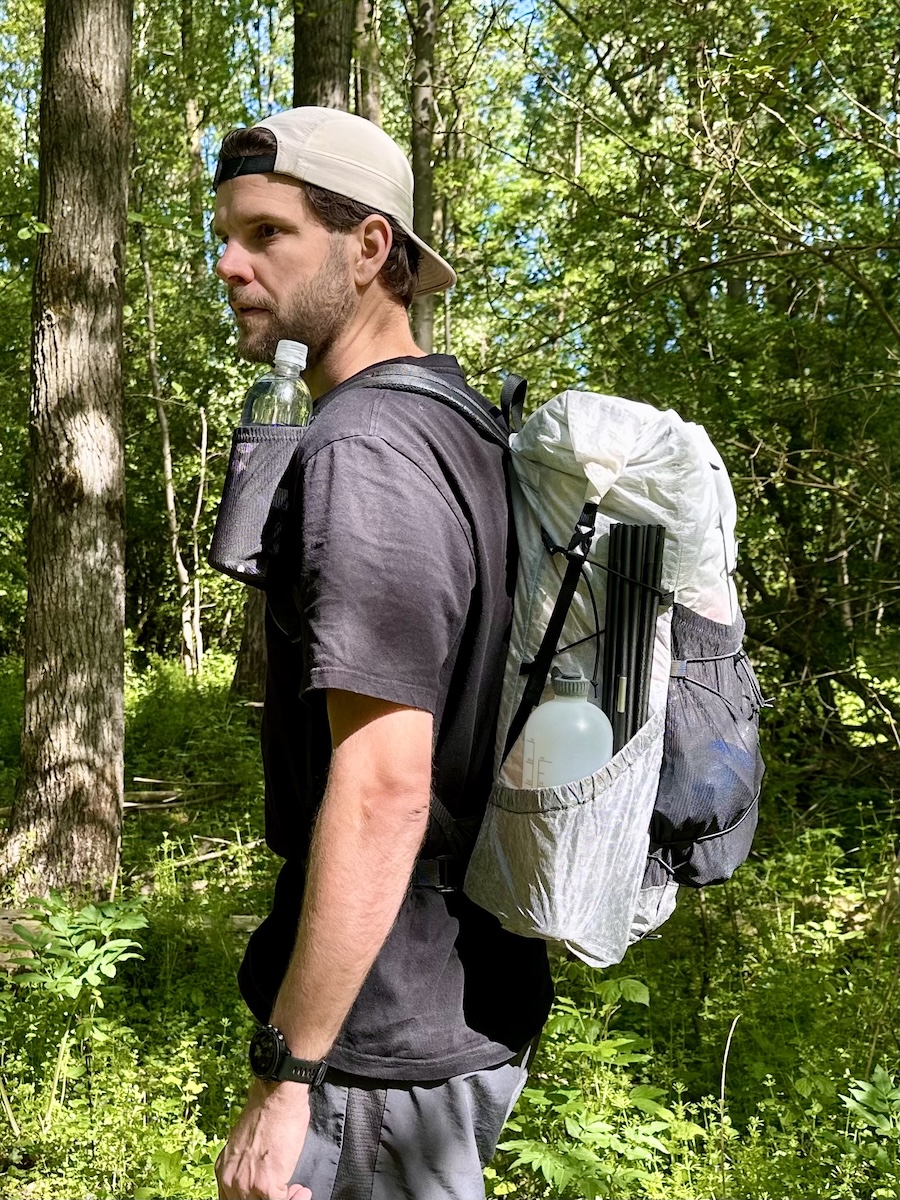
I am a tall hiker (195cm (6’5”) with a 53cm (21”) torso). This always makes it difficult to find the perfect gear. My height is definitely the upper limit of this pack. It is advertised to fit hikers between 160cm and 195cm tall with a torso between 45cm and 65cm long. Honestly, I feel a little too tall for the pack. To get it to sit lower, more comfortably in the curve of my back, I had to loosen the shoulder straps more than I typically would. That in turn puts anything stored in the shoulder strap pockets very close to my face and chin. This is fine when I had my Goby Tripod, Trek bars, or phone in those pockets, but not so much with water bottles as I found them annoyingly close to my face.
My next big gripe was the waterproofness. The fabric itself is waterproof on both versions, but only the DCF version has sealed seams. I messaged Hyberg for clarification as I found the website description a little unclear, and they confirmed it directly: water can still enter through the seams or the roll-top closure during heavy or prolonged rain on the Aluula version. I chose to order the Aluula anyway. I wanted the next new, cool fabric, but I sometimes wondered why use a waterproof material without constructing the pack in a way that fully takes advantage of it.
Update: 07/2026
I spoke with Dan Durston at Trail Days EU about this specifically as it also pertains to the Wapta 30. The short answer was “it’s hard”. He pointed out that on the bottom of the pack where the side pockets attach, there are essentially 5 seams that need to be heat bonded in order to make it work. In addition, where the shoulder straps join the pack is another difficult area as its two different types of fabrics on that seam.
On the first day of the WHW, I quickly confirmed that the pack is indeed not waterproof. The horizontal seam across the top that connects the back panel and shoulder straps to the rest of the pack definitely leaked water as I had water droplets inside my bag. You will need a Nylofume pack liner if heavy rain is expected.
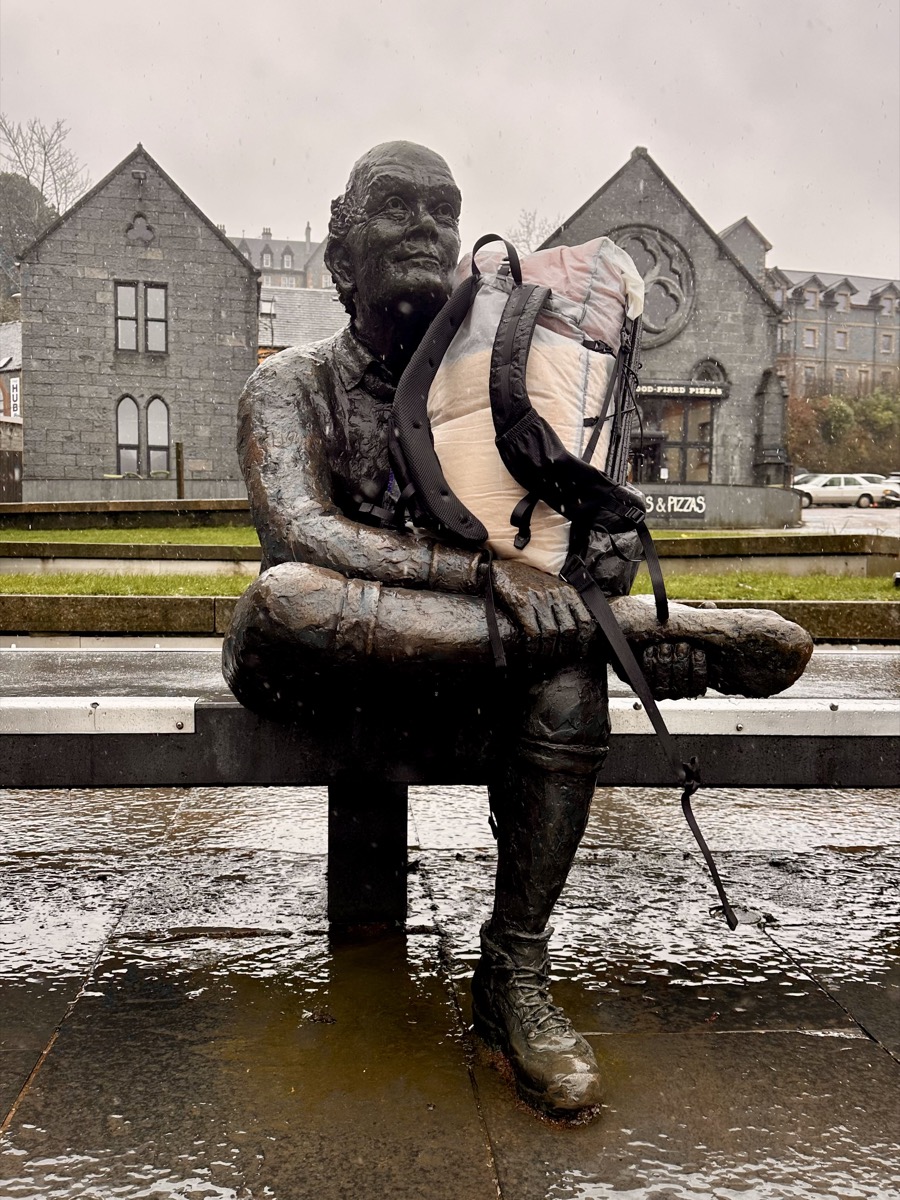
Lastly and not necessarily a deal breaker but something to be aware of… The Aluula pack comes in both black and translucent white. Emphasis on translucent, especially when wet. For much of the trip, you could see the various stuff sacks inside my pack through the outer fabric.
Who is this pack for?
If you are looking for a European-made (Germany), ultralight pack with a very simple design, this is a great option. At 410g, it stacks up well to its competitors while offering the newest outdoor fabric along with the more common DCF. It is well built, includes the important features while still maintaining that incredibly low weight
If you are as tall as me, I’d look elsewhere. It works, but I wish they had a small / medium and a large /extra-large sizing as Hyberg has with other packs. The adjustable hip belt simply isn’t enough. A longer back panel and longer shoulder straps would make for a better fit in my opinion.
Would I buy it again?
To answer that question honestly, I’m not sure, but I wouldn’t let that discourage you. My biggest problem is my height combined with the sizing of this pack, but maybe that’s more of a me problem. I do love the fabric, the ultralight weight, and the simplicity. It is well constructed and was still quite comfortable. It’s not waterproof, which was kind of a bummer, but it does check all of my boxes as a small, 3-season fast packing, hut-to-hut, carry-on, so I am very happy with that.
At €269 the Hyberg Bandit Lite Aluula, sits at a competitive price. If you want to save a bit of money and have a pack that is fully seam-taped, the DCF version is a great option at €224. Neither is cheap, but the weight savings over a conventional 40L pack are real and can help you knock off a few hundred grams from traditional packs. Only do so if the rest of your kit is headed in that direction; otherwise, you’ll hate every step.
Update: 07/2026
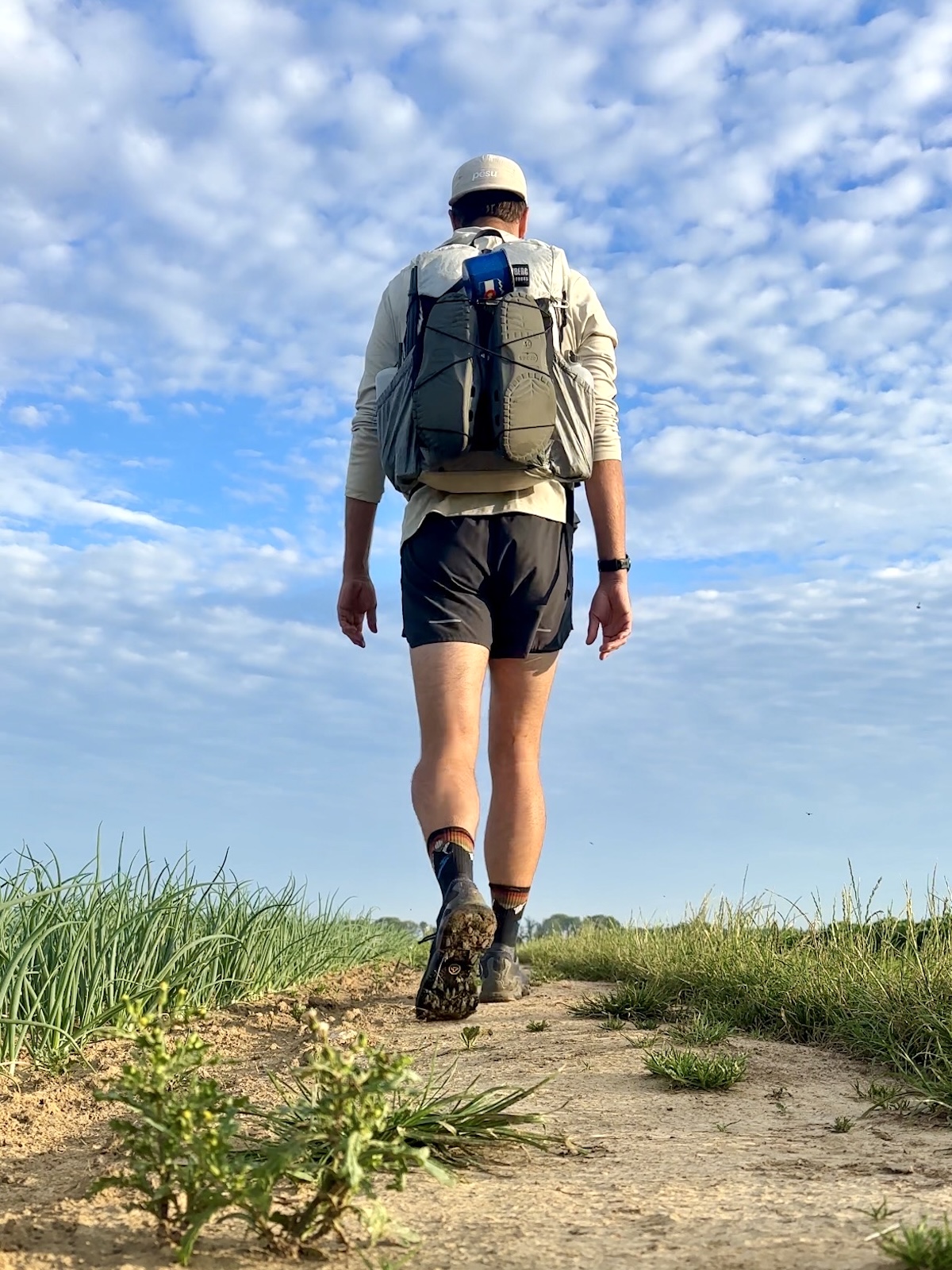
I had the chance to take this pack out on another 4 day trip along the Dutch Mountain Trail. The weather was the complete opposite of the West Highland Way. Temps ranged from 22 at night to 33 during the day and full sun. It was very dry and hot. After this second trip, I really have become more fond of the pack. I went without the waist belt and I used my Atom Packs “The Roo” 2.5L hip belt. No rain jacket required all day and everything worked out well.
You can check out my full kit for that hike at TrekList. Dutch Mountain Trail 5.8kg Gear List