Wild Camping the West Highland Way: Everything You Need to Know
Scotland
Wild camping West Highland Way is one of the best ways to experience Scotland’s most iconic long distance trail. Stretching 96 miles from Milngavie on the outskirts of Glasgow to Fort William at the foot of Ben Nevis, the West Highland Way passes through some of the most dramatic highland scenery in Europe: from the banks of Loch Lomond to the vast open moorland of Rannoch Moor and the rugged hills of Glencoe.
Below you’ll find everything you need to know to plan, organize, and wild camp the West Highland Way.
Overview
Quick Stats
- Location: Scotland, United Kingdom
- Distance: 96 Miles | 154 Km
- Difficulty: Moderate
- Days required: 6 – 9 days
- Season: April – October
- Start Point: Milngavie, Glasgow
- End Point: Fort William
- Total Elevation ↑ : 14,800 ft | 4,500 m
- Total Elevation ↓ : 14,400 ft | 4,390 m
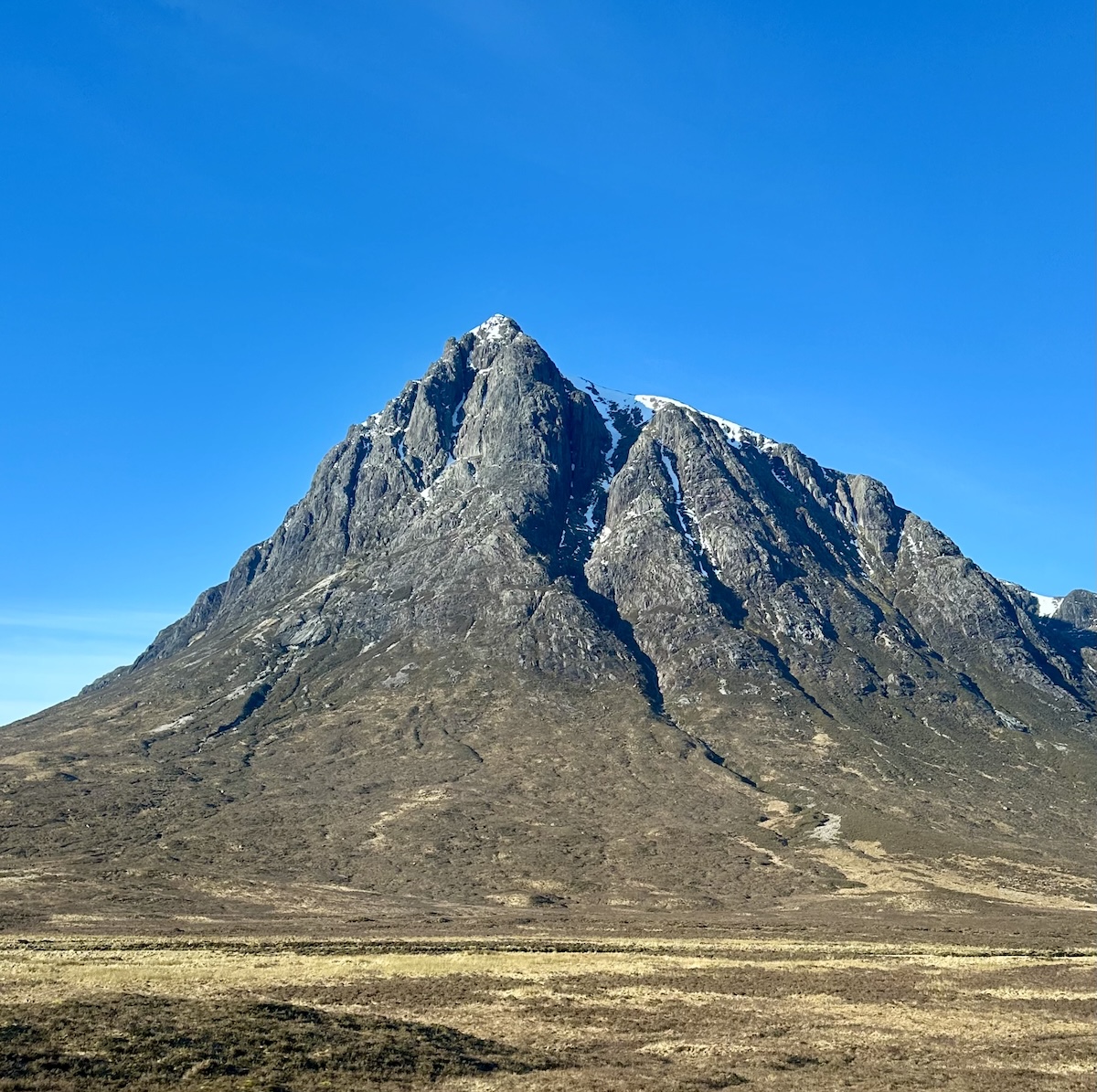
- Highest Point: 1,791 ft | 546 m (Devil’s Staircase)
Some links on this site are Amazon Associate affiliate links. If you pick up gear through them, I earn a small commission—at no extra cost to you. Your support helps support the site, and I’m truly thankful!
When To Hike the West Highland Way
The West Highland Way can be hiked from March through October, with the summer months being the most popular. Unlike high elevation alpine trails, there are no huts to open or passes to clear although services are limited in off peak seasons. The weather and midges (tiny biting insects that swarm in large clouds) play a big role in timing.
- March – May: Early season. Trails are quiet and the landscape is at its most dramatic with snow still on the higher hills. Weather is unpredictable and cold nights are common. Midges are not yet a factor, which is a big plus.
- June – August: Peak season. Long days and the best chance of decent weather, but also the most hikers on the trail. Midges are at their worst from late June through August, particularly in still, humid conditions near Loch Lomond. Pack a good midge net and repellent!
- September – October: A favorite for many hikers. Cooler temperatures, fewer crowds, and the midges begin to thin out. Autumn colors make for spectacular scenery. Days are getting shorter and rain is more frequent, so pack accordingly.
Scottish highland weather is famously unpredictable. It can rain for days in July and deliver clear skies in October. Always pack layers, a waterproof jacket, and waterproof pants no matter the forecast. Personally, I’m a fan of non-waterproof trail runners as they dry out the quickest. With heavy rain, regardless of waterproofing, your shoes will get wet one way or another.
Guide Book
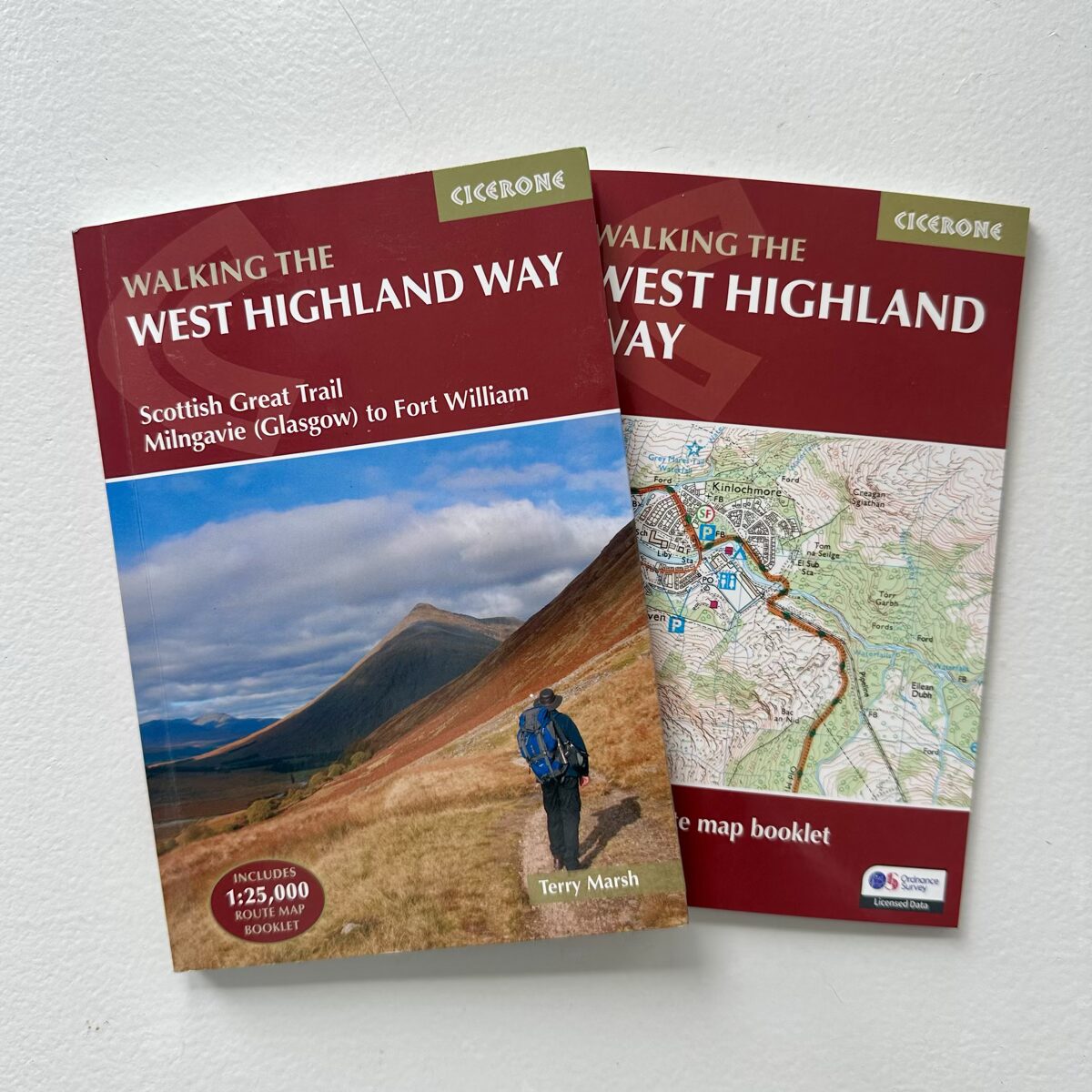
I picked up the Cicerone guidebook by Terry Marsh before my hike and found it a useful introduction. That said, it is written primarily for hikers staying in accommodations along the way rather than wild campers. If you want a solid overview and some history of the route, it is a great affordable option and also includes a waterproof paper map.
For route planning, I use TrailEasy, a trail app built by a fellow hiker with good WHW coverage including route planning, accommodations, and campgrounds. For navigation I use AllTrails. Combined with this guide, you have everything you need for planning a wild camping trip on the West Highland Way.
Walking The West Highland Way by Terry Marsh
Logistics
Getting There
- Flight → Glasgow Airport (GLA)
- Bus → GLA → Glasgow Queen Street Station – approximately 35 minutes
- Train → Queen Street Station → Milngavie (pronounced “mul-GUY”) – ScotRail, approximately 25 minutes
Tip: Travelers from outside the UK may need to apply for a UK Electronic Travel Authorisation (ETA) before departure. Check your requirements here
Getting Home
- Bus → Fort William → Glasgow (approximately 3 hours)
- Ember — advance tickets recommended
- Scottish Citylink — advance tickets recommended
The Ember bus was a very comfortable ride back to Glasgow airport (GLA). The bus stop was directly behind the Morrisons grocery store. Surprisingly the route it took was parallel with the WHW for much of the journey. It was exciting to look back at all of the places I had walked the previous days.
What To Do Next: Fort William is a natural basecamp for further adventure. The nearby Glen Nevis is worth exploring, or you can tackle Ben Nevis (4,413 ft / 1,345 m), the highest peak in the UK. For those looking to keep walking, the Great Glen Way starts in Fort William and heads northeast to Inverness. Another option, is the Isle of Skye and the Skye Trail which are within reach by bus and offer some of the most dramatic scenery in Scotland.
Cost
My total cost for 6 days on the West Highland Way was £435, not including airfare. This did include transportation to and from the trail, food, and 2 nights in a hotel.
Accommodation varied quite a bit. I stayed two nights in hotels (Muthu Ben Doran in Tyndrum £84 – breakfast included and a cheap option in Fort William, the Alexandra Hotel £58). Wild camping covered the rest of the nights, which kept costs down significantly.
During the day, my typical spending looked something like this:
- Coffee and a snack at morning stops: £1–7
- Lunch a toastie or takeaway from a trail shop or inn (£4–8), or a sit-down meal at a hotel or cafe (£17–24)
- Dinner at a restaurant or hotel: £20–25
Other expenses to plan for:
- Trail snacks and food resupply at Co-ops and village shops: £7–25 per stop
- Laundry in Fort William: around £9
- Bus and train travel to/from the trail: £11–16
- Phone/data: £11 for a Jetpac eSIM
Depending on how “wild” you want to be, you can skip all of the restaurants, resupplying at the Tesco Superstore (3 minute walk from the Milngavie train station), The Green Welly Stop or Brodies in Tyndrum and the Co-op in Kinlochleven. This would obviously reduce your cost even more.
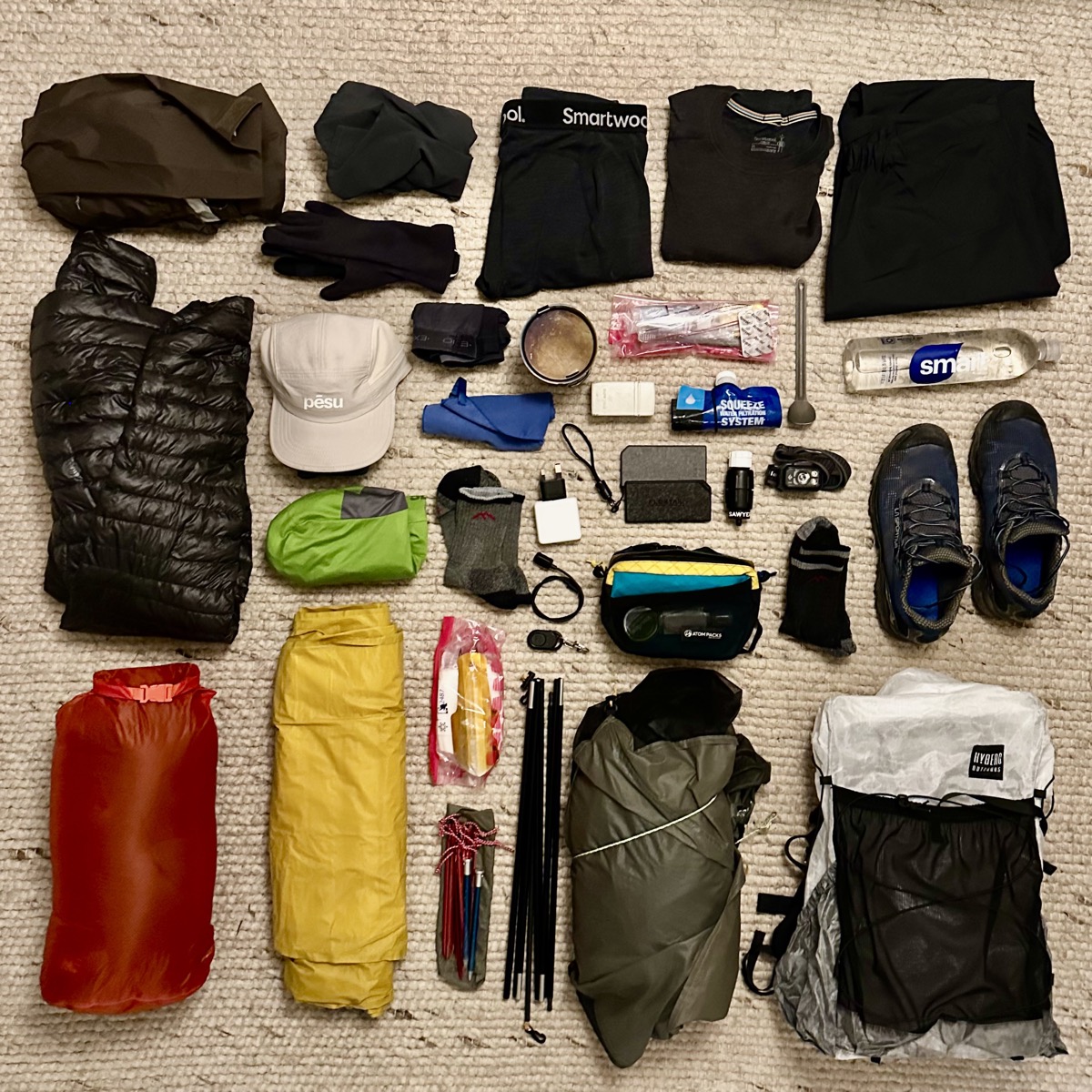
Wild Camping Gear List
Having hiked the PCT, AT, Tour du Mont Blanc, Alta Via 1 and 2, and the Camino de Santiago, I’ve learned that what you carry can make or break a long distance hike. Wild camping the West Highland Way is no exception.
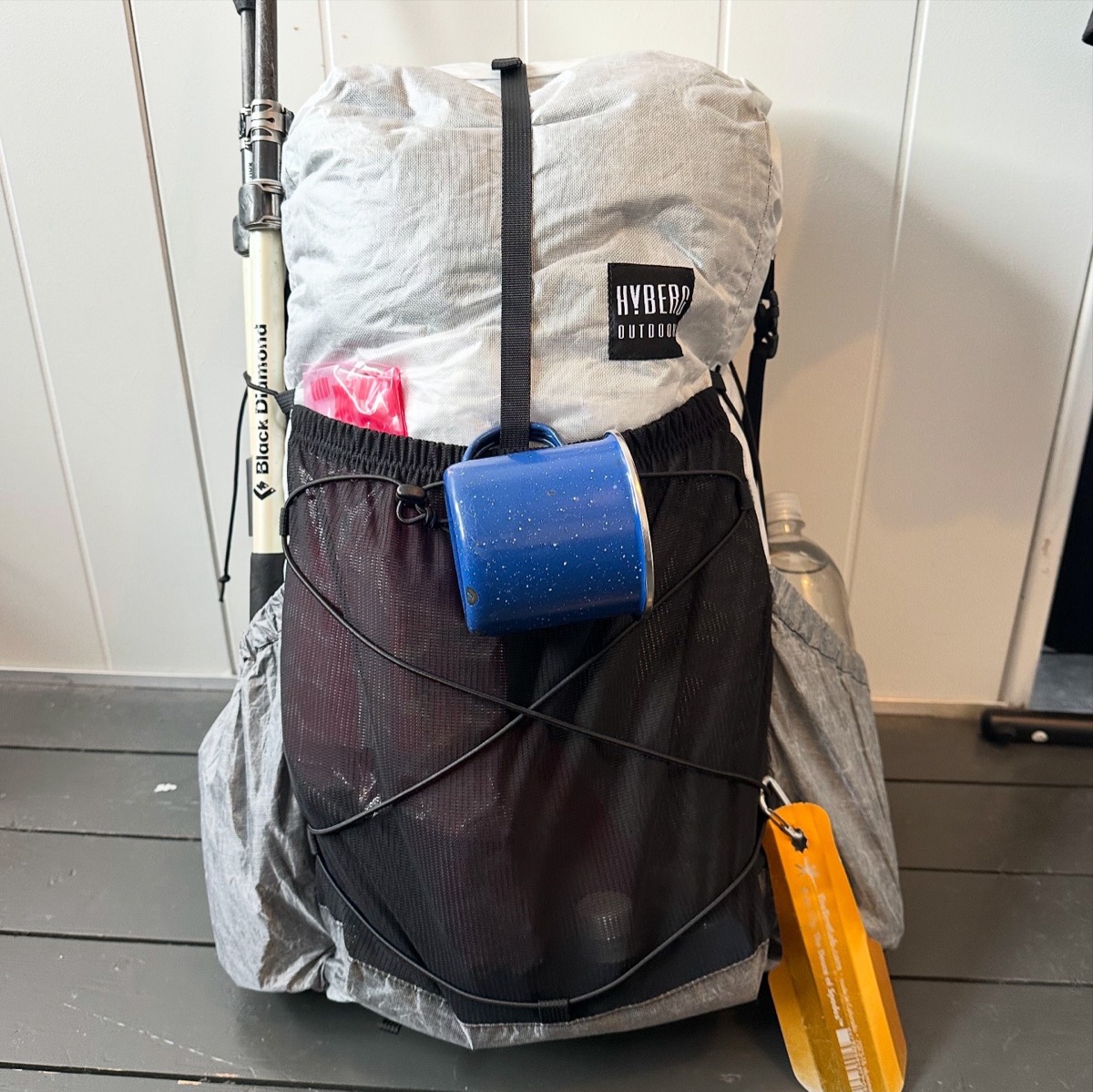
Unlike hut to hut trails, wild camping the WHW means carrying everything including shelter, sleeping kit, clothing, cooking set, etc – so pack selection and weight matter. The goal is to carry everything you need and nothing you don’t.
Check out my complete wild camping gear list for the West Highland Way built and organized with Treklist.
Tip: The WHW is not technically difficult, but Scottish weather can turn quickly. Make sure your kit is prepared for rain and cold regardless of the season. I recommend opting for a quality rain jacket and rain pants as opposed to a poncho.
Wild Camping on the West Highland Way
Scotland has some of the most progressive land access laws in the world. Under the Land Reform (Scotland) Act 2003, you have the legal right to wild camp almost anywhere on the West Highland Way as long as you follow Leave No Trace principles — pack out your waste, leave no trace of your camp, and be respectful of the land and other users.
Below you’ll find everything you need to know about camping on the West Highland Way.
Is wild camping legal on the West Highland Way?
Yes, with one exception. The stretch along Loch Lomond between Balmaha and Rowardennan falls within Loch Lomond and The Trossachs National Park, where a camping management zone is in effect from March 1 to September 30. During this period you are required to use a designated campsite or purchase a permit in advance. Permits are affordable and easy to book online before your trip.
Tip for permitted area
The name of the permitted site is Loch Lomond: Lochan Maoil Dhunne. Reservations can be made here. Availability is offered on a 28 day rolling basis, meaning you can not book out more than 28 days from now. When you search for your desired day, if it doesn’t show up on the map (just below “Rowardennan”) or in the list below, it is not available. Google Maps Location Cost is £4.50
Established Campsites
There are eight established campsites along the West Highland Way, ranging from basic lochside pitches to full service sites with kitchens and laundry. Note that there are no official campsites between Tyndrum and Kinlochleven so you need to plan your wild camping accordingly for that stretch. More details below.
Bothies
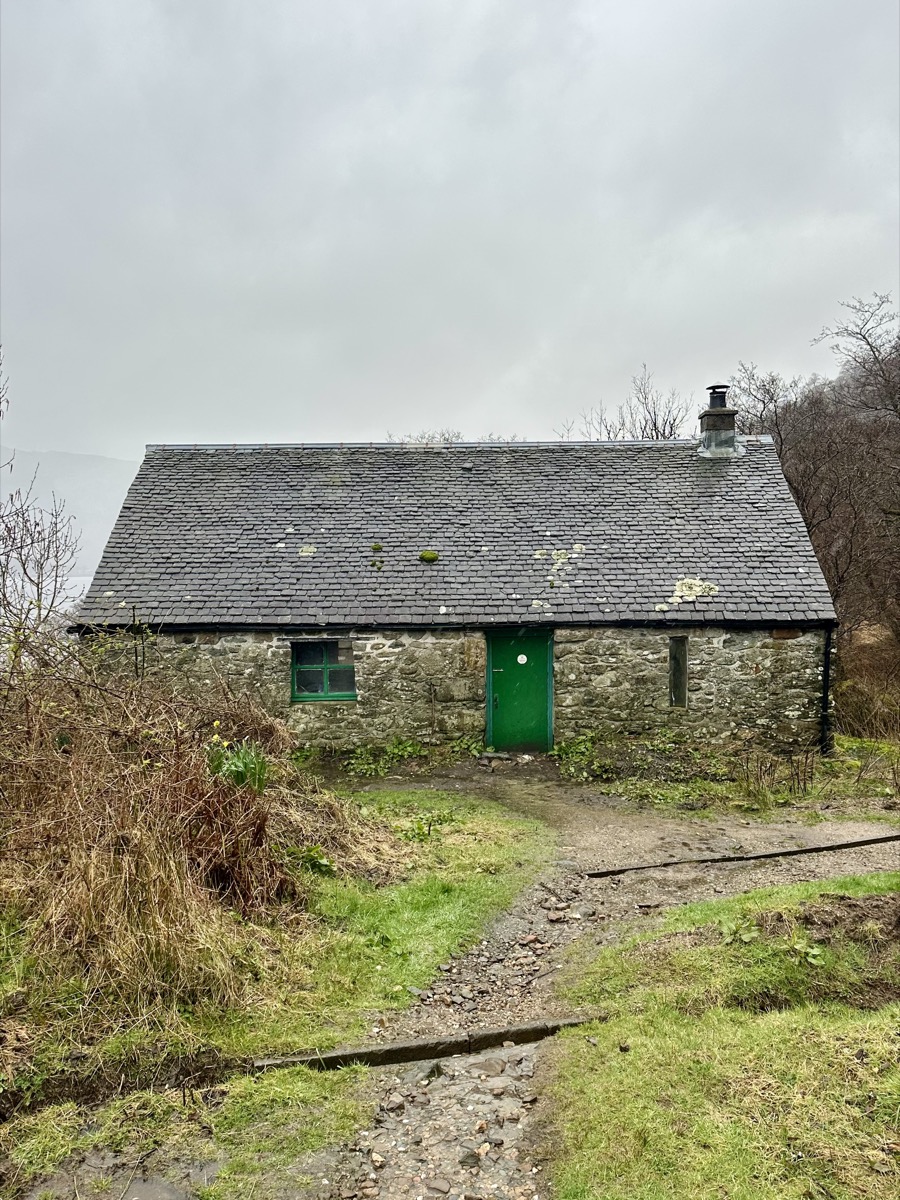
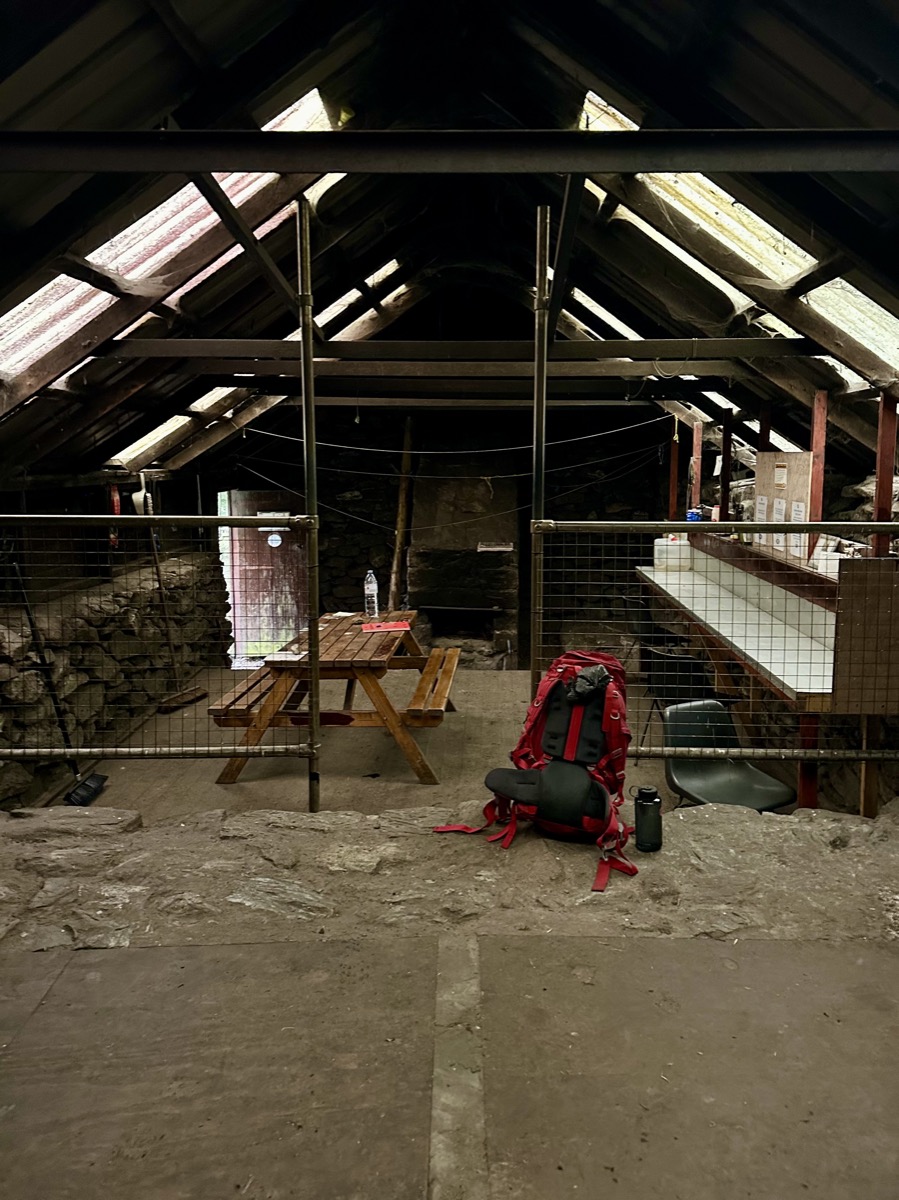
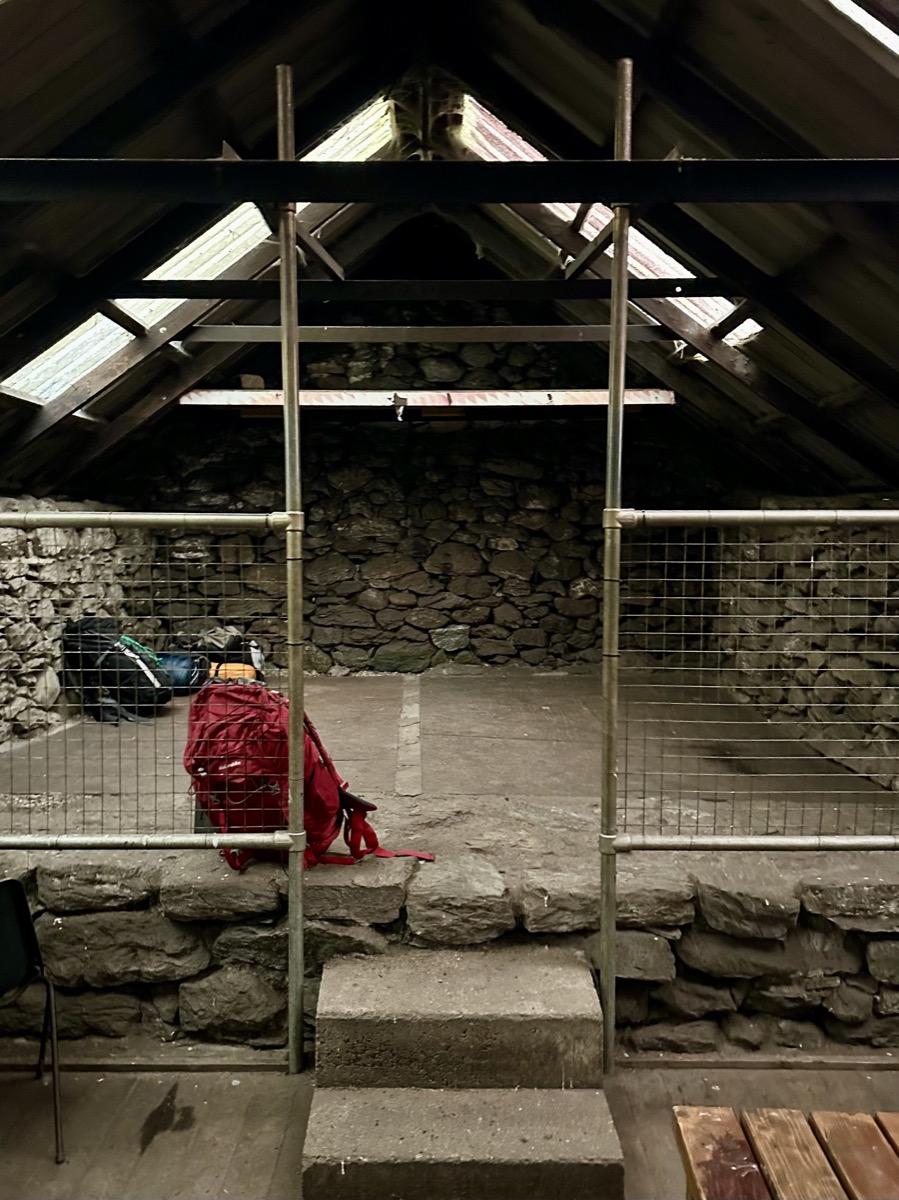
There are two bothies accessible from the West Highland Way. These are simple, rustic stone shelters maintained by the Mountain Bothies Association, free to use and first come first served. They are a great option in bad weather but should not be relied upon as they can fill up, particularly in peak season.
Rowchoish Bothy — approximately mile 34, just off the trail to the left after leaving Rowardennan. Sits a little off the trail, with a picnic table inside and sleeping platforms. The surrounding terrain is sloped and grassy making it hard to pitch a tent nearby.
Doune Byre Bothy — approximately mile 42, just before the trail leaves Loch Lomond near Ardleish. One large room with sleeping platforms for around 10 people and an open fire. Driftwood can be collected from the lochside on the walk in. It sits directly on the WHW.
Recommended Wild Camping Spots on the West Highland Way
Finding a good wild camp on the West Highland Way is one of the best parts of the experience. Scotland’s land access laws give you enormous freedom, but some spots are significantly better than others when it comes to shelter, flat ground, water access, and scenery.
A full breakdown of my recommended wild camping spots for each section of the route is coming soon, including GPS coordinates.
West Highland Way Campsite List
| Campsite / Website | Location | Facilities |
|---|---|---|
| Drymen Camping | Milngavie to Drymen | Basic camping, toilets, showers, Wi-Fi, charging points, snack shop |
| Milarrochy Bay Campsite | Drymen to Rowardennan | Basic camping, toilets, showers, lochside setting |
| Cashel Campsite | Drymen to Rowardennan | Basic camping, camp store, toilets, showers, lochside setting |
| Sallochy Campsite | Drymen to Rowardennan | Basic camping, composting toilets, water, bins only. Reservations required. Lochside setting. |
| Beinglas Farm Campsite | Rowardennan to Inverarnan | Basic camping, pods, restaurant, camp store, toilets, showers, free washing machines, camp kitchen, drying room |
| By The Way Hostel & Campsite | Tyndrum | Basic camping, toilets, showers, drying room, hostel facilities on site |
| Tyndrum Holiday Park | Tyndrum | Basic camping, pods, hot tub pods, toilets, showers |
| Glencoe Mountain Resort | Kingshouse area | Basic camping, pods, bunkhouse, free showers accessible to all hikers |
| Blackwater Hostel | Kinlochleven | Basic camping, bunkhouse, pods, tent boxes |
| Glen Nevis Camping | Glen Nevis / Fort William | Basic camping, pods, showers, restaurant, camp store, laundry |
West Highland Way Laundry Facilities List
| Campsite / Website | Location | Facilities |
|---|---|---|
| Balmaha Bunkhouse | Balmaha | Washer / Dryer combo |
| Cashel Campsite | Rowardennan | Coin operated Washer / Dryer |
| Rowardennan Lodge Youth Hostel | Rowardennan | Laundry and drying room |
| Inversnaid Bunkhouse | Inversnaid | Laundry service for guest |
| By The Way Hostel | Tyndrum | Laundry and drying room |
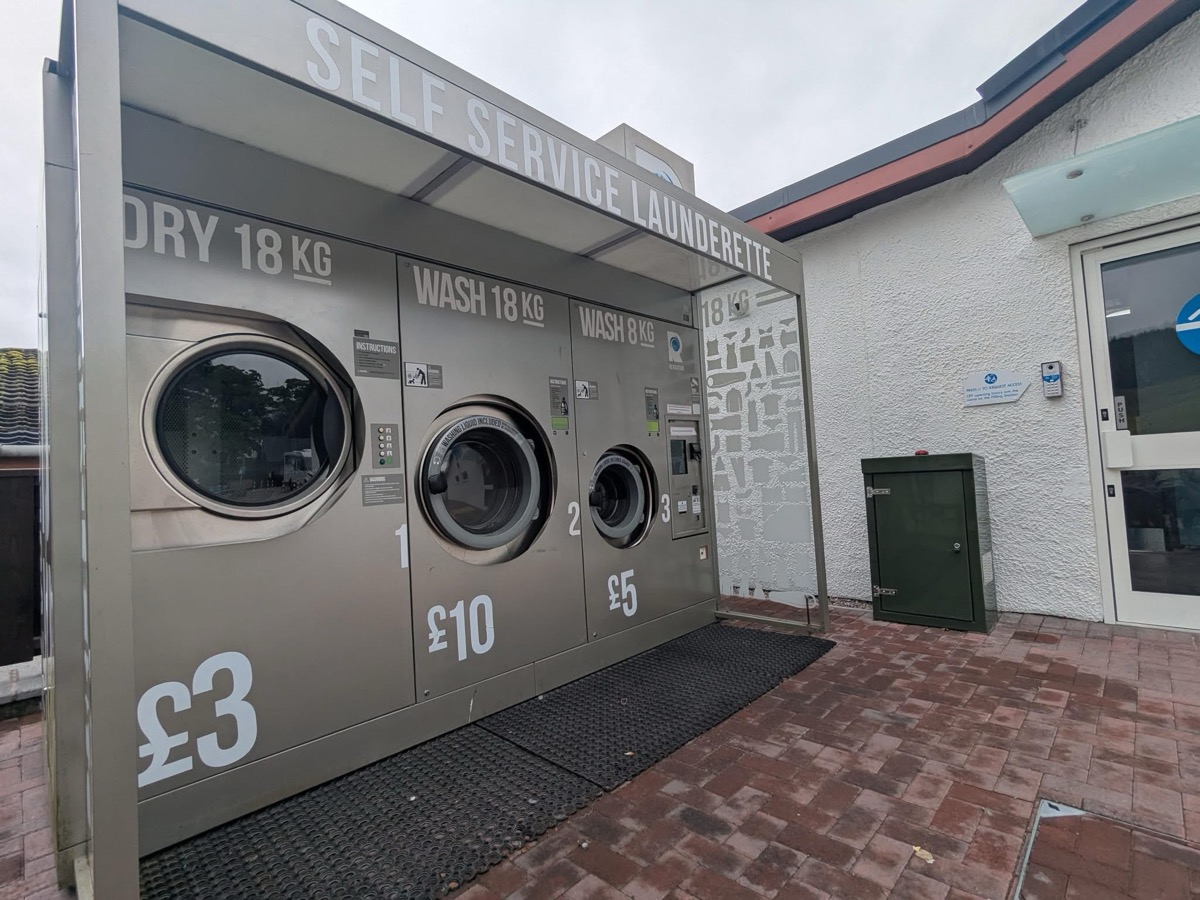
| The Green Welly Stop (Behind the shop) | Tyndrum | Coin operated outdoor machines |
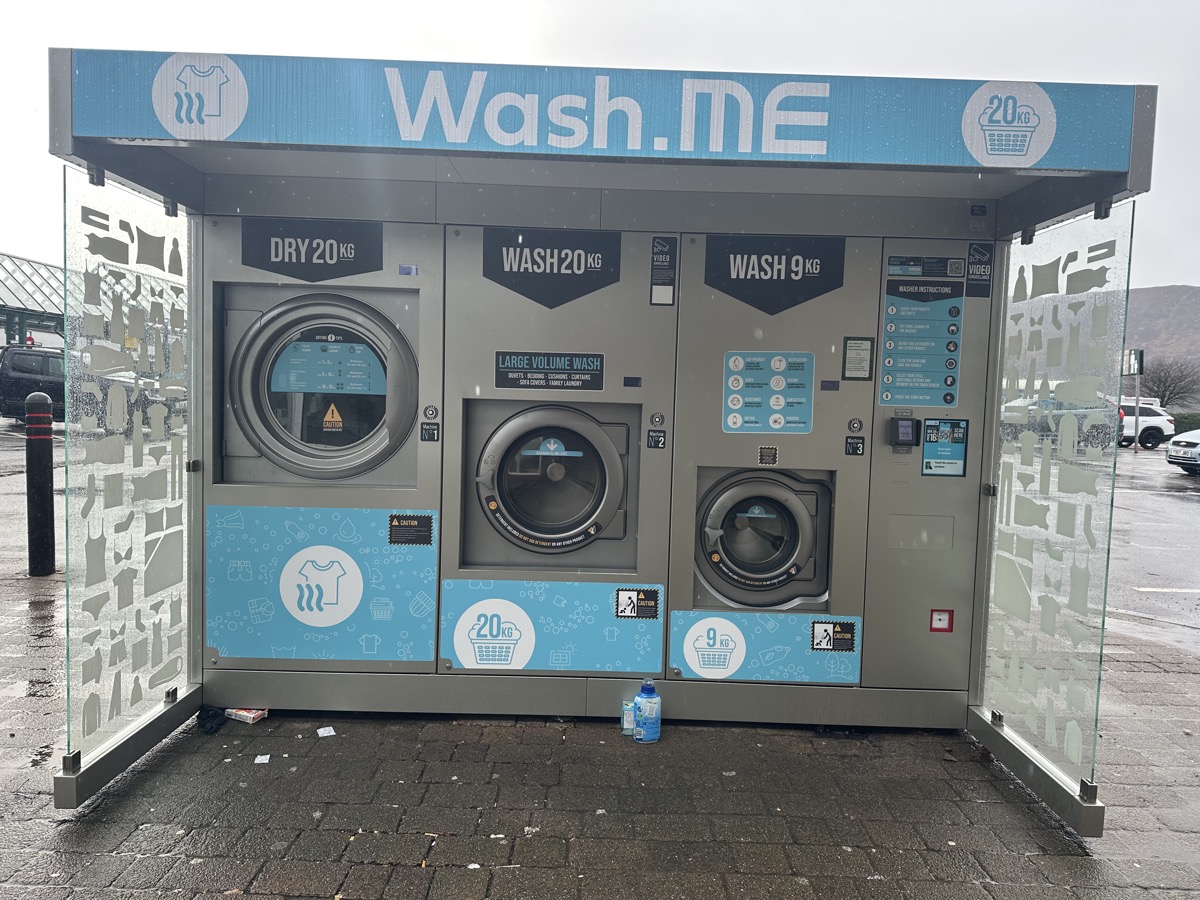
| Wash.me (Morrisons Grocery Store) | Fort William | Apple pay, credit cards, outdoor machines |
West Highland Way Honesty Boxes List
| Name | Location | Mi / Km | What’s Available |
|---|---|---|---|
| Turnip the Beet | Near Dumgoyne | Mi 7.5 / Km 12 | Cakes, snacks, porridge pots, drinks, Smidge. Cash or bank transfer. Deli and coffee shop open Wed–Sun. |
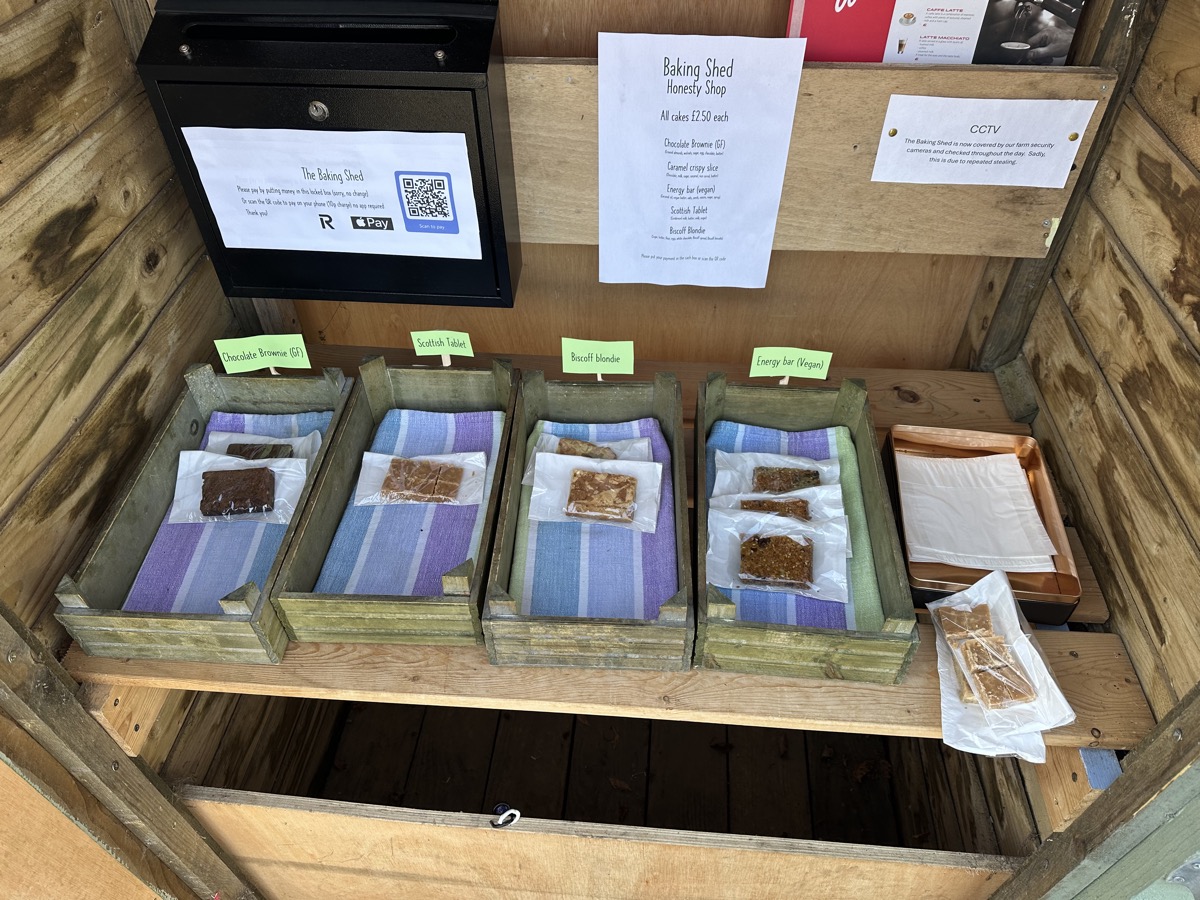
| Altquhur Byre Baking Shed | Near Drymen | Mi 11.5 / Km 18.5 | Homemade baked goods, eggs. Cash. |
| Ben’s Bakes | Rowardennan | Mi 27 / Km 43 | Homemade cakes, sandwiches, crisps, drinks. Cash. |
| The Wee Midgie | Kinlochleven | Mi 87 / Km 140 | Fresh eggs, baked goods, local produce. Cash or mobile pay. |
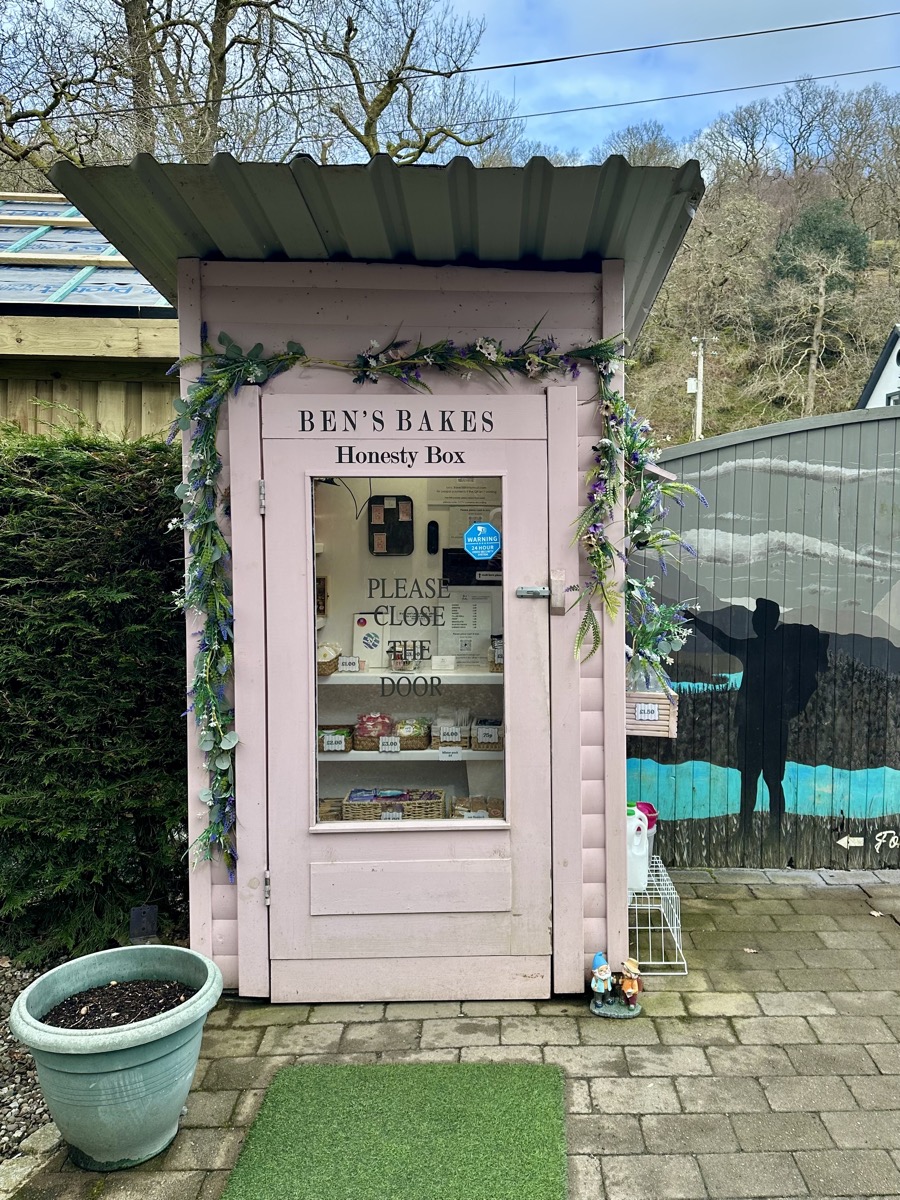
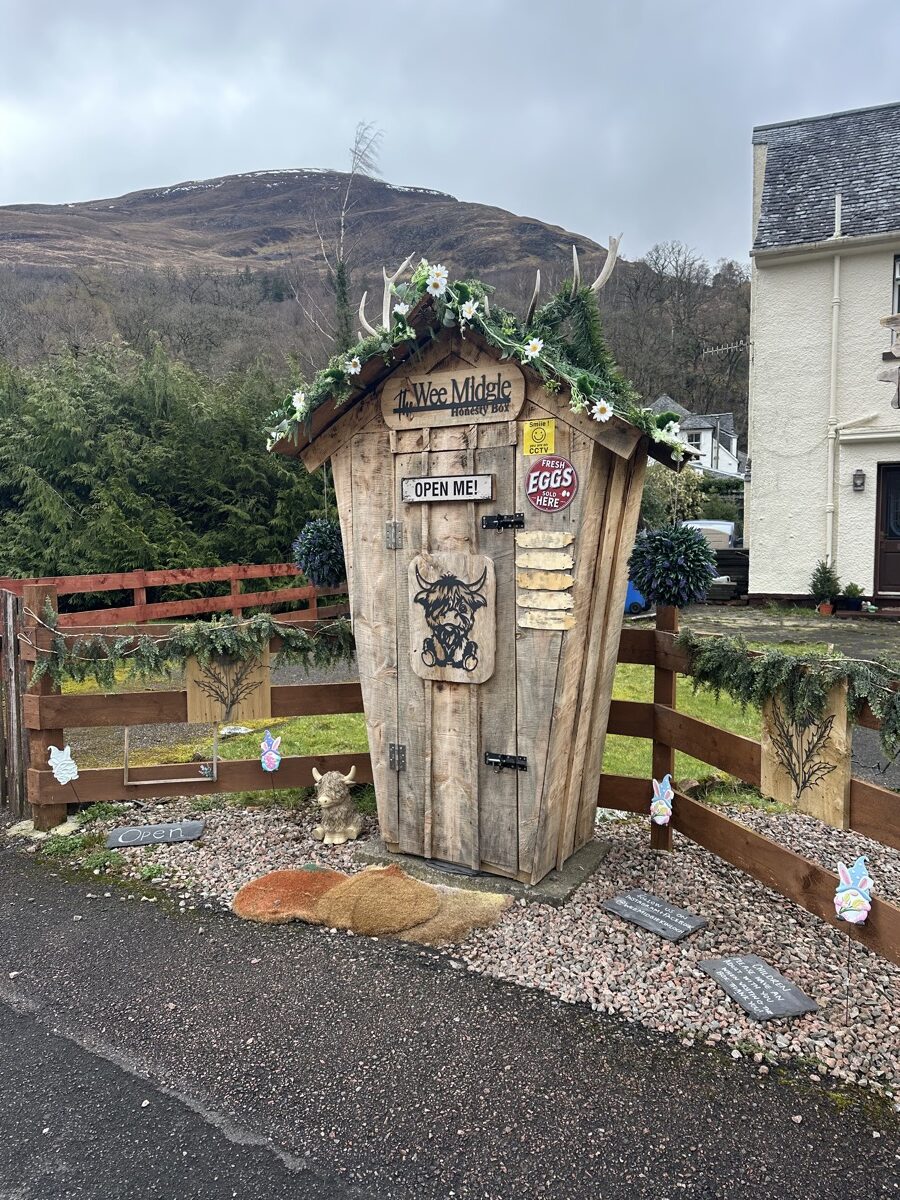
West Highland Way Trail Map
Tips
Drinking Water
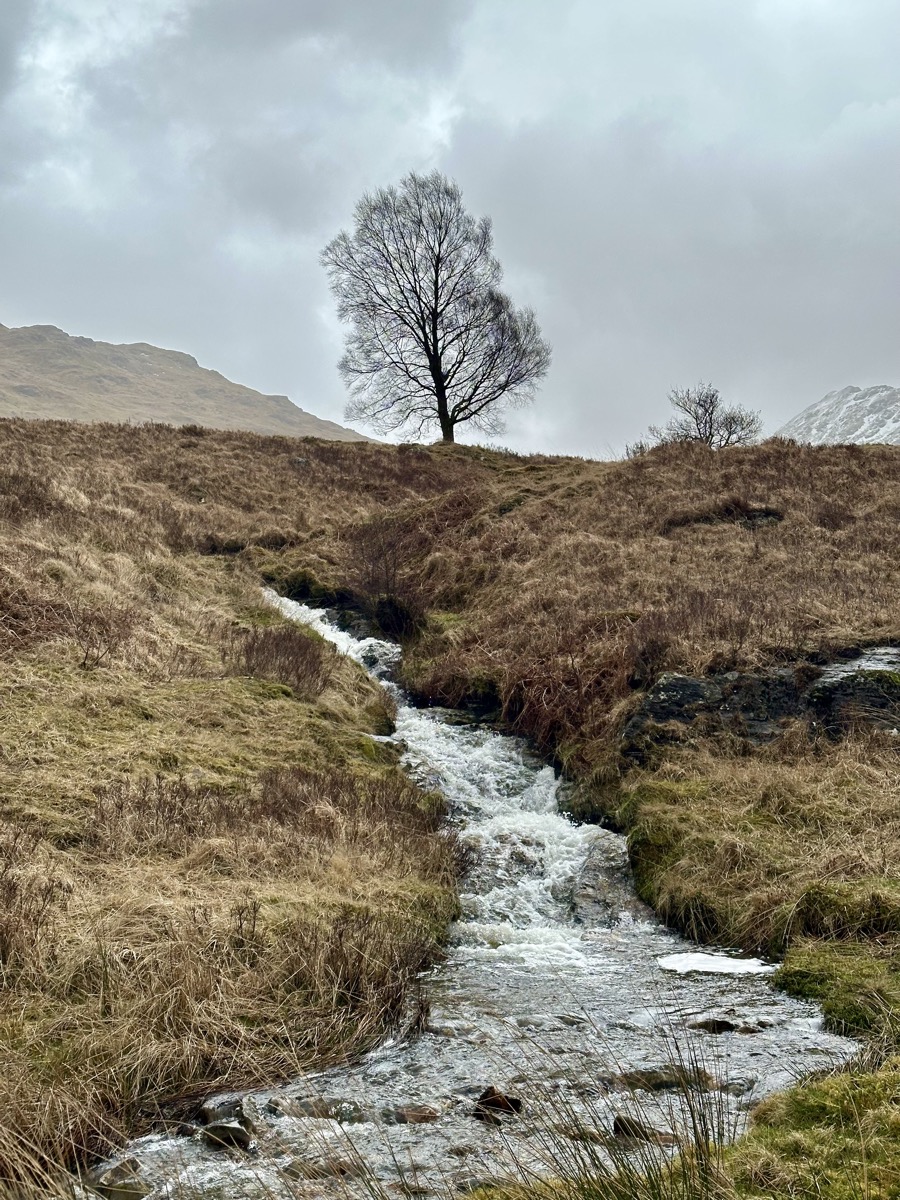
Water is never a concern on the West Highland Way. The route passes countless natural sources including streams, rivers, and lochs. Most inns, shops or campsites along the way have taps available to fill up. I never carried more than 1 liter of water during my entire trip. For wild camping, a lightweight filter is worth carrying, particularly for natural sources. The Sawyer Squeeze and the Platypus QuickDraw are both my top choices as they are effective, easy to use and very lightweight.
Resupply
The West Highland Way has enough supply points that you can get by without relying on restaurants or hotel dining at all. Here is how I would plan it:
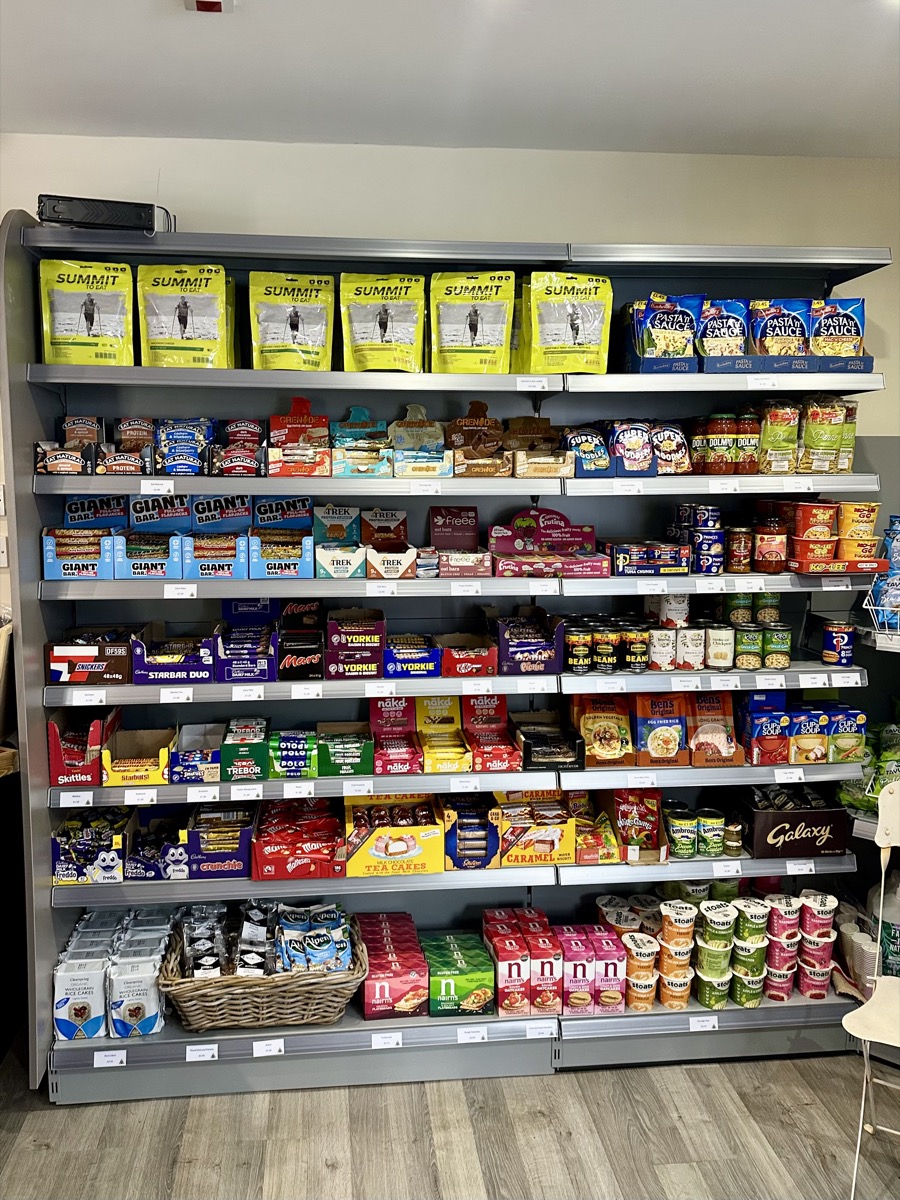
Stock up for the first two days at the Tesco in Milngavie before you set off. From there, the shop in Balmaha and the Beinglas Farm shop are good spots to top up as you pass through. At Tyndrum, the Green Welly Stop is well stocked and a natural resupply point for the next two days. The Co-op in Kinlochleven can cover your final stretch into Fort William.
Fuel Canisters
There are multiple places along the way to pick up fuel canisters. I forgot to pick one up in Milngavie as I was too excited to start but managed to get one from the shop in Balmaha. At most campgrounds, you can also purchase one although the price can be pretty outrageous in more isolated areas.
Cash
I started the hike with no cash and found it completely fine. I did pick up £40 from the ATM at the Green Welly’s Stop in Tyndrum. That proved to be unnecessary. You may want to bring a small amount, but credit cards are accepted at most places with the exception of some of the Honesty Boxes. There you can often pay by mobile phone.
Phone Service ESim
When I travel I use Jetpac to stay connected. Their data plans start at $15 for 30 days of coverage, which is significantly cheaper than most carrier roaming rates. Note that if you have a carrier locked phone you will not be able to use a eSIM from Jetpac.
Weather App
Before you go, bookmark the Met Office page or download the app for the best weather forecast. It is the most reliable source for Scottish weather and covers the entire WHW route in detail.
West Highland Way Wild Camping Trip Report
Day 1: Milngavie to Drymen Area Wild Campsite
Distance: 25.5km | 15.8mi | Time: 7h
End point: Km 25.5 | Mi 15.8
Getting to the Start
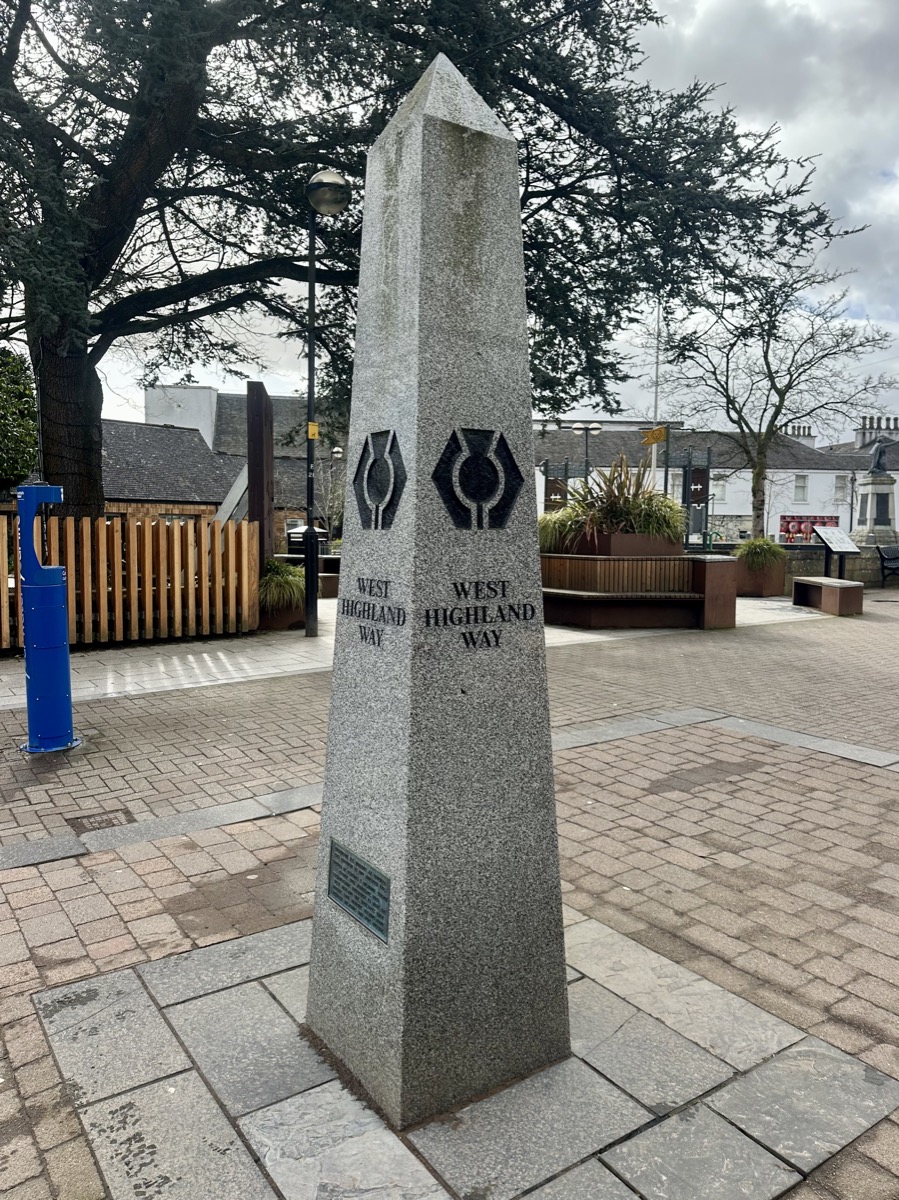
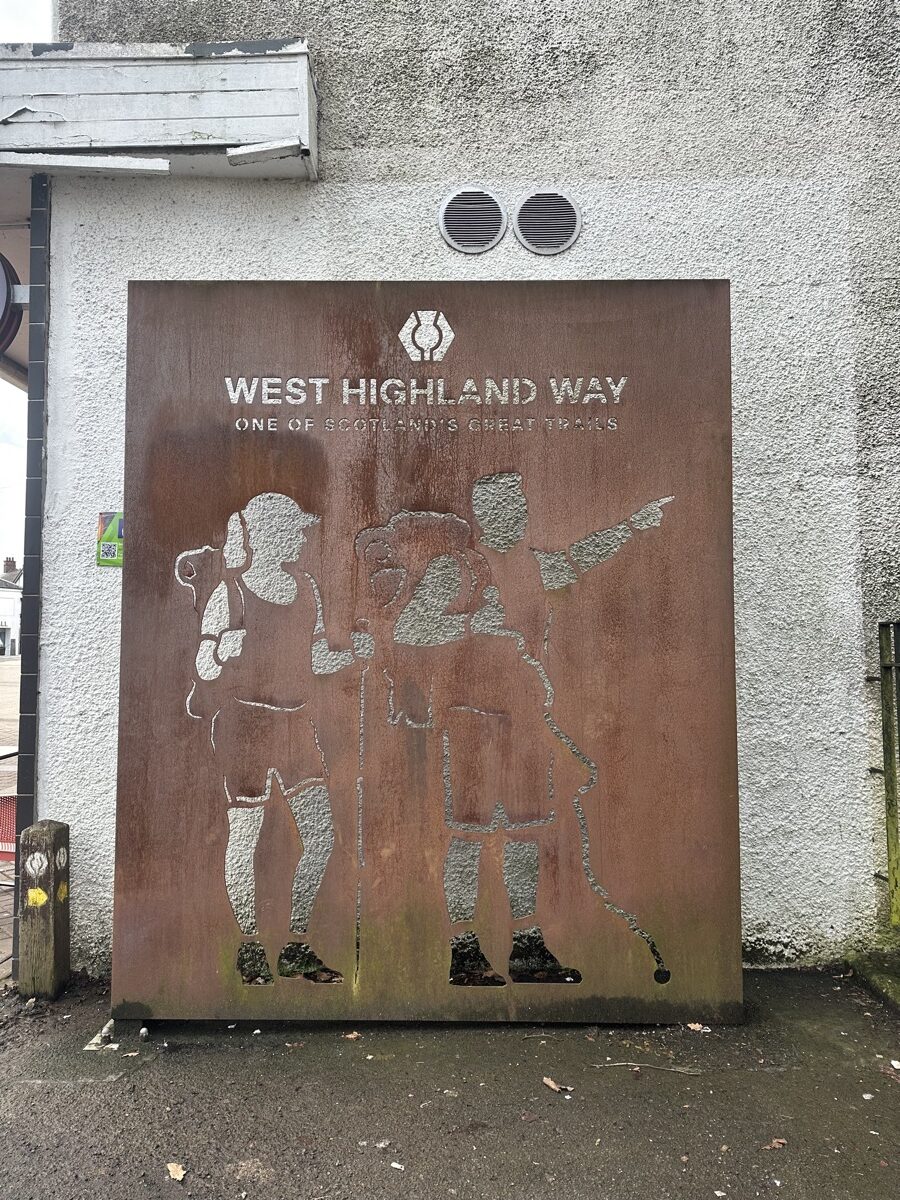
Getting to the beginning of the West Highland Way turned out to be incredibly convenient. I flew into Glasgow, hopped on a bus to Queen Street Station, and then transferred to a train that took me directly to Milngavie. Eager to begin, I hadn’t really considered the places to stop in Milngavie before setting off. At the station, I grabbed a coffee, but two minutes later I regretted it as I passed by the Honey Bee Bakery. It was on my list of must stops, so I picked up a scone and started walking towards the official start of the West Highland Way.
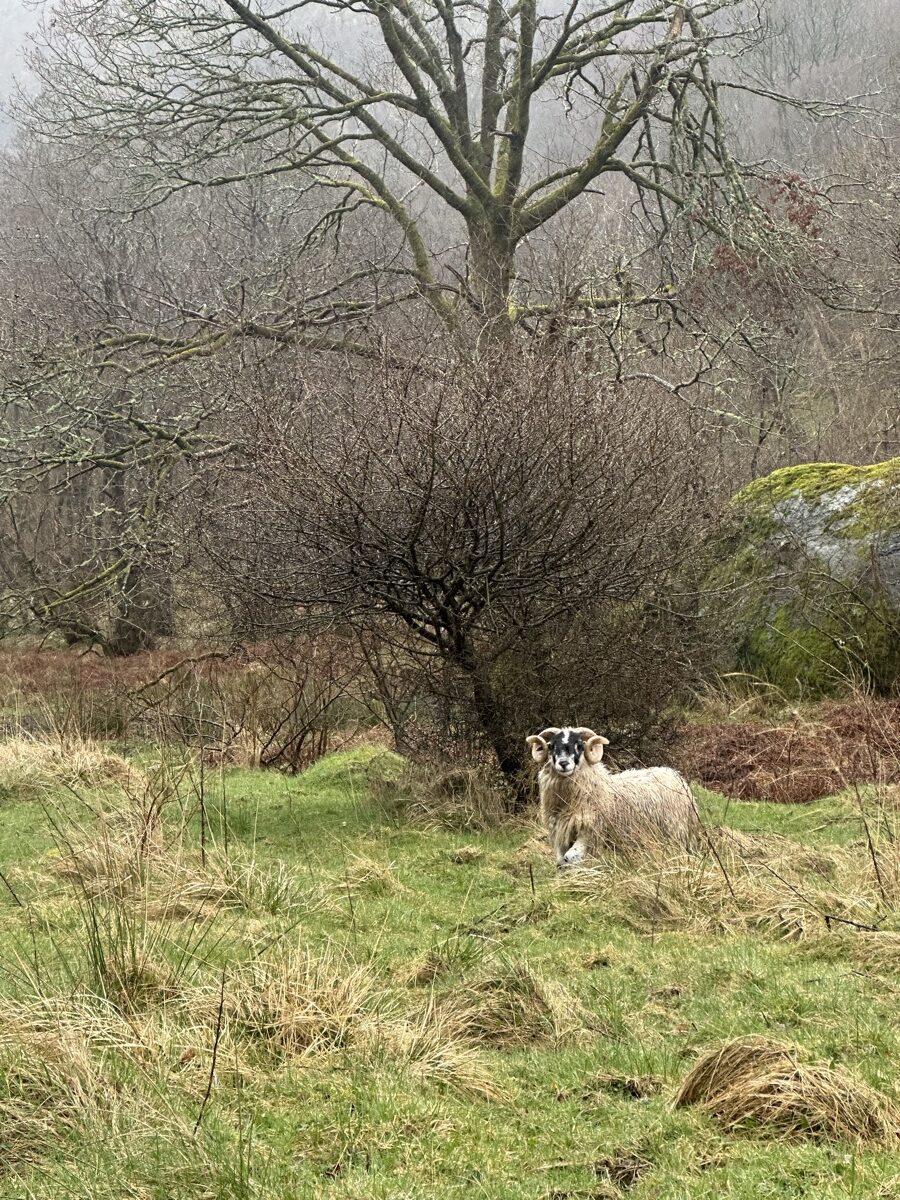
Milngavie is a quiet little town, and the trail gradually eases you out of it. For the first stretch it felt more like a city park than a highland trail. Locals jogged, dogs roamed freely, and flat gravel paths lined the way. Pleasant and easy. The further out of town I ventured the more the landscape opened up, sheep grazing on the hillsides as the suburbs fell away behind me.
Scottish Weather Arrives
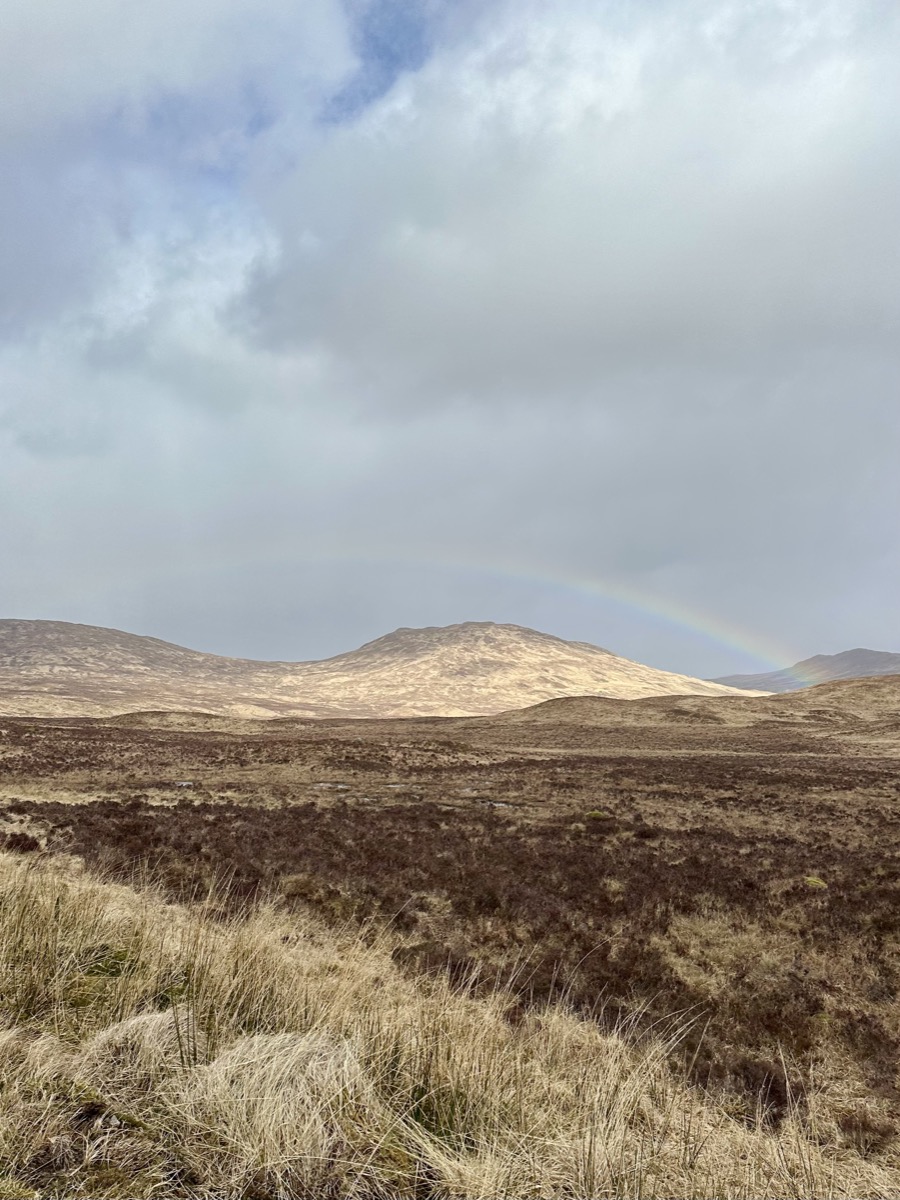
The day began with full sun and warm weather, warm enough that I ditched my puffy jacket. I should have savored the moment. A rainbow appeared straight ahead, thick clouds rolled in fast, and a cold wind picked up. Within an hour it was sleet, and then a cold hard downpour. Everything soaked.
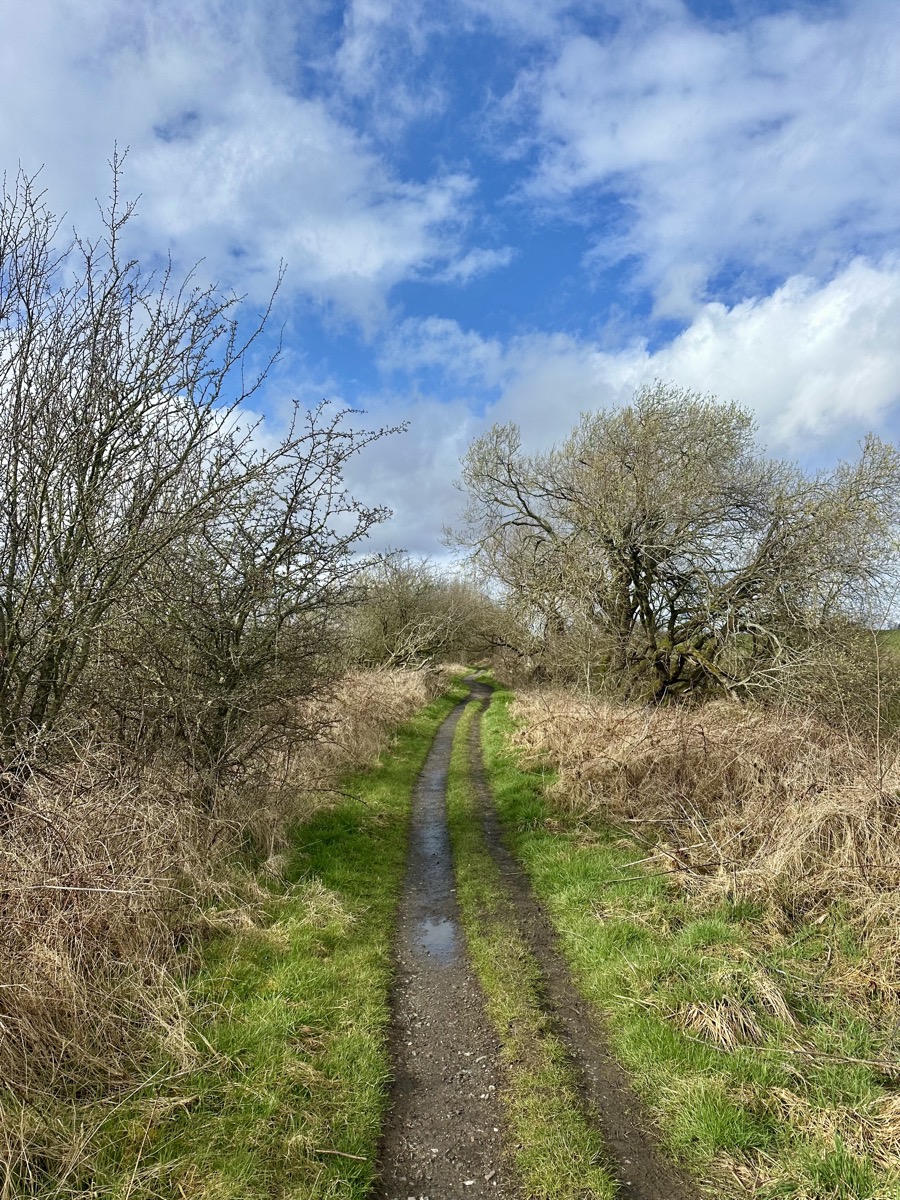
The trail itself was mostly a gravel road for this section, flat and easy underfoot. The challenge was the mud. The saving grace was that despite the conditions, the walking itself was never difficult.
Turnip the Beet
For lunch I stopped at Turnip the Beet, which turned out to be a real highlight of the day. The staff was friendly and welcoming, the atmosphere cozy: part country store, part dining room. I had a brie naan sandwich and took a brownie and a kombucha to go. Highly recommend stopping here.
It was also at lunch that I realized I had forgotten to pick up a fuel canister in Milngavie. Turnip the Beet didn’t stock them either. The plan shifted to finding one further up the trail in Balmaha the next morning.
Finding Camp
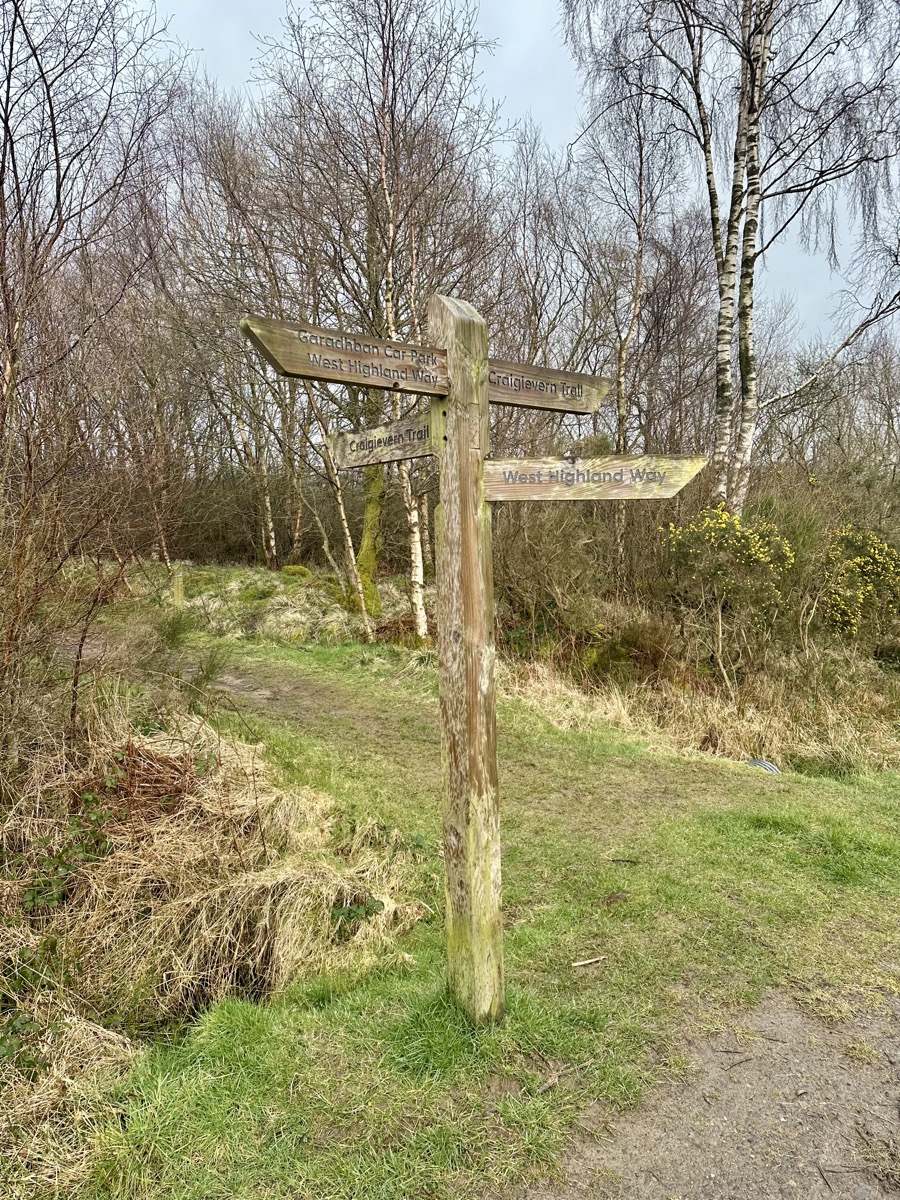
My plan was to make camp before climbing Conic Hill. After leaving the road and turning left into the trees, I found a secluded and well protected wooded spot. It was a bit too early to stop so I kept moving, though by this point I was tired and none of the upcoming campsites on the map looked particularly appealing.
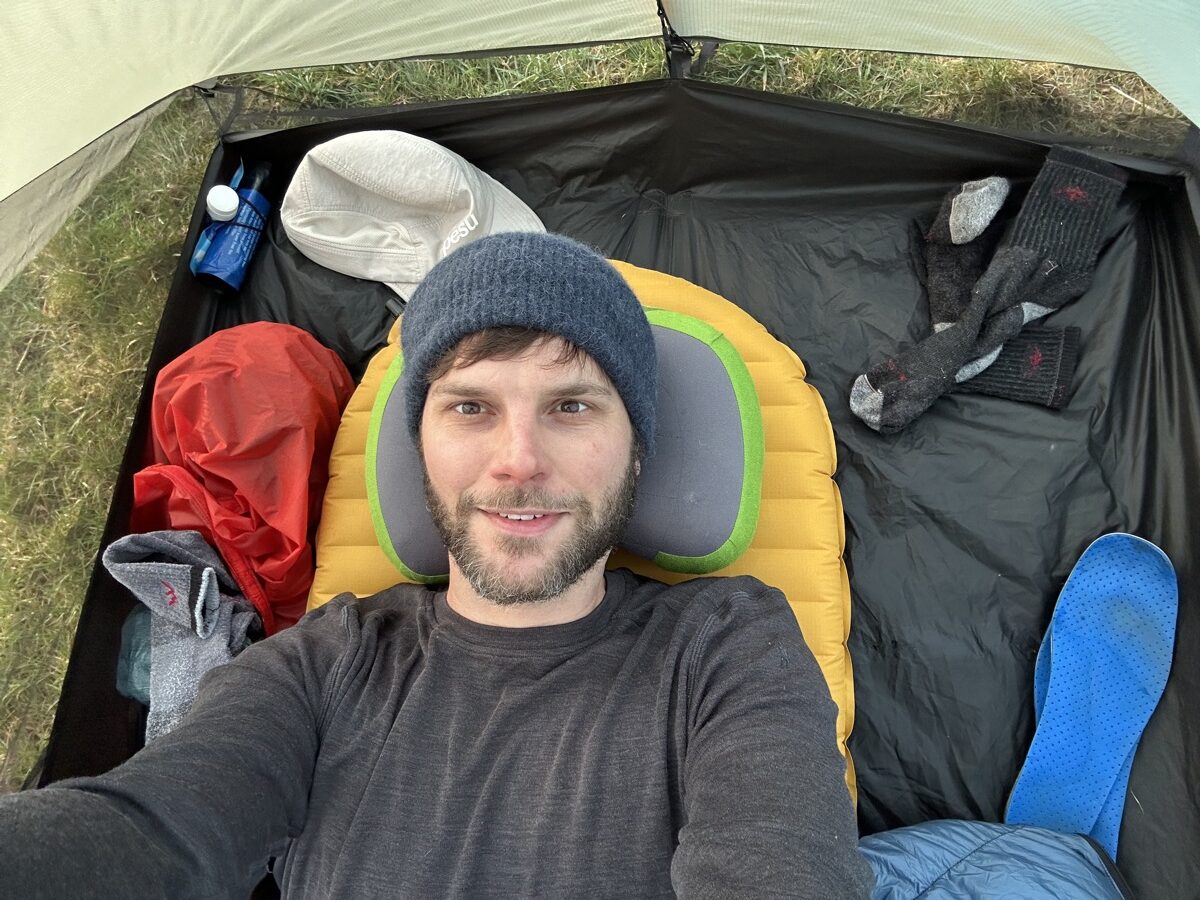
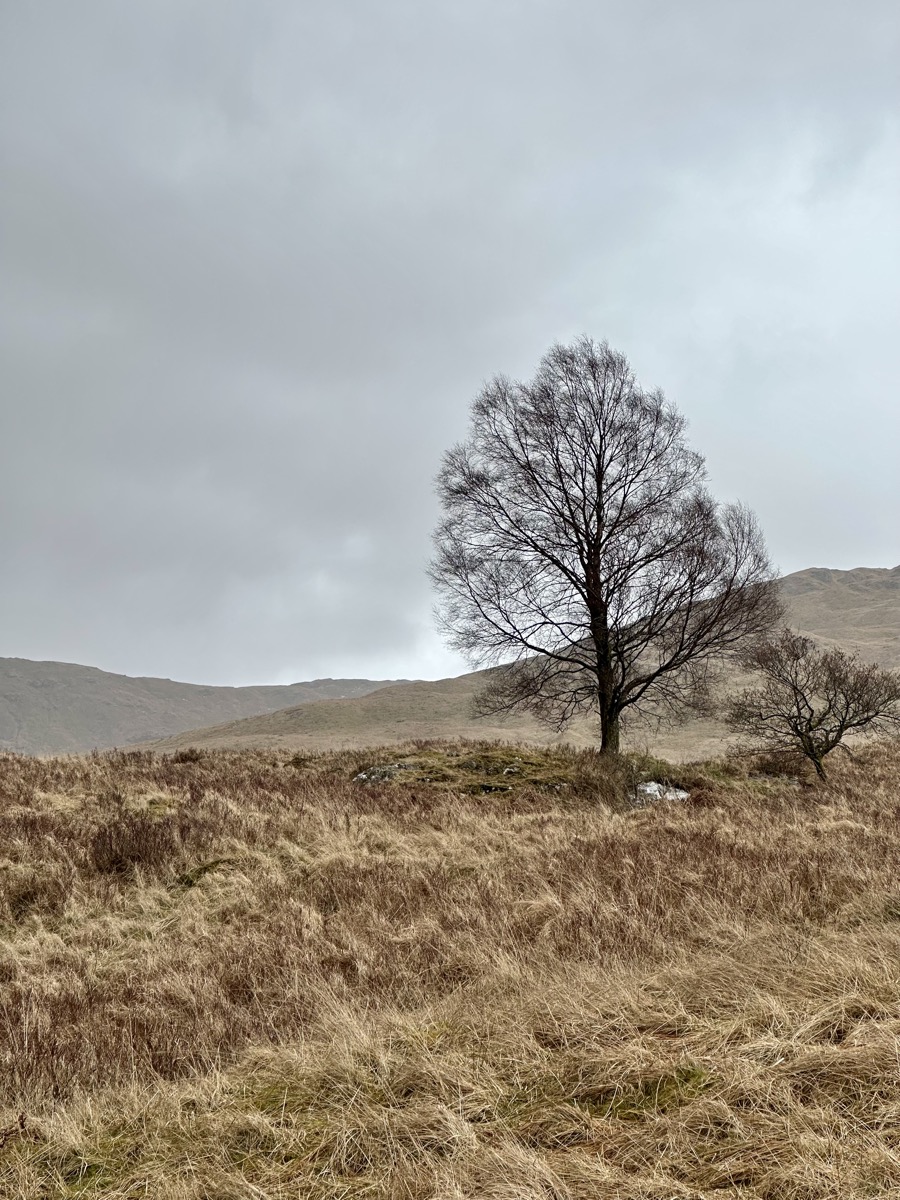
I pushed on a little further until I found a grassy patch about 20 meters off the trail with a view out over the loch. That was camp for the night. I set up quickly, got into my sleeping bag, and called it a day. Between the travel and the hiking, it had been a long one.
Day 2: Drymen Area Wild Campsite to Inversnaid Hotel Wild Campsite
Distance: 30.5km | 18.9mi | Time: 12hr
End point: Km 56 | Mi 34.8
A Stormy Night and Early Start
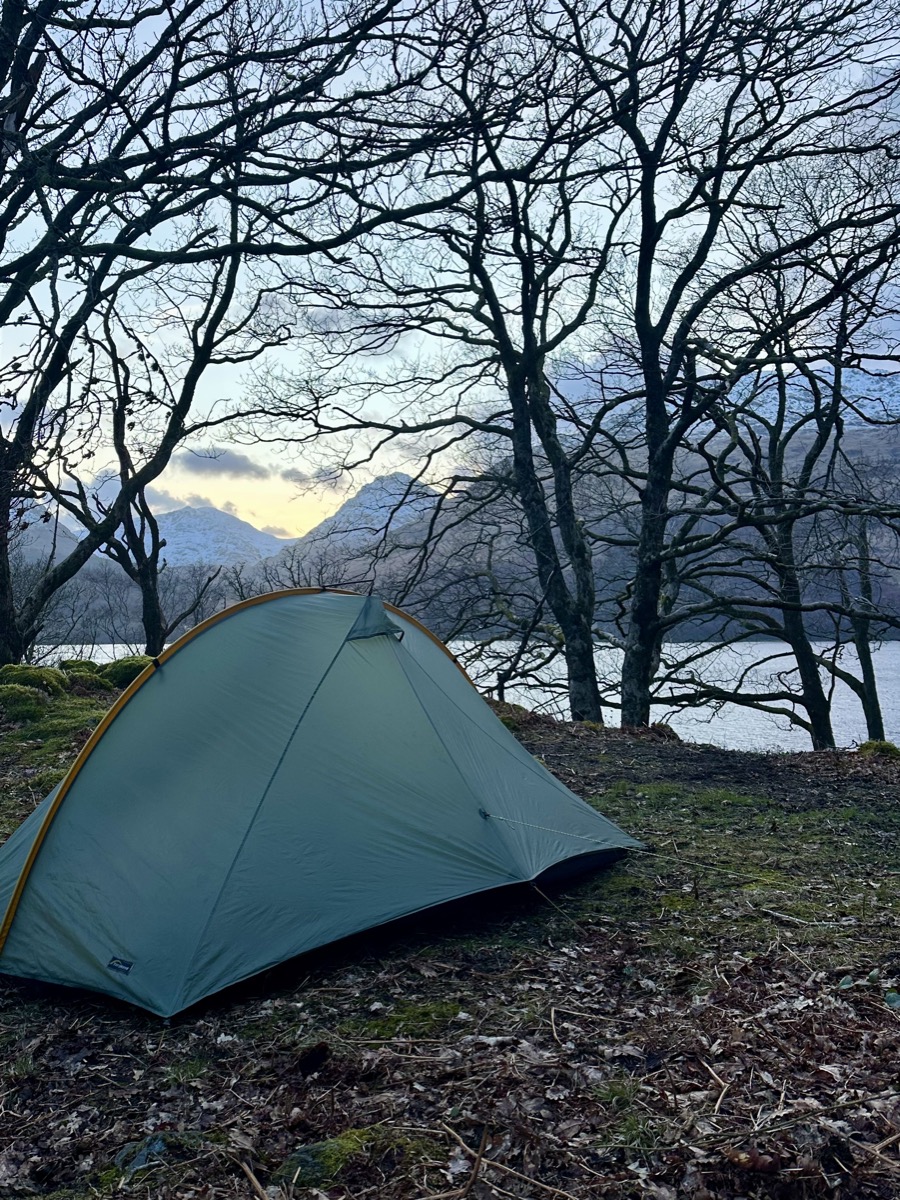
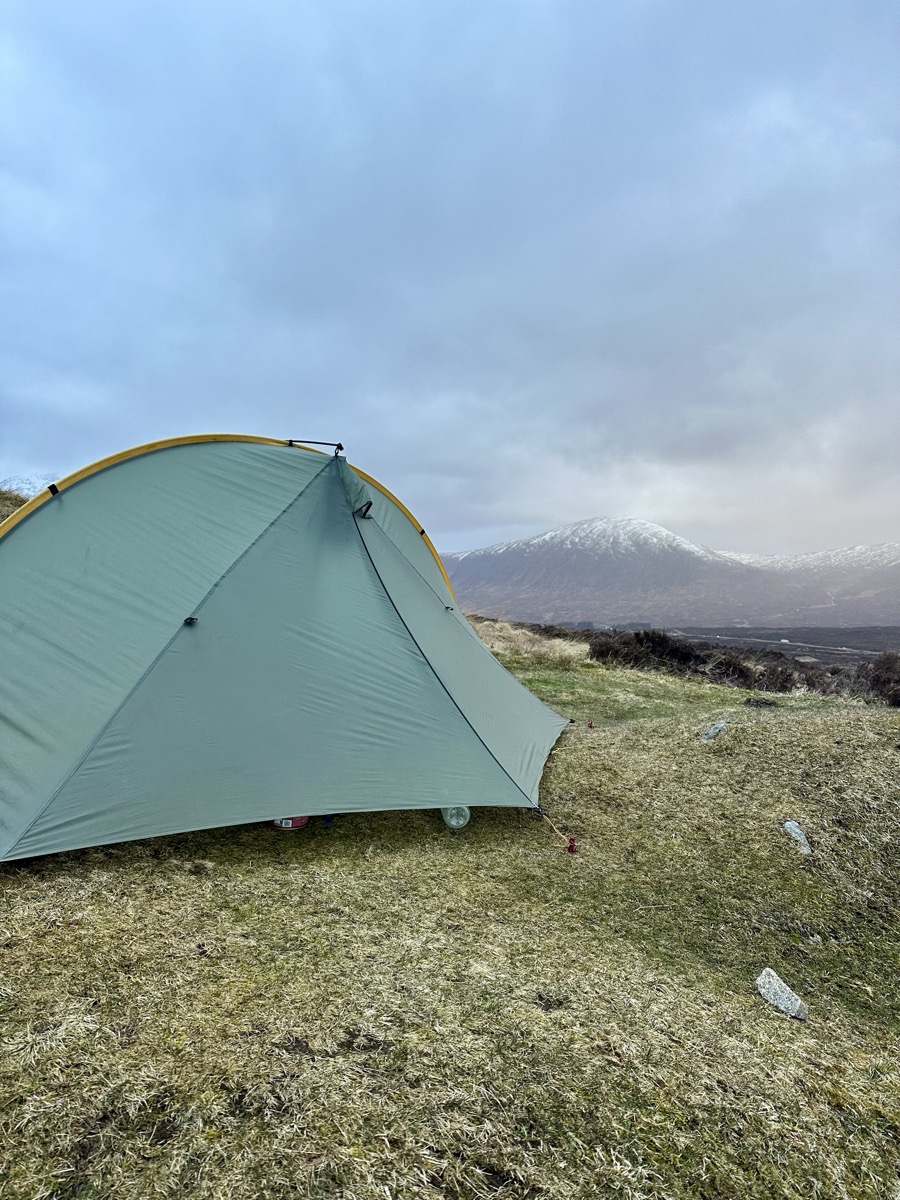
Throughout the night, storms rolled in and out almost like clockwork. Every hour or so the wind picked up, then rain, then sleet, followed by a period of calm. The Tarptent Rainbow handled it without any issues, but I was glad I had picked up a set of MSR Ground Hog stakes before the trip. They are a bit longer than standard stakes and grabbed the soft soil well. I checked the radar during a calm window and decided to pack up before the next storm moved in. I’d rather walk in the rain than pack up in it.
Conic Hill
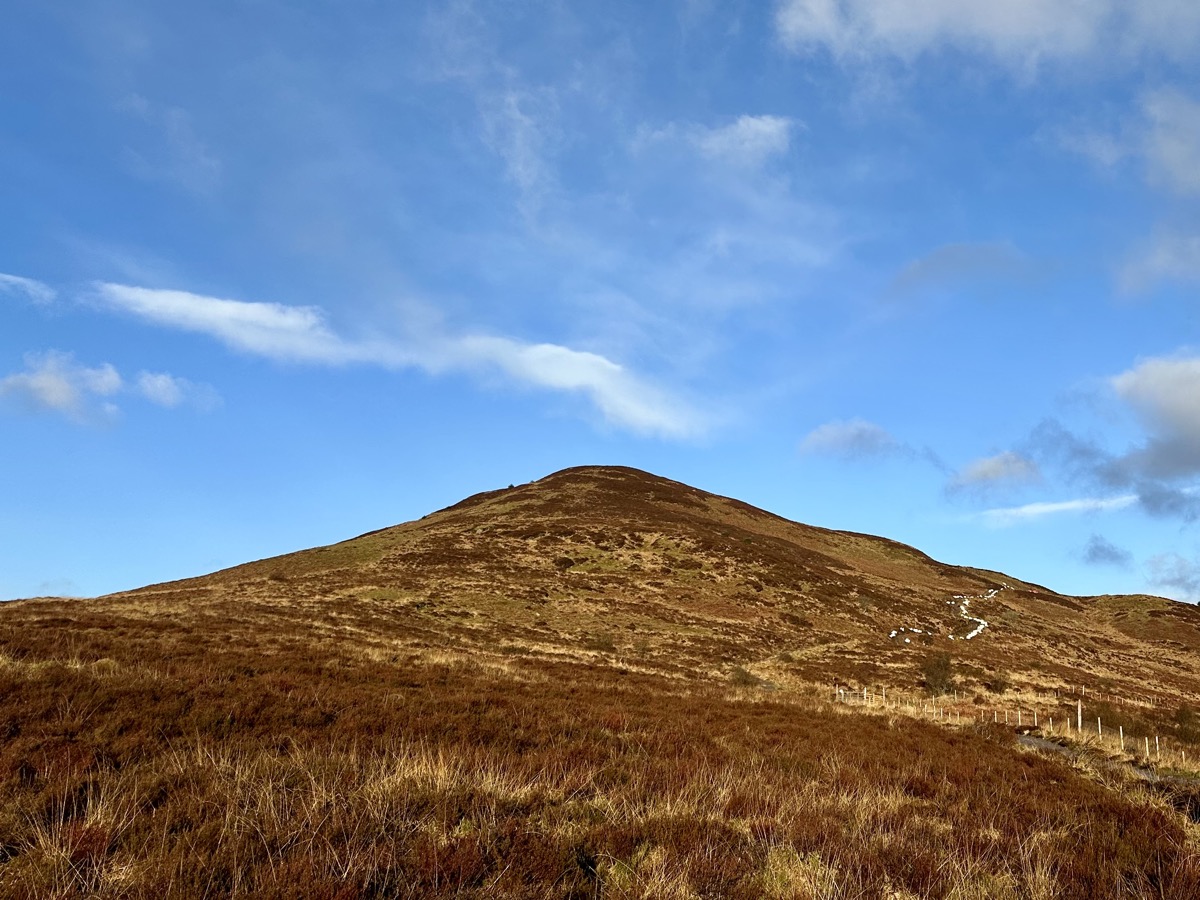
Back on trail I passed two bridged creeks, both with nicer campsites than where I had spent the night, tucked out of the wind. I filed that away for next time. I approached Conic Hill with the sun rising behind me and grey clouds ahead. The climb was short and well engineered, with a nicely built stone path leading to the summit junction. I took the short detour to the top.
As I made it up, the wind picked up hard and I could feel another storm coming. Sleet and sideways snow followed. I put my arms out like wings and just laughed. It was one of those moments where you feel completely alive and slightly ridiculous at the same time. The descent was a long run of stone steps, steeper and further down than I expected. A test of the knees but manageable.
Balmaha and the Oak Tree Inn
In Balmaha I headed straight to the little shop. The guy inside was friendly and chatty, and when I asked about the weather he told me it was going to be dry. I learned that day that dry means something very different to a Scotsman. He stocked fuel, which solved my problem from the day before. He also pointed me toward the Oak Tree Inn across the way, mentioning they were serving breakfast and I could stop in even as a non-guest.
Still hungry from skipping dinner the night before, I ate an enormous breakfast. It was a buffet and I made sure to get my money’s worth: eggs, sausage, meat, Greek yogurt, two coffees, orange juice. Probably two thousand calories. Afterwards I spread my gear out on the picnic tables across the street to dry and set off again feeling like a new person.
Walking Loch Lomond
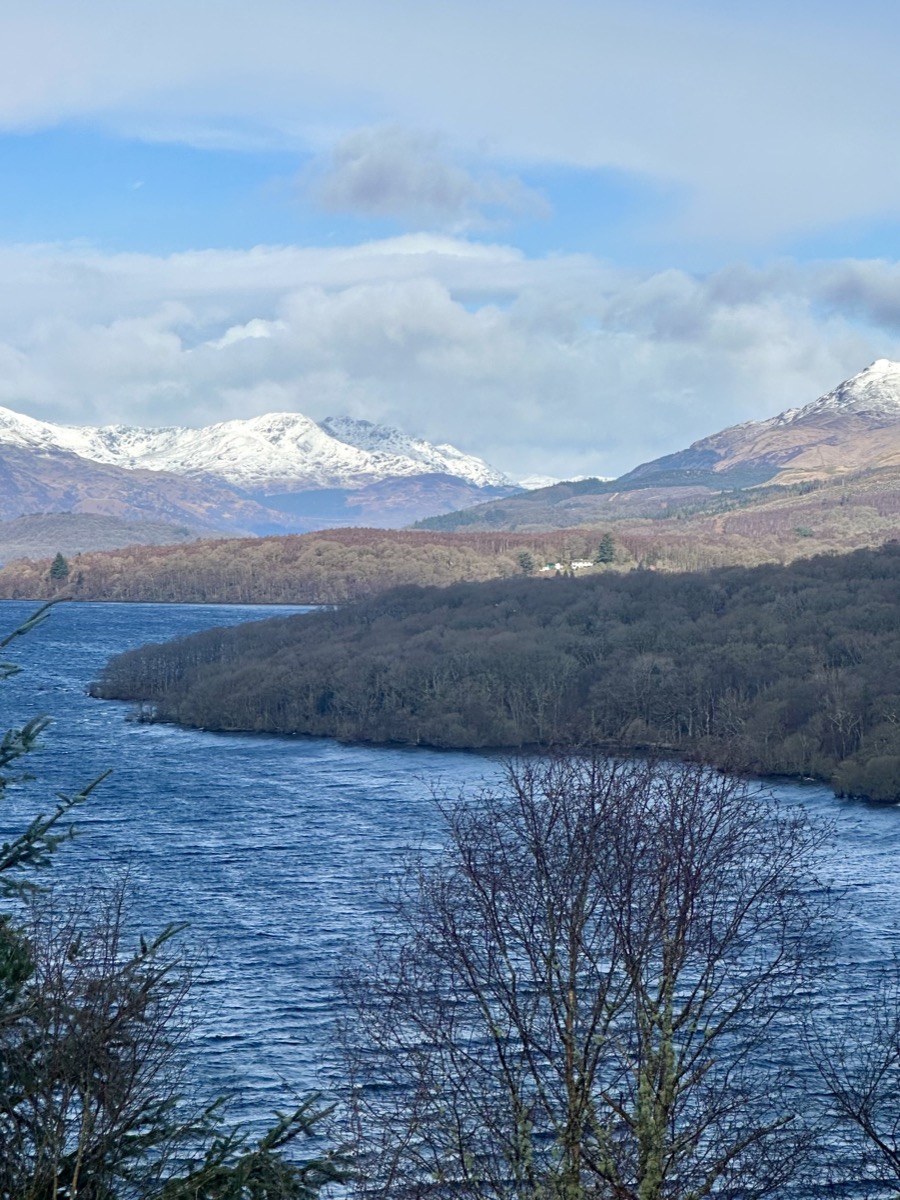
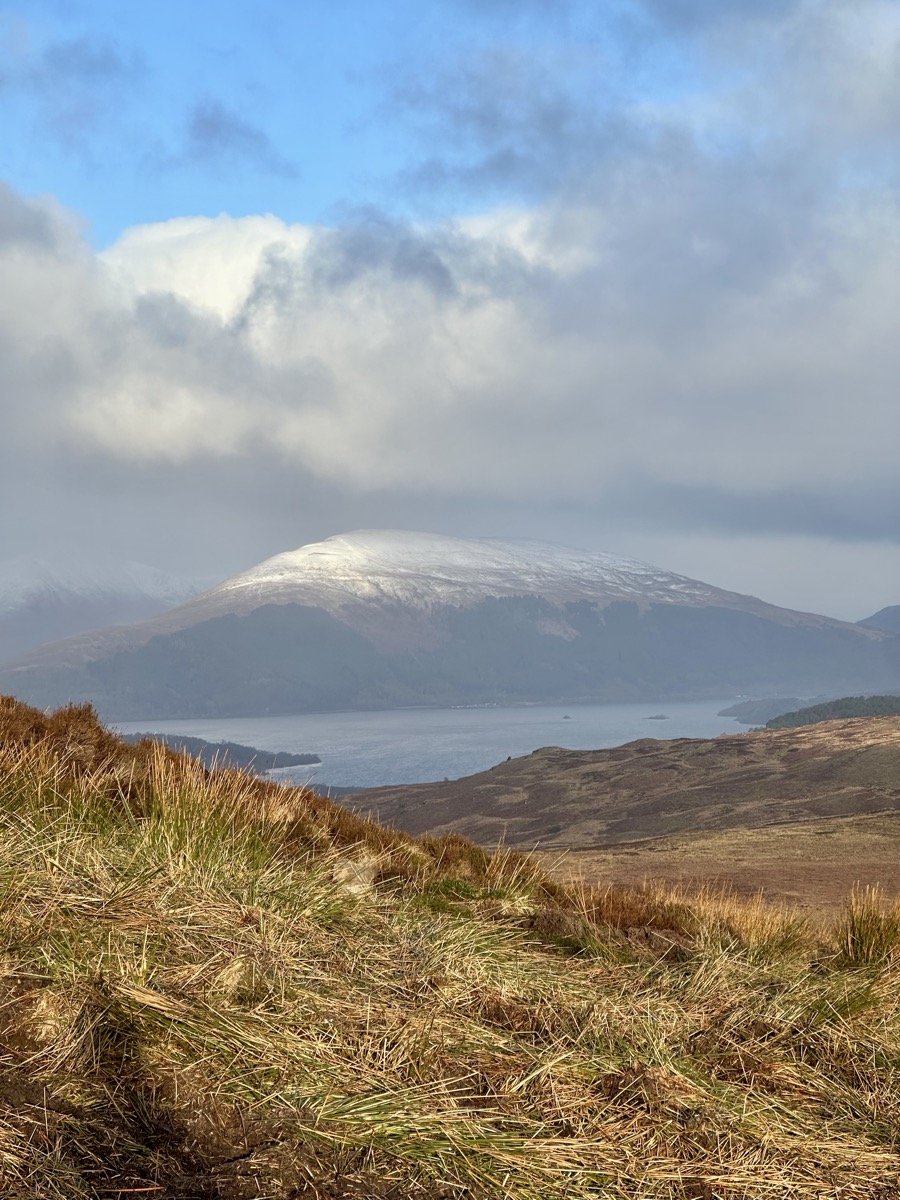
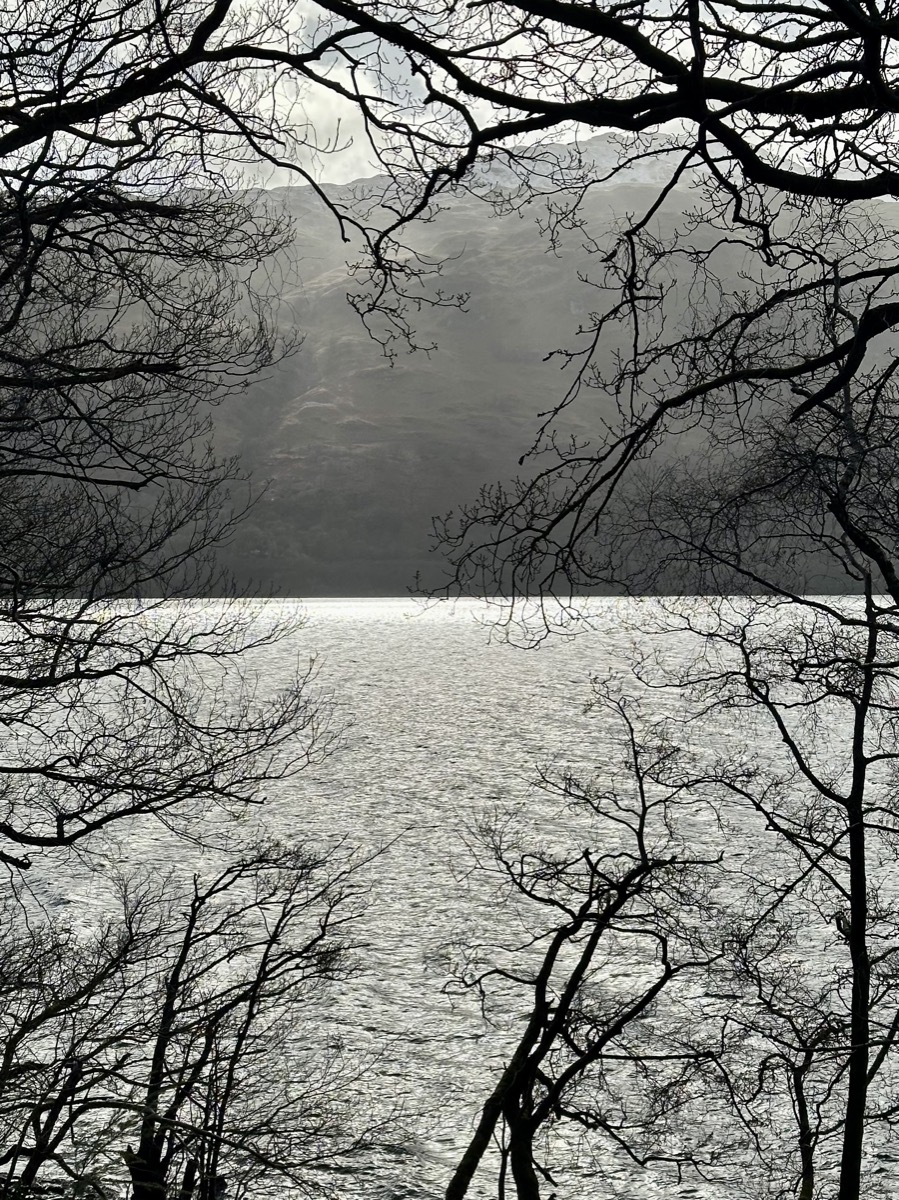
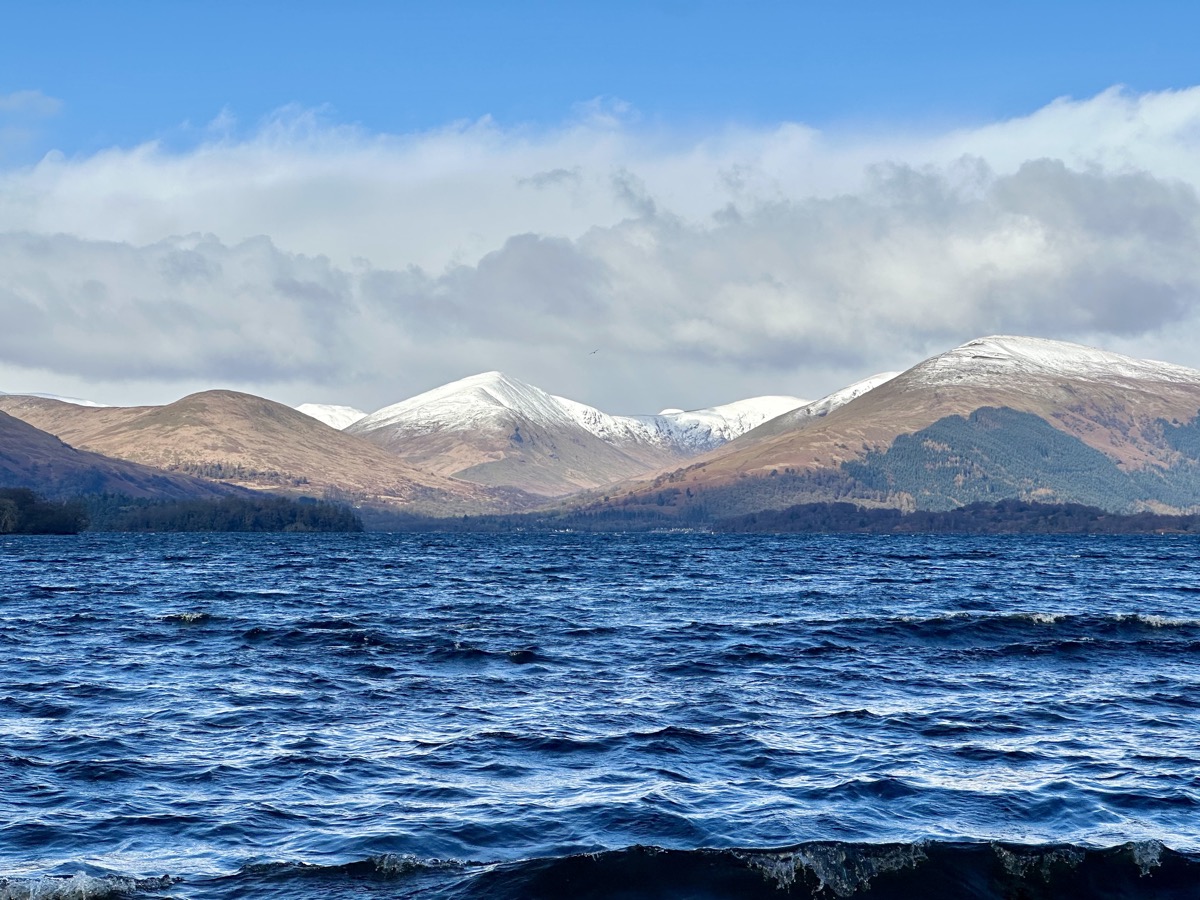
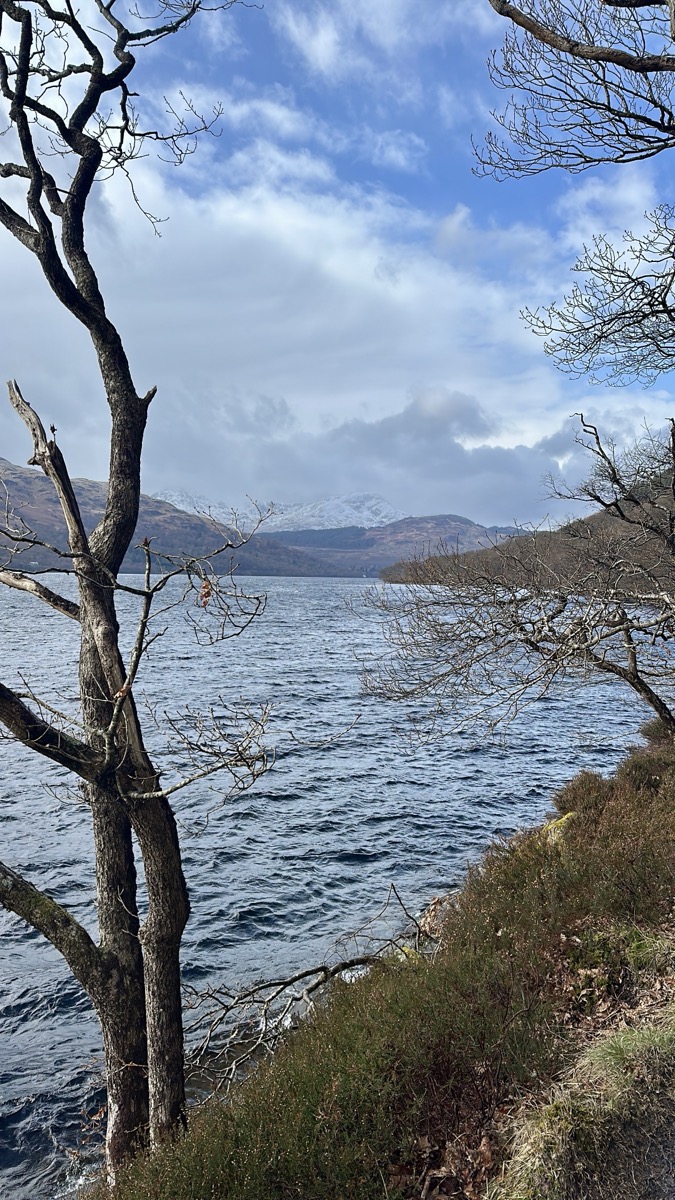
The loch is stunning. Whitecaps running across the water in the wind, snow still sitting on the Munros in the distance. The weather ran through its full repertoire about five or six times that day. Rain, sleet, wind, then ten minutes later full sun and everything starting to dry out, then repeat. You just get used to it and keep moving.
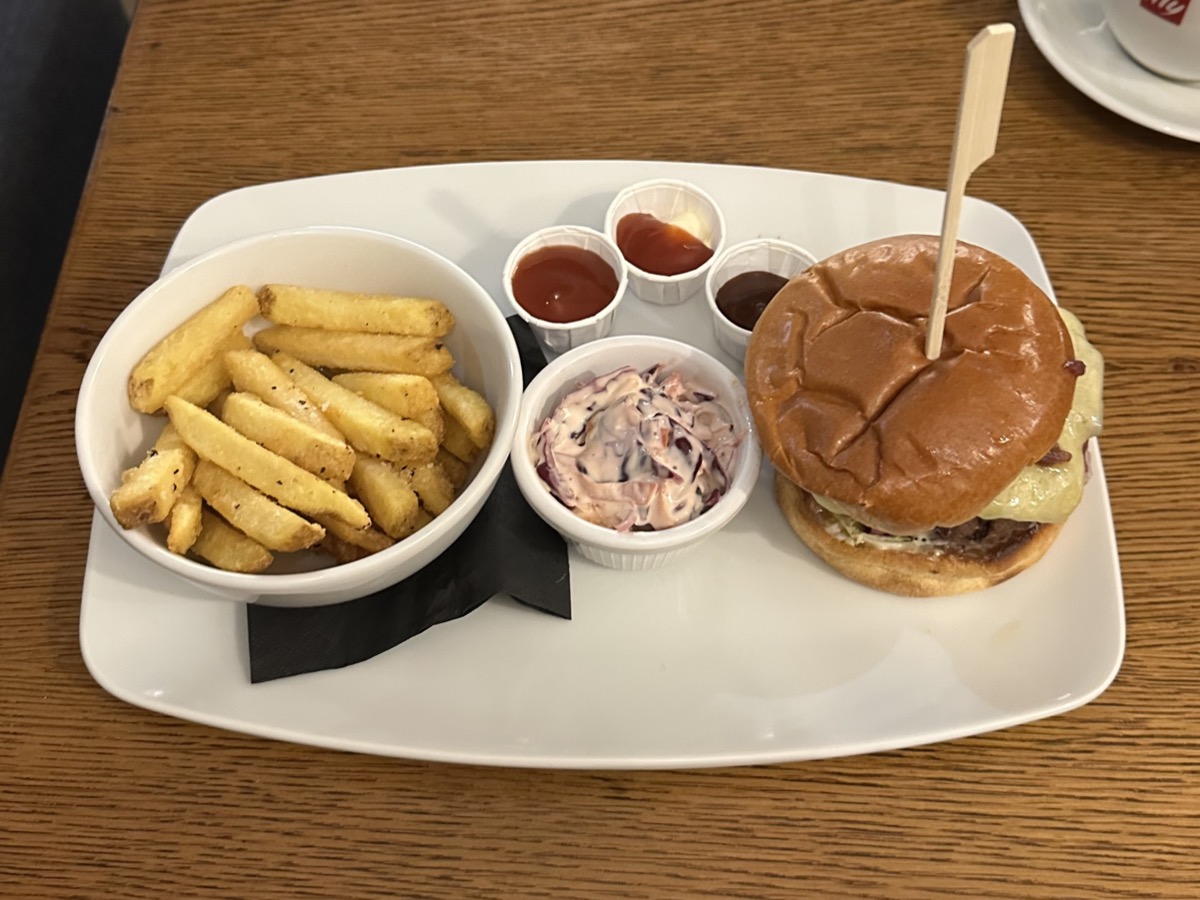
In Rowardennan I stopped at the Clansman Bar for a burger and fries mid afternoon. My plan for this trip was to carry as little food as possible and rely on stops along the way. As long as I stayed flexible it worked out well. After lunch I checked out the little shop and pressed on past the loch.
Camp at Inversnaid
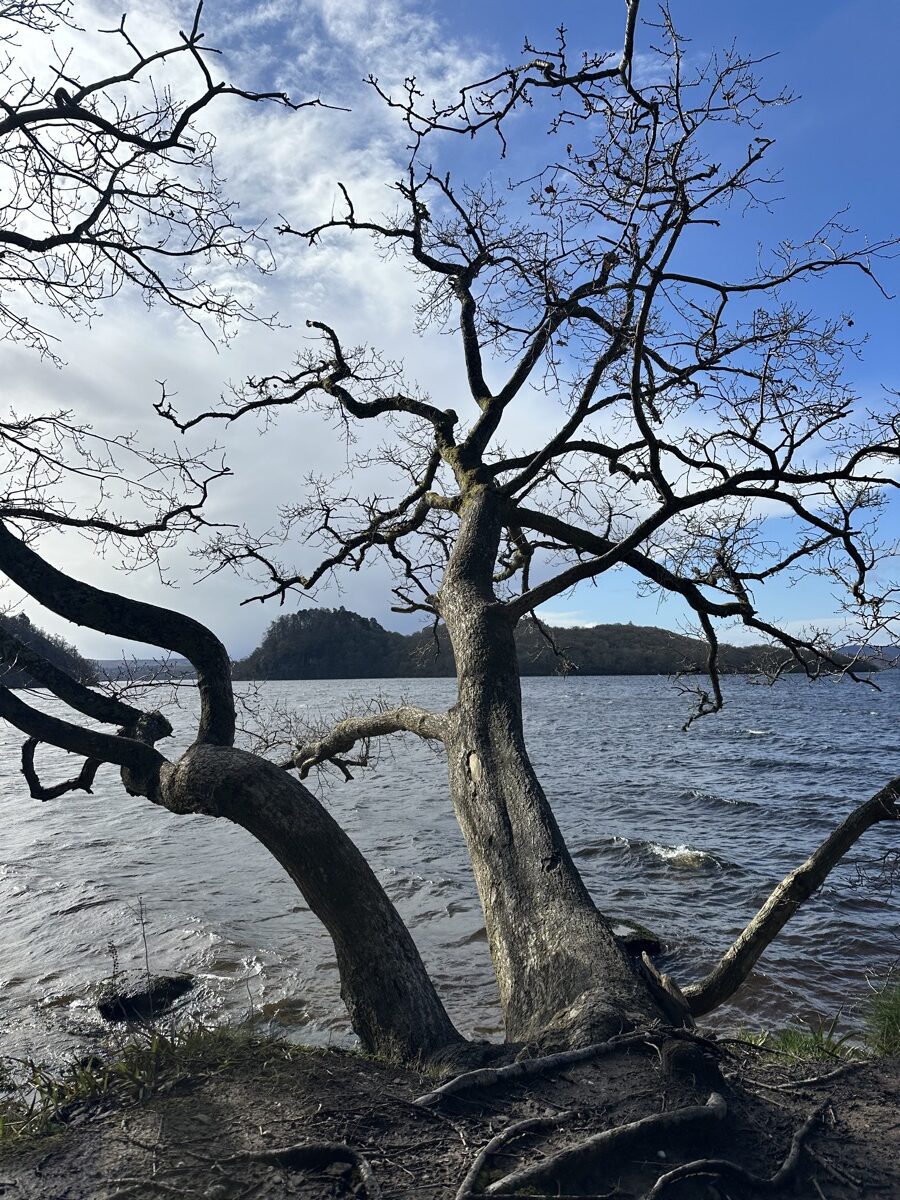
Later in the afternoon I reached the Inversnaid Hotel and made use of the facilities before continuing on. Just past the hotel there were several excellent campsites a few hundred meters down the trail. I took a spot a little higher up and away from the water, trying to stay out of the wind. It was a beautiful campsite. I made some tea, settled in, and slept well.
Day 3: Inversnaid Hotel Wild Campsite to Tyndrum
Distance: 29km | 18mi | Time: 11hr
End point: Km 85 | Mi 52.8
The Upper Loch Lomond Section
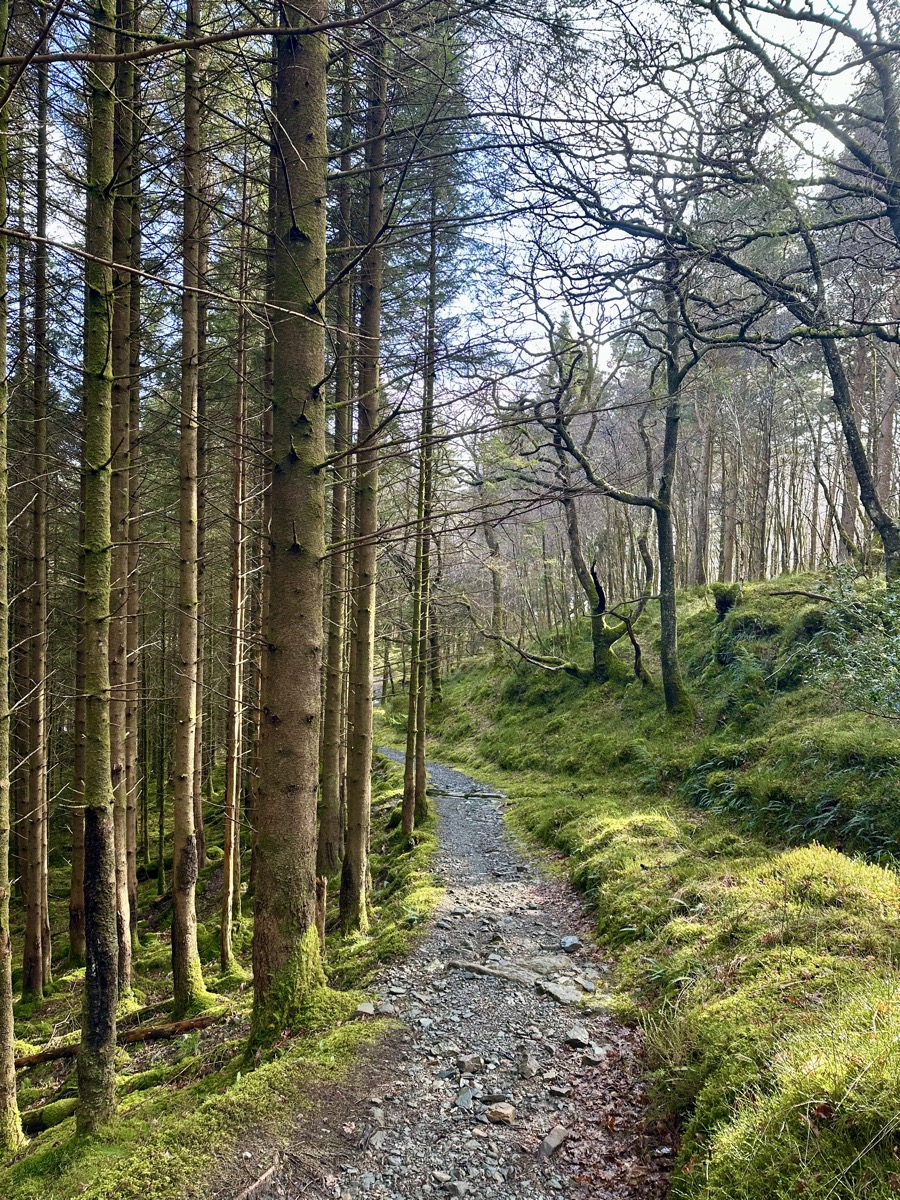
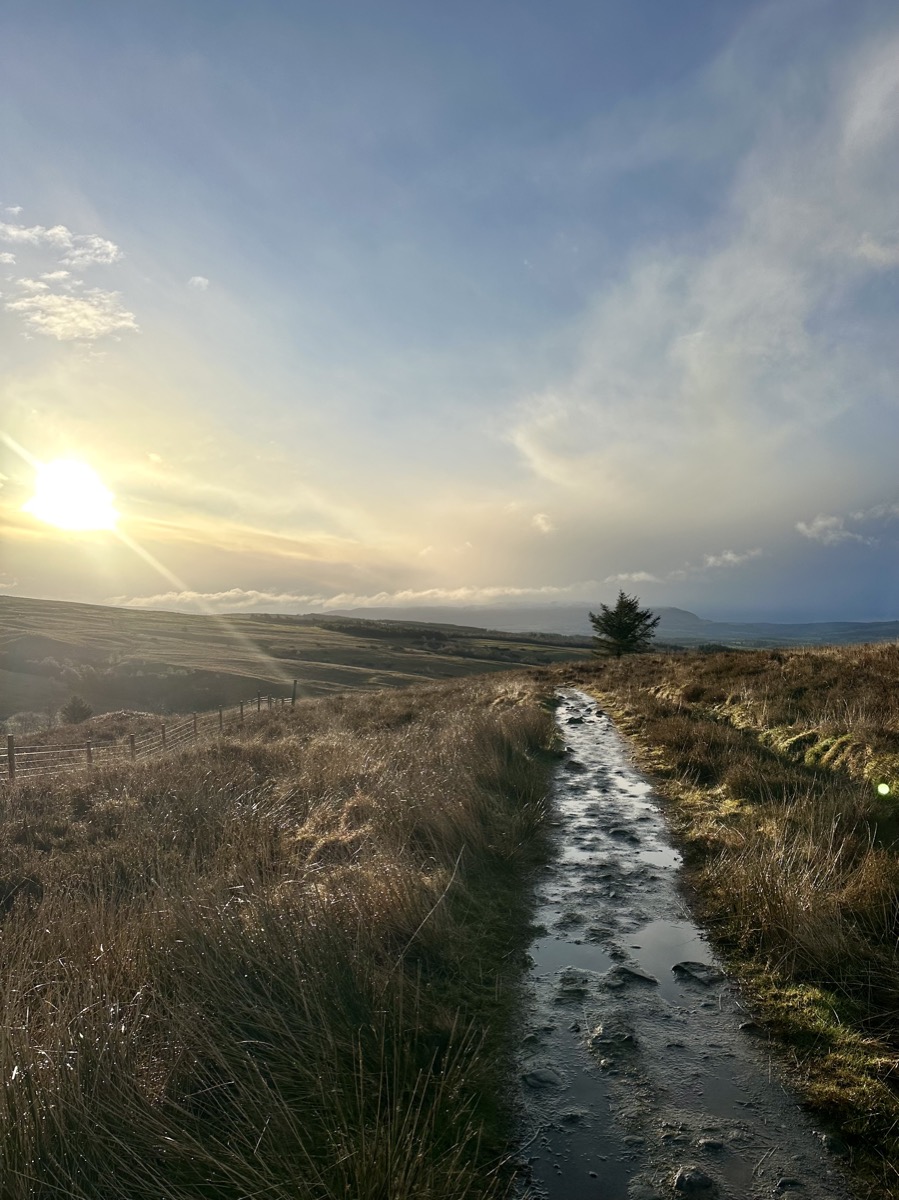
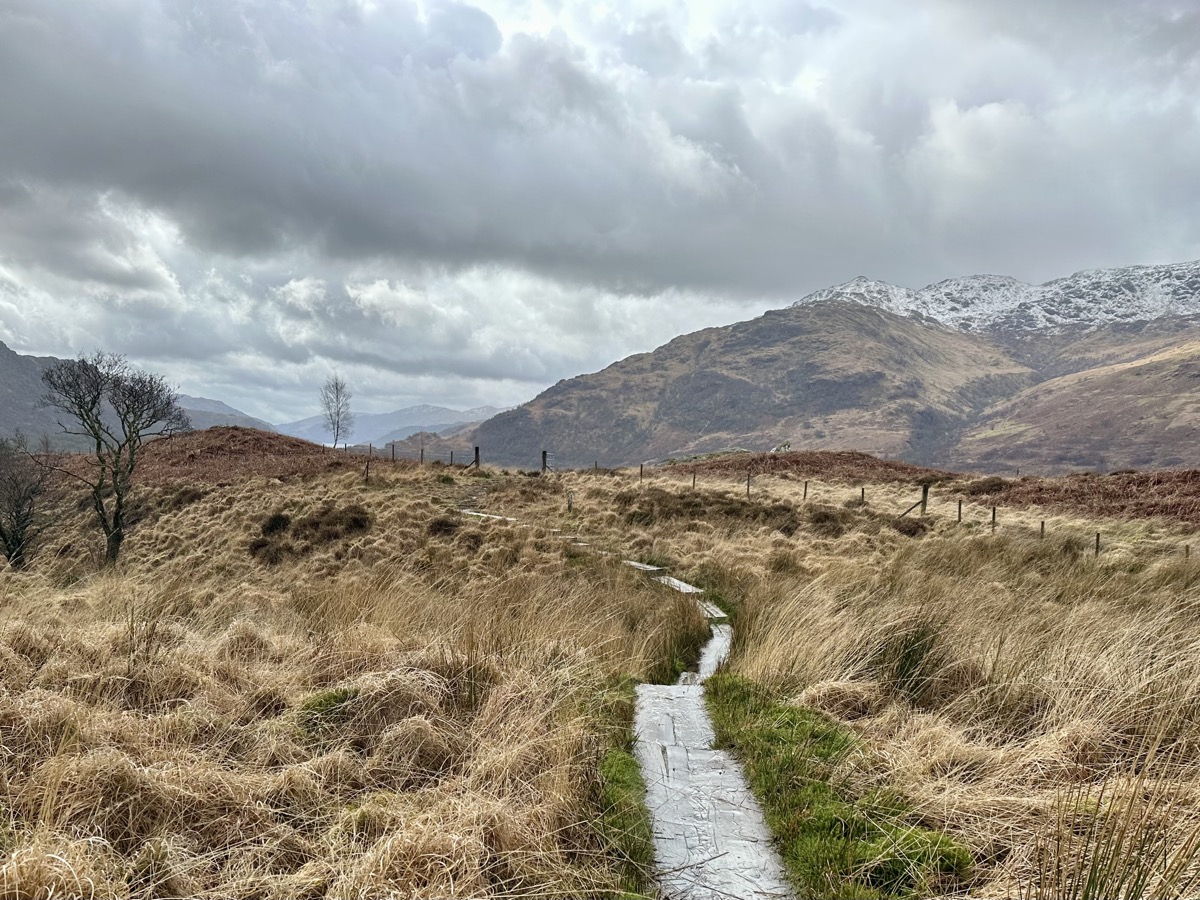
It was a calm night but again the rain was coming. I packed up while still dry and started hiking. This next section has a reputation for its rocks, roots, and boulders. I actually found it an enjoyable hike that reminded me a lot of southern Appalachia. Based on the Facebook groups, others have a much different opinion. In the rain, with the trail running like a stream in places, it did demand a bit more focus than the previous days.
Doune Byre Bothy
I passed the Doune Byre Bothy and stopped in to rest and make a coffee. Five people had slept there the night before and at ten in the morning they were still tucked into their sleeping bags, looking very cozy. I did not blame them. I wished I had pushed on to make it there myself the previous night, but it would have meant a long day and some night hiking. I was already soaked from the morning and the bothy was a welcome break.
Beinglas Farm
The next stop was Beinglas Farm Campsite, which is genuinely one of the nicest spots on the entire route. The shop had everything I needed: dehydrated meals, bars, drinks, and fuel. I had lunch there, a venison burger harvested right from the estate, dried out as best I could, and let my feet air out. I could have easily spent a night here. But it was only noon and I needed to keep moving.
The Push to Tyndrum
From Beinglas it was a long push to Tyndrum through some of the worst conditions of the trip. Just above freezing, heavy rain almost the entire way, with giant puddles spread across the forest road every few hundred meters. In good weather this would be a relatively easy section. With the amount of rain it had seen, the drainage just could not keep up. I rock hopped around puddles for hours before eventually accepting that I was soaked regardless and just walked straight through everything.
I arrived in Tyndrum cold and done. The server at the Real Food Cafe could tell. She sat me right by the fireplace without me having to ask, which I appreciated more than I can say. I ordered the fish and chips. They were good but perhaps not worth the reputation. Though I’ll admit my mood wasn’t doing the fish and chips any favors.
Hotel Decision
My plan had been to stay at The By The Way Campsite, specifically because they have a drying room and showers. When I arrived I found they were not yet open for the season. There is another campground nearby but at this point the decision was easy. I got a hotel room, dried everything out properly, and woke up the next morning feeling ready again. Sometimes the right call is the comfortable one.
Day 4: Tyndrum to Glencoe Wild Campsite
Distance: 28km | 17.4mi | Time: 9.5hr
End point: Km 113 | Mi 70.2
Tyndrum to Bridge of Orchy
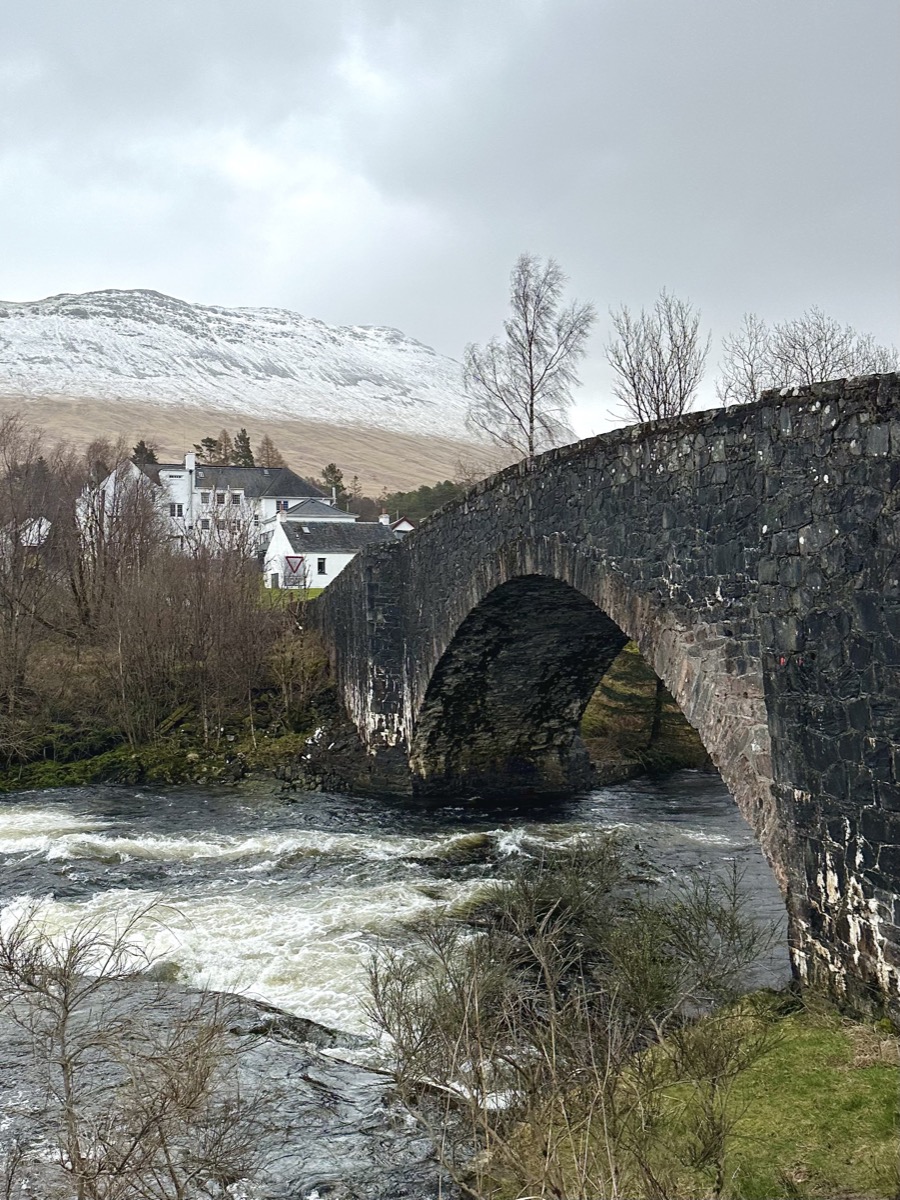
Leaving Tyndrum the trail joins the old military track heading north and it is a completely different feel from the Loch Lomond section. Wide, smooth, and easy underfoot. The train tracks run alongside for much of the way and every so often the ScotRail train would roll past. I enjoyed that more than I expected. I stopped at the Bridge of Orchy Hotel for a coffee, aired my feet out, and kept moving.
Inveroran and the Valley
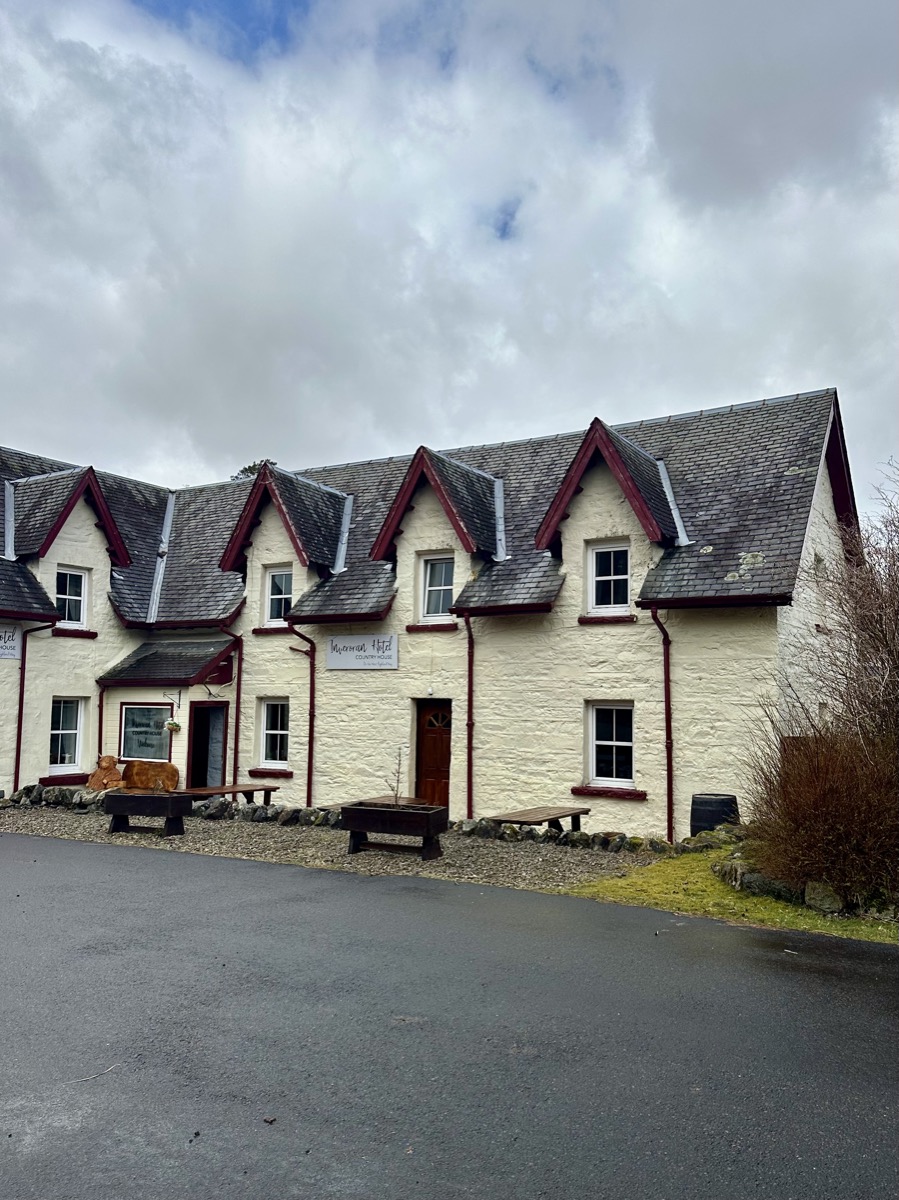
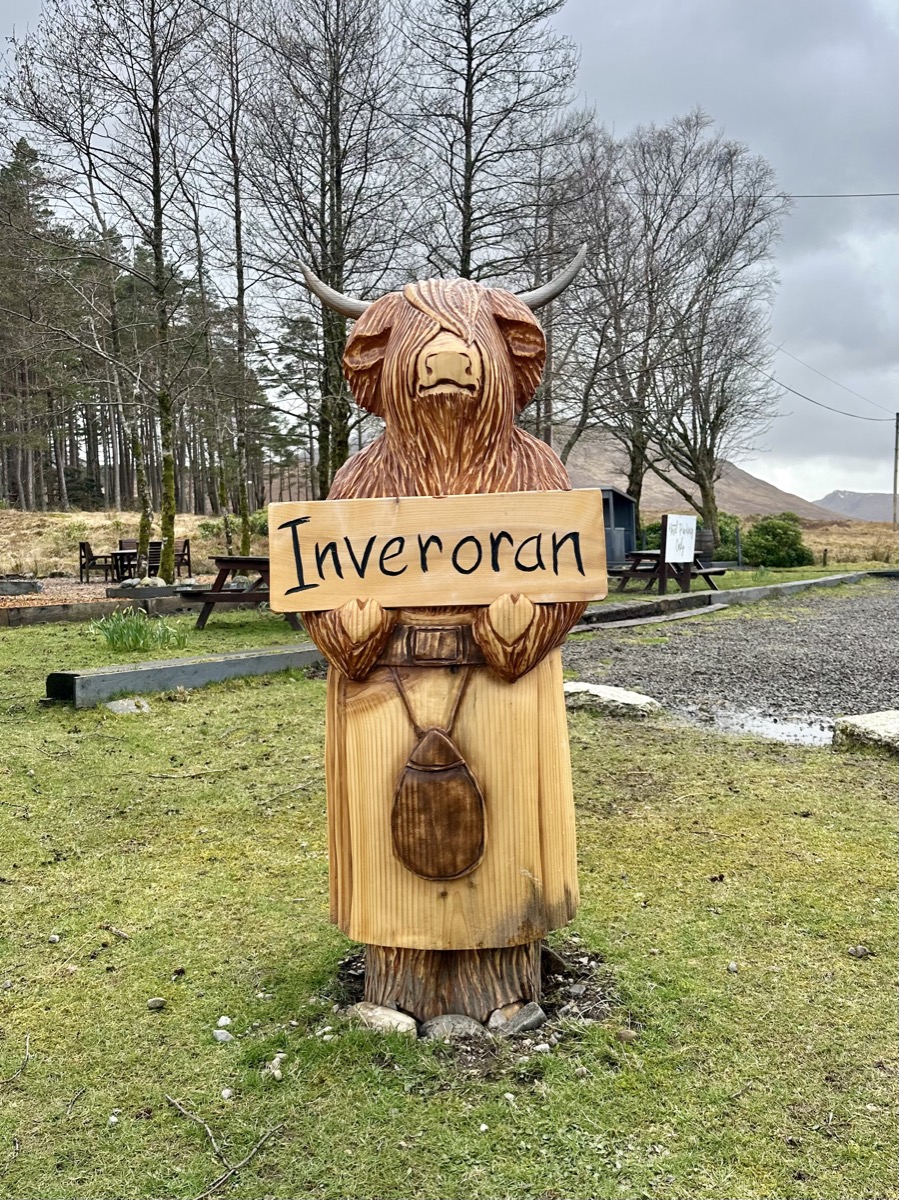
Past Bridge of Orchy the trail climbs up and over a hill before dropping down to the Inveroran Hotel. I had a dinner reservation here, my only reservation of the whole trip, but I arrived four hours early. The hostess was super friendly. I ordered a Coke, decided I wasn’t hungry enough for lunch, and moved on. There are some great campsites nearby if you want to make an early stop and enjoy the comforts of the inn first.
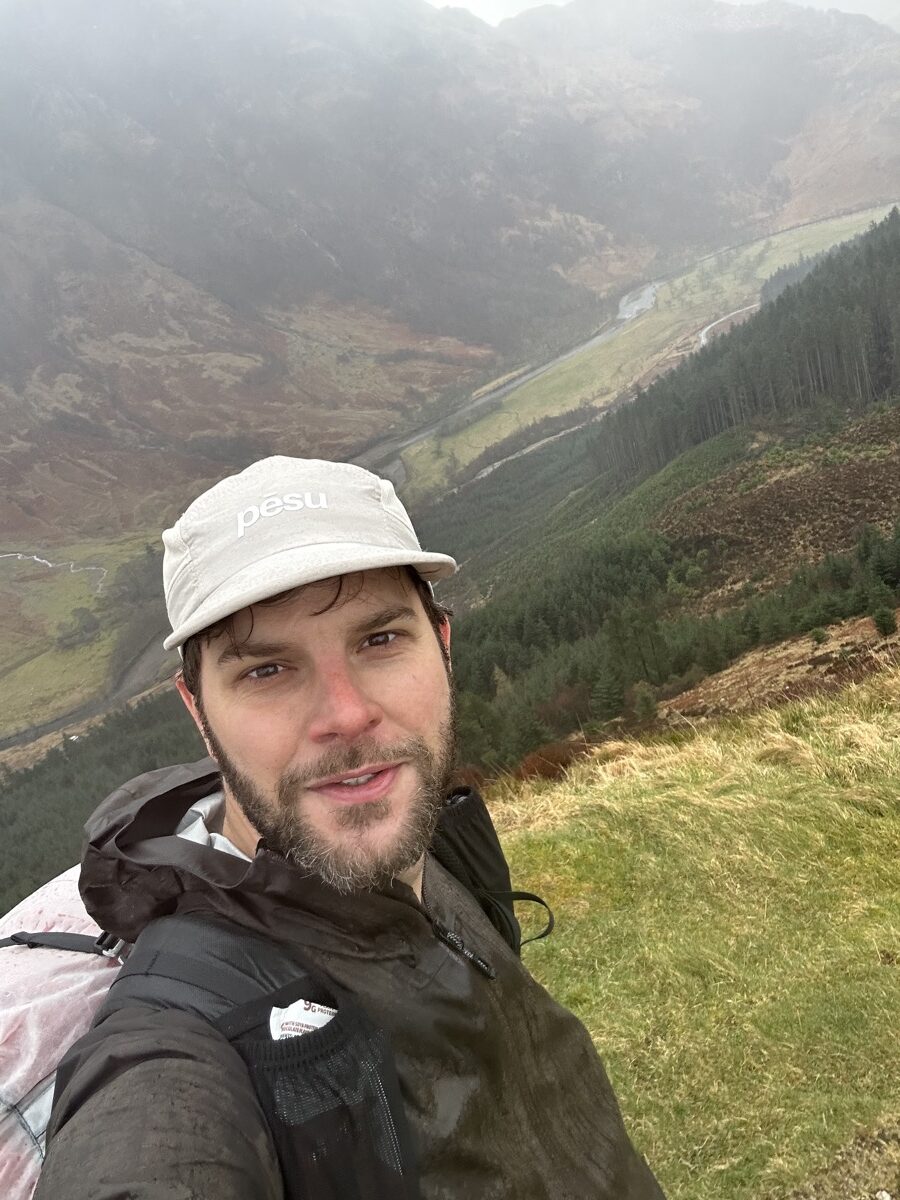
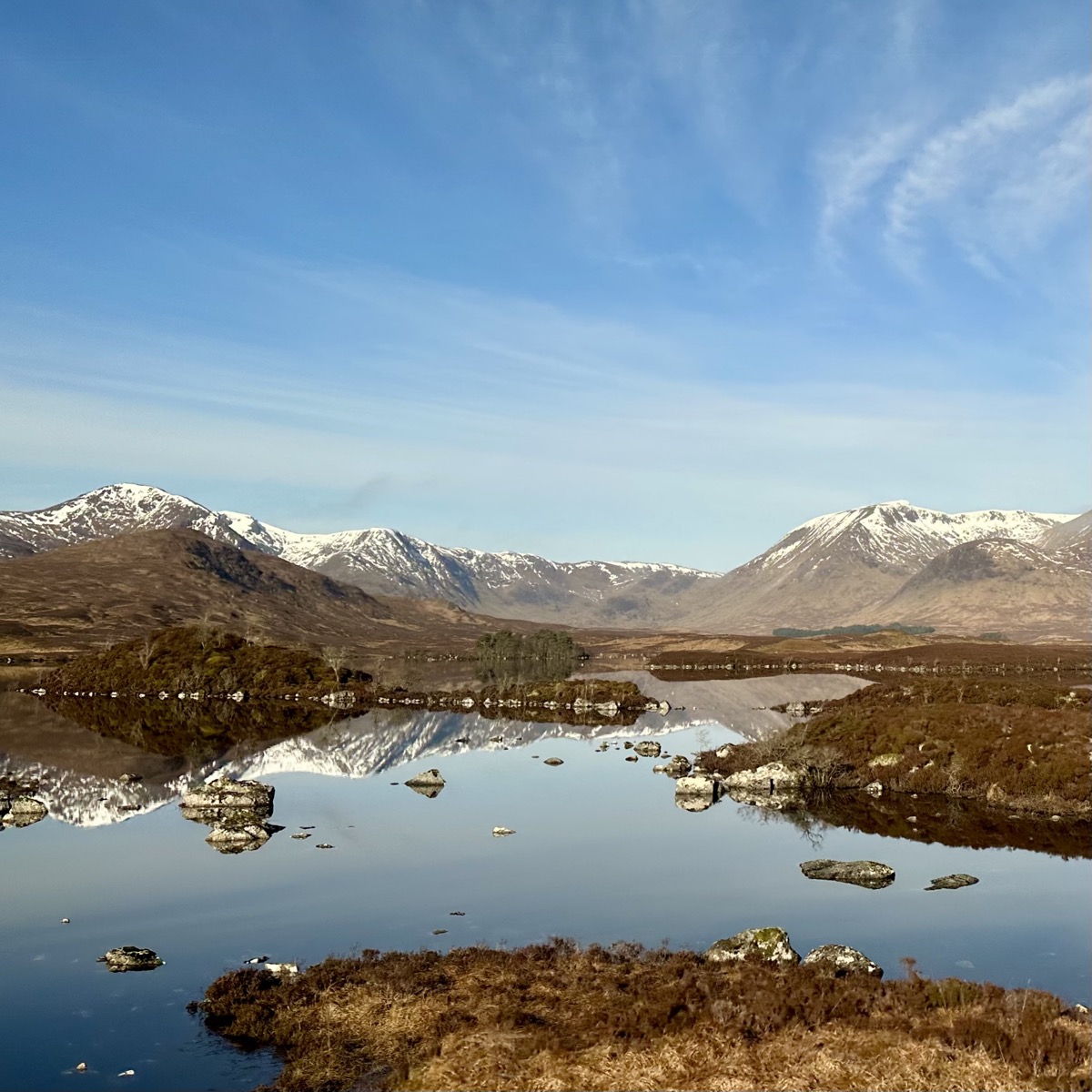
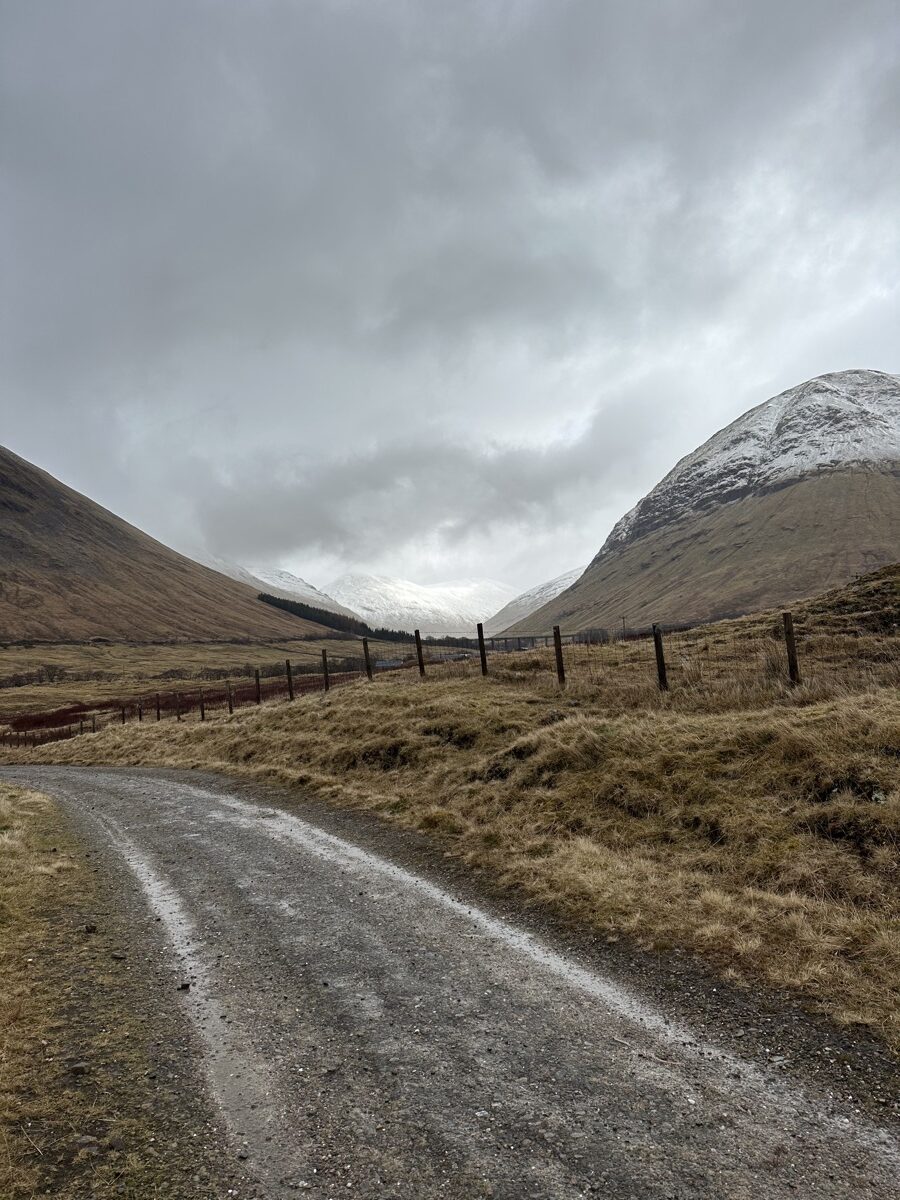
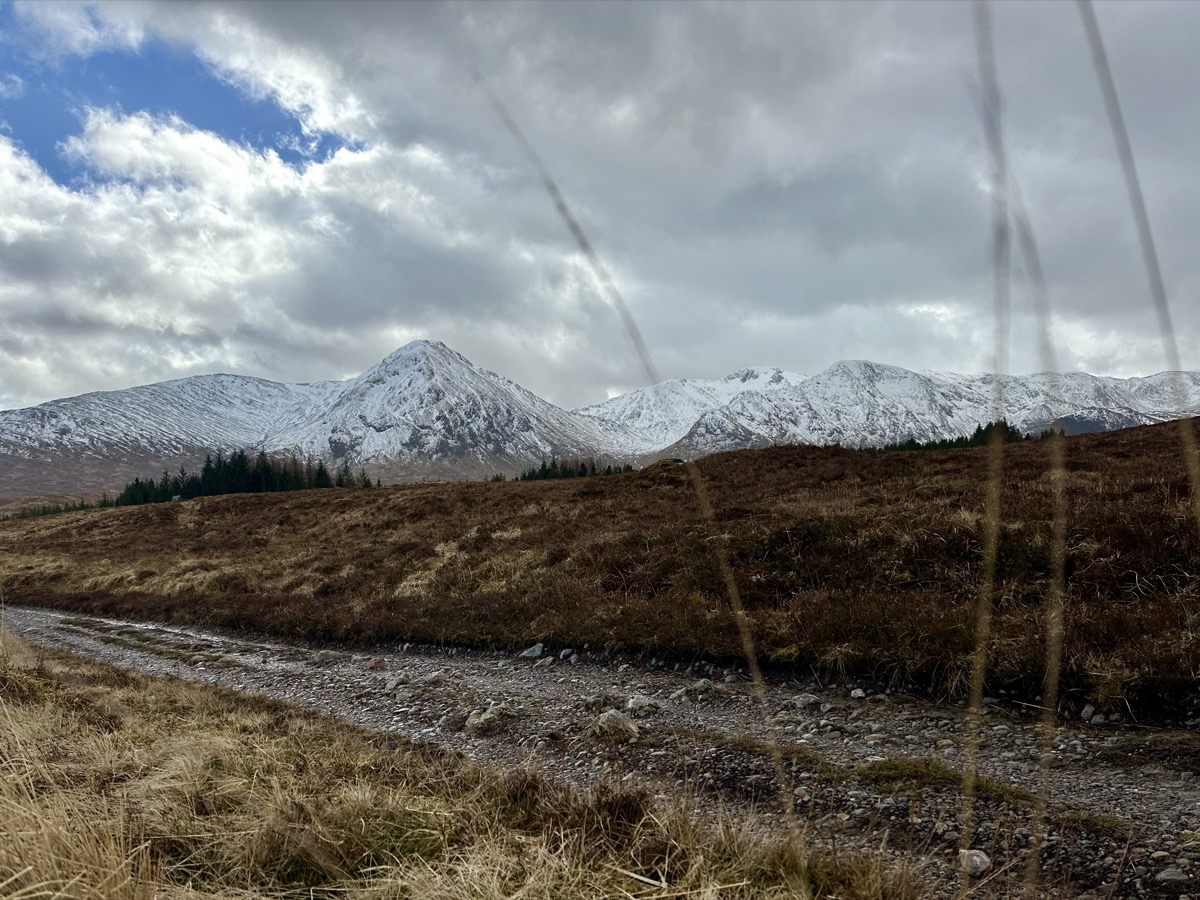
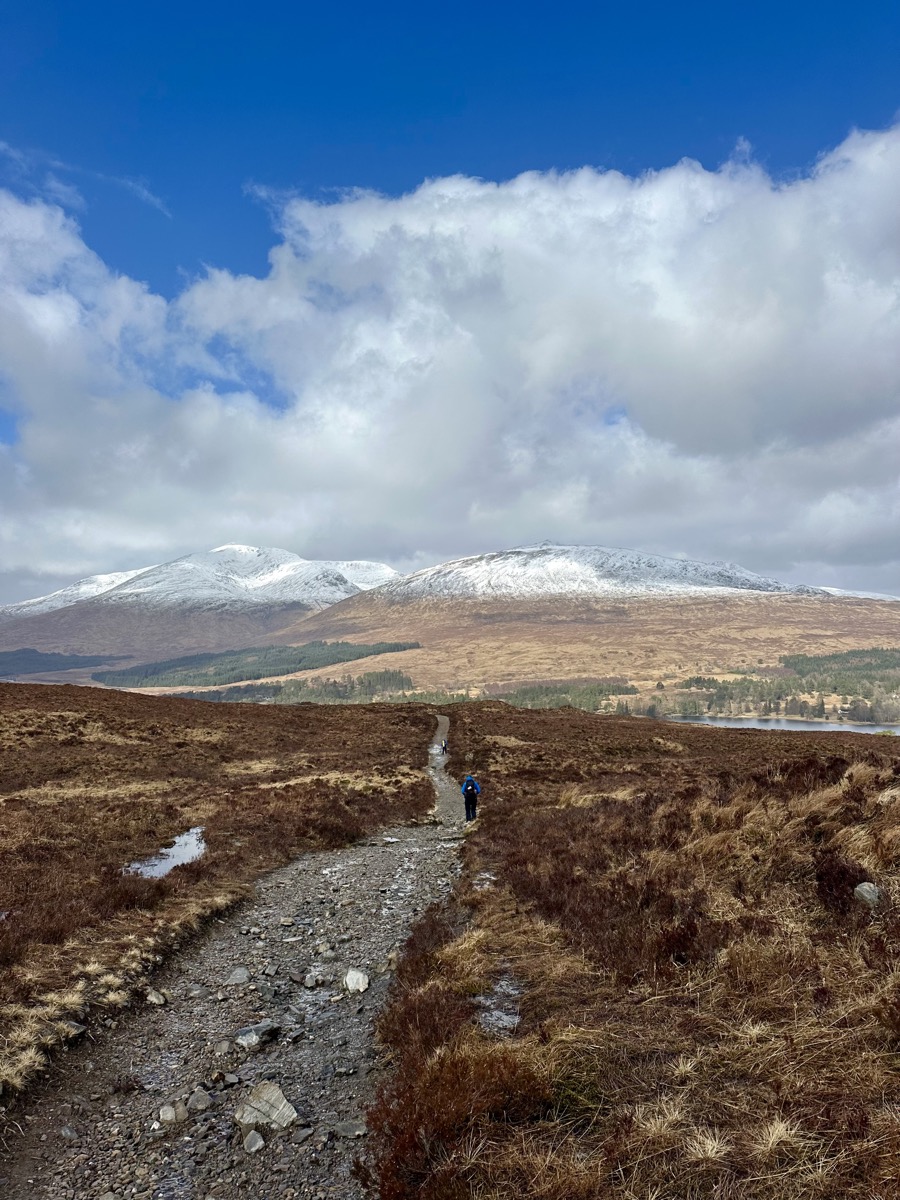
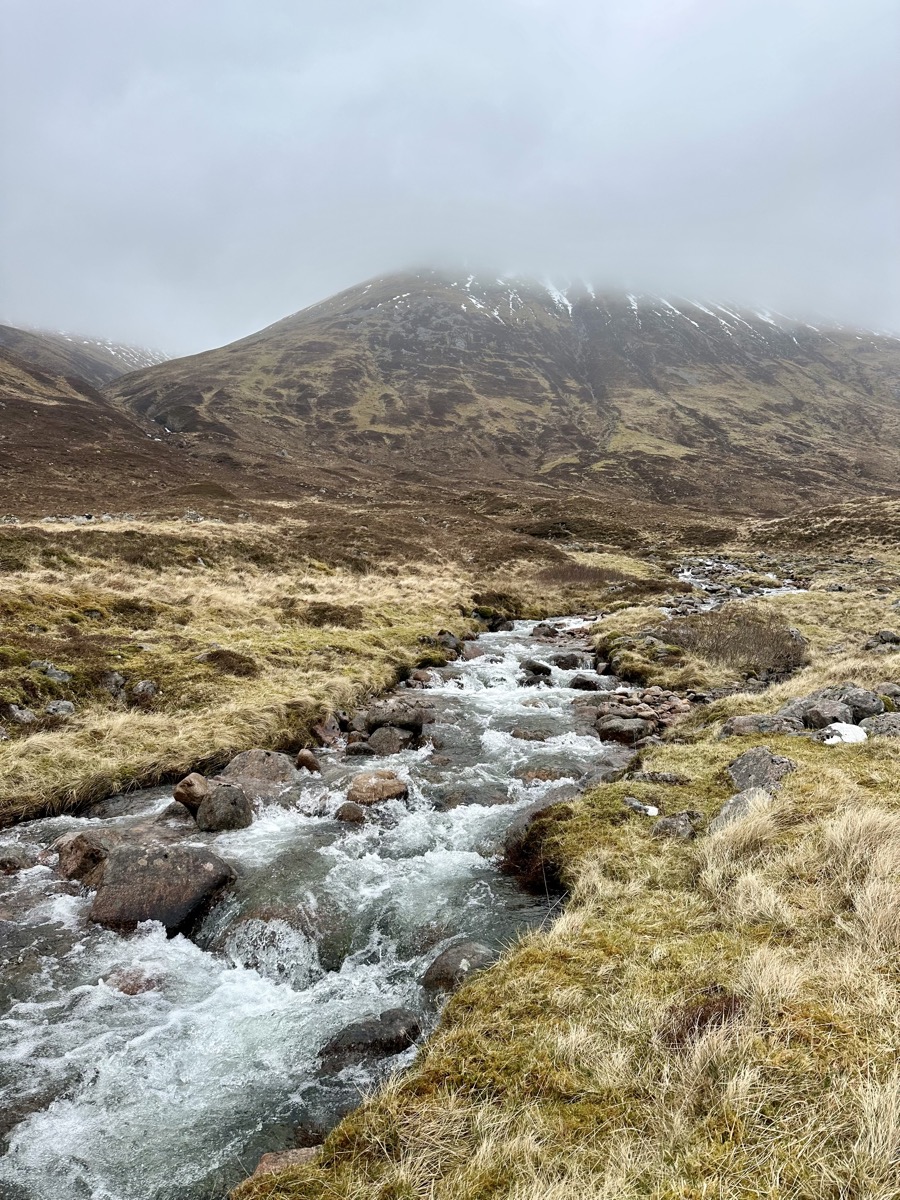
Further on, the trail joins another old military track as it gently climbs over a ridge and suddenly the mountains are everywhere. Snow capped Munros on the left, a massive open valley dropping away to the right, streams and waterfalls cutting down through everything. This is the view and the experience that made me want to hike the West Highland Way. I saw a group of six deer scatter across the hillside maybe a hundred meters ahead of me. A proper highland moment.
The Best Campsite on the Trail
I linked up with the Scottish hikers I had been crossing paths with for a few days and we chatted for a while. They were from Glasgow and this was a training hike for their John O’Groats trip the following month. They stopped to camp in a clearing in the valley, next to a creek and bridge. It looked like the best campsite on the whole trip. I kept moving because the weather window was good and I wanted to bank some miles before Wednesday when the forecast was not looking great.
Camp above Glencoe
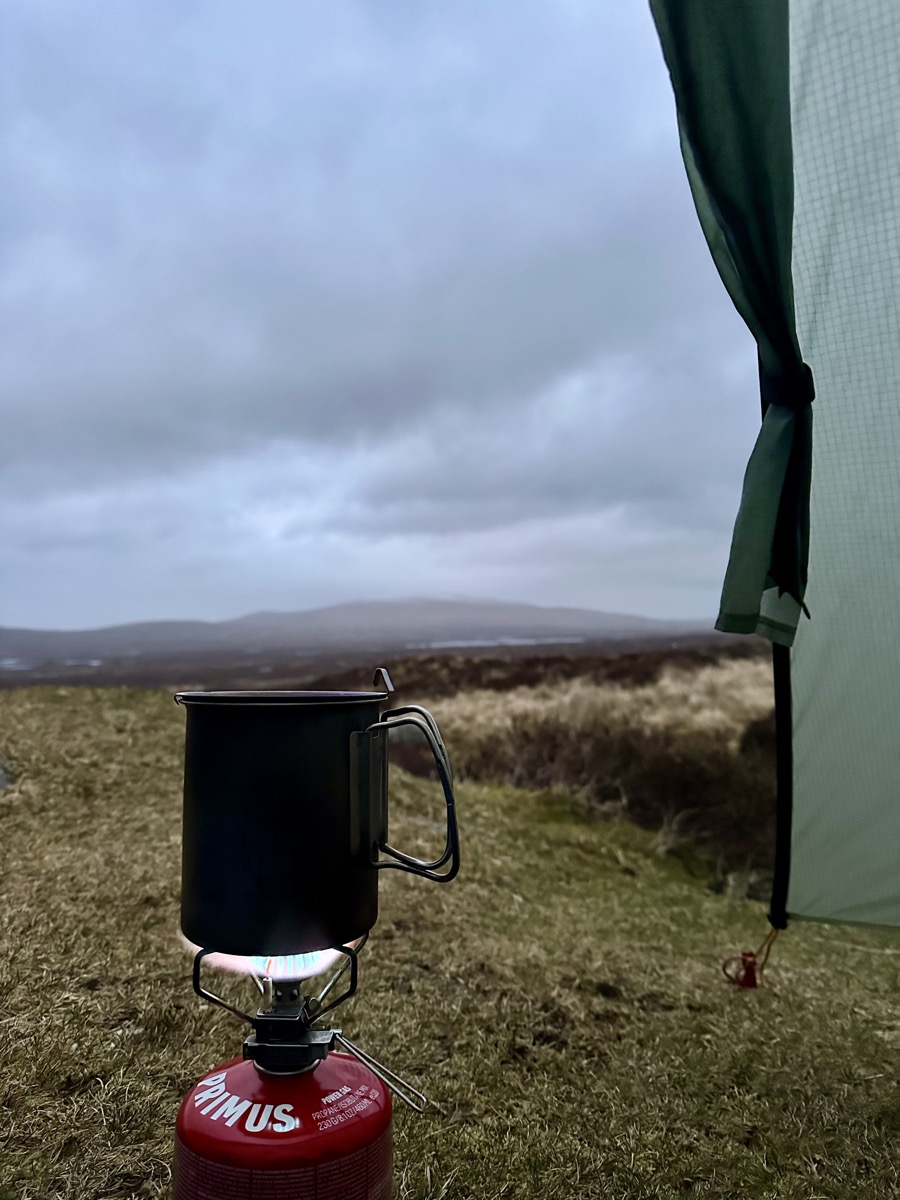
Over the next ridge and about halfway down toward Kingshouse, I found a flat grassy spot near a bridge with a direct view across to Glencoe. The mountains were right there. I could see the Kingshouse and the highway below, and behind me just open highland. I set up camp, made the dehydrated dinner I had picked up at the Beinglas shop, and enjoyed a quiet evening. It was windy enough to make the tent work hard but by ten o’clock it had settled down completely.
Day 5: Glencoe Wild Campsite to Wild Campsite near Lohan Lunn Da-Bhra
Distance: 29km | 18mi | Time: 10.25hr
End point: Km 142 | Mi 88.2
Kingshouse Disappointment
I woke up hungry and excited to check out Kingshouse. I made a coffee, packed up, and headed down toward the inn. There was a turn off for the ski resort cafe on the way down but I kept going. That would later prove to be a mistake.
At Kingshouse I used the public toilets and then went to check out the hiker inn. It was closed. I went around to the main hotel, which was fancy and I felt out of place. I asked the receptionist about breakfast and was turned away for not having a reservation. They wouldn’t offer anything at all. A croissant and a coffee to go would have been perfect, but the answer was no. It was the only place on the entire trip where I had an experience like that. Every other stop had been welcoming without hesitation. In fairness, it was my own fault for not having a reservation. If I did it again I would stop at the ski resort cafe on the way down. Do not make the same mistake I did.
I had one bar in my pack and a dehydrated dinner. It was time to move on to Kinlochleven.
The Devil’s Staircase
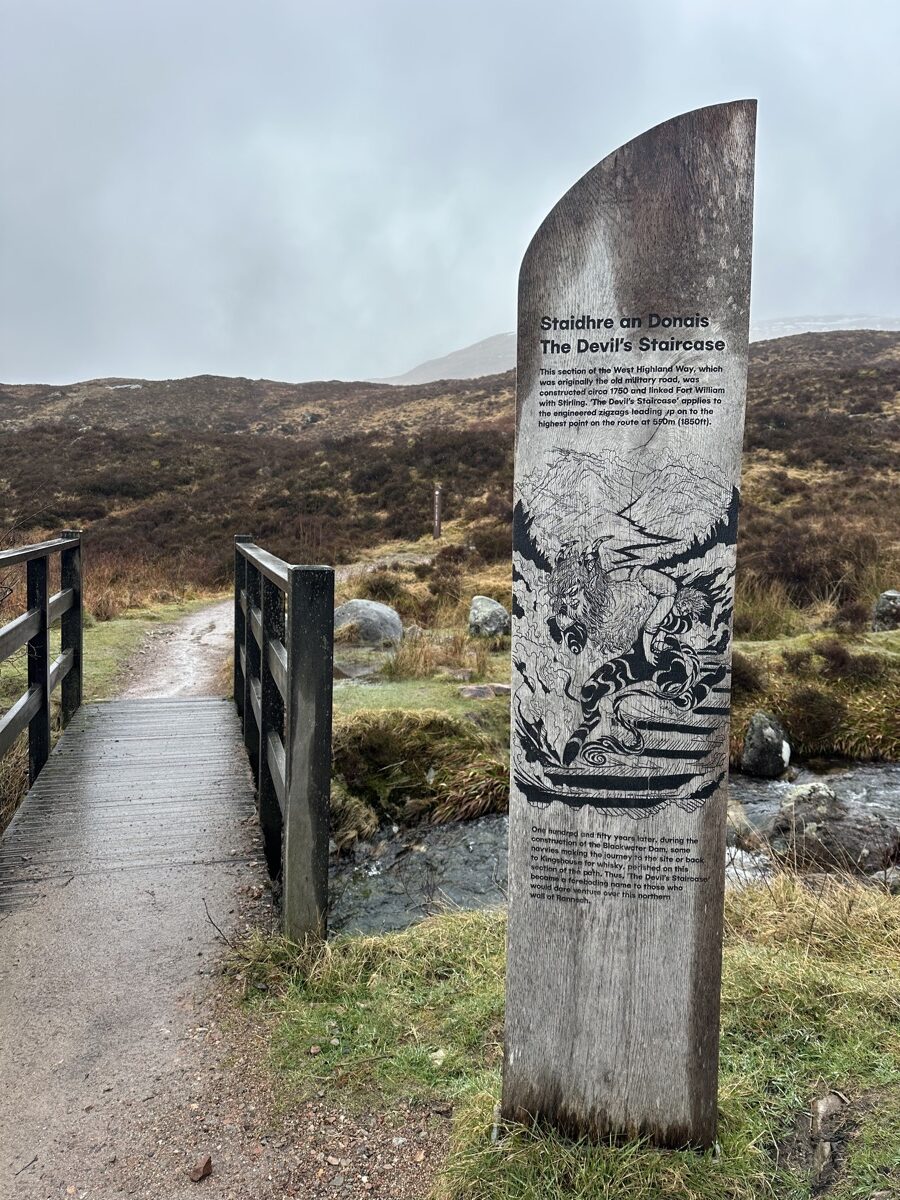
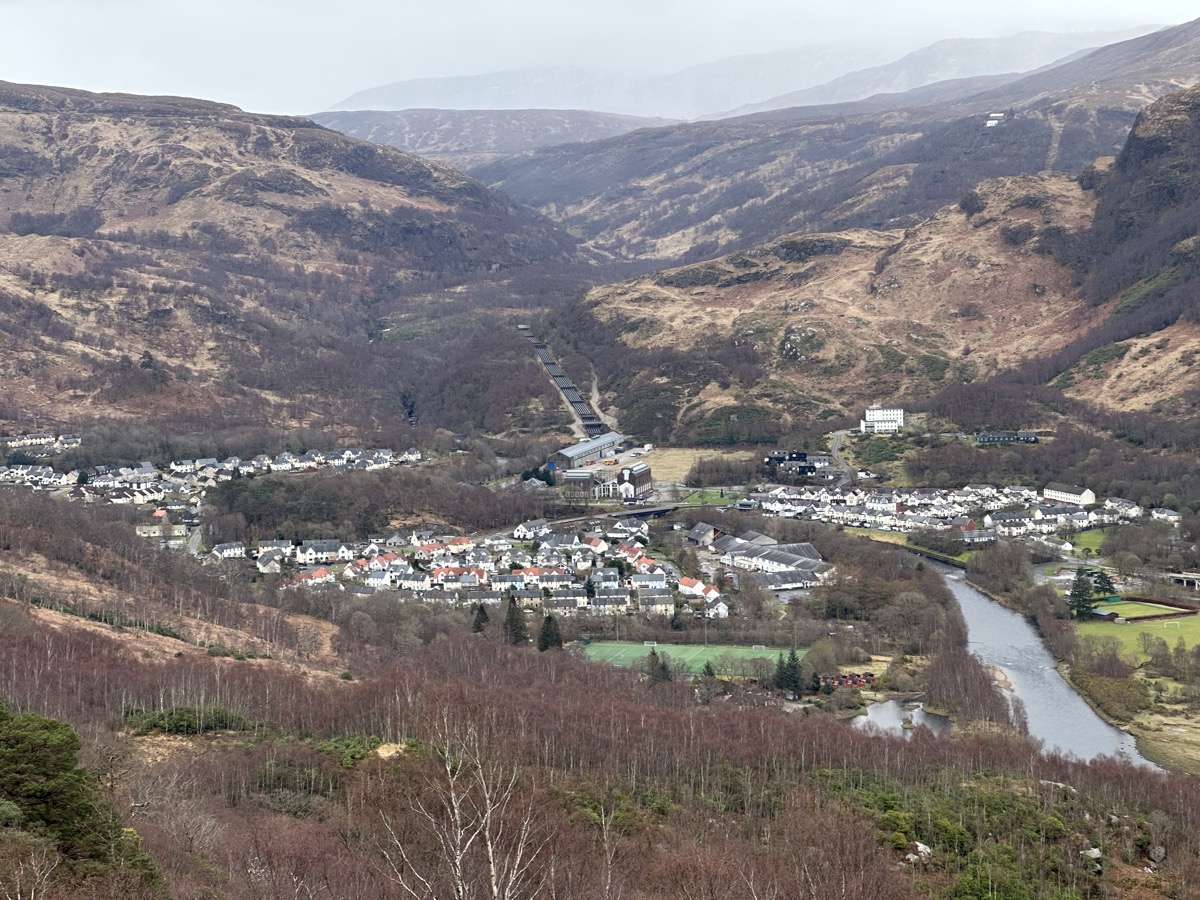
The Devil’s Staircase sounds intimidating. It is not. Switchbacks all the way to the top, rocky but manageable, and the views when you get there are worth every step. In terms of difficulty it was easily the most overhyped section of the trail. From the top it rolls along for a while before dropping steeply down into Kinlochleven on a long forest road descent. There is a lot of down here, more so than the section into Balmaha, and my legs felt it by the bottom.
Kinlochleven
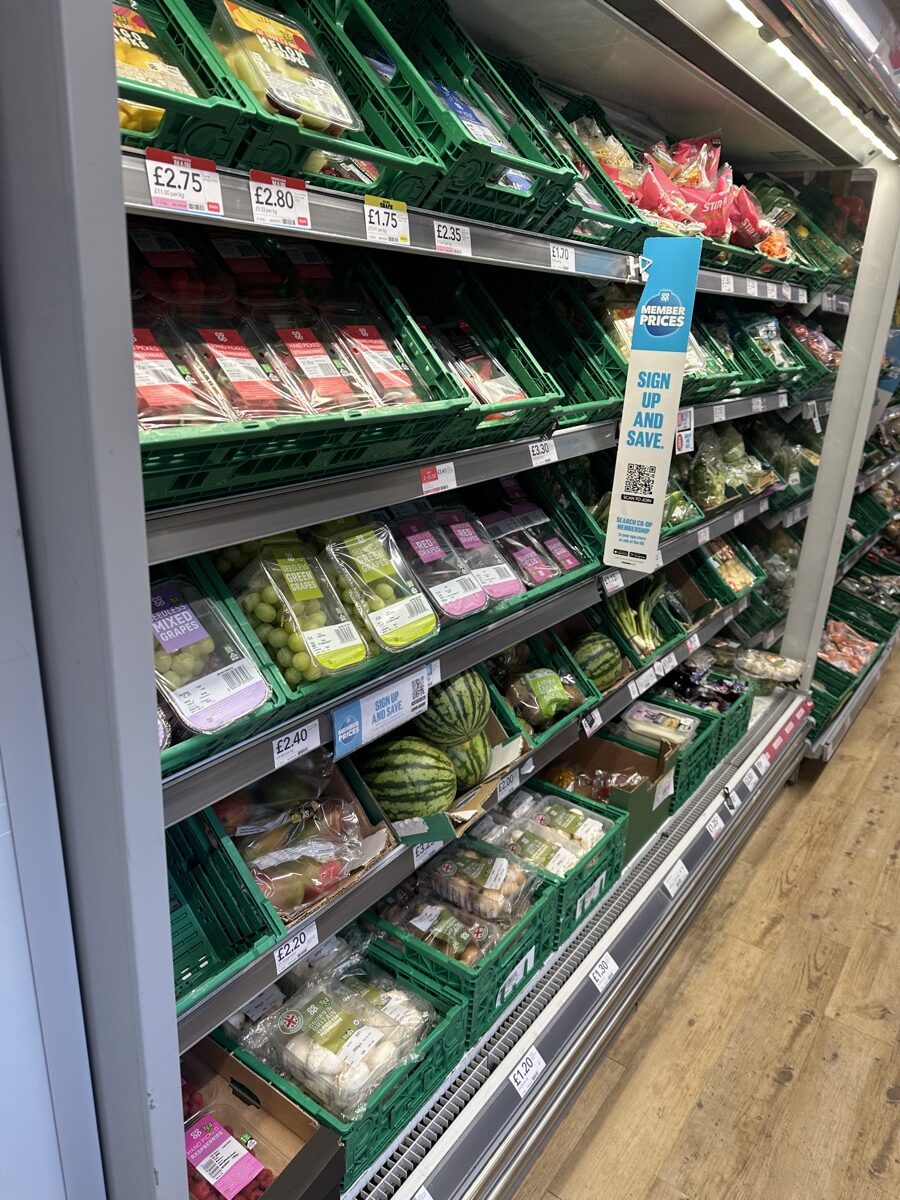
Kinlochleven surprised me. I was expecting a small trail stop but it is an actual town with real residents and a solid Co-op. I was starving at this point so I went straight in, grabbed everything I could carry, and sat on a bench in the square like proper hiker trash. Tent drying on a sign, socks off, coffee on the stove, food everywhere. I felt remarkably free.
Before leaving town I grabbed a toastie from Leven Bites just behind the Co-op. The one thing I missed was Rice and Chips, a highly recommended Chinese place in town. It was lunchtime and they didn’t open until 16:00. Something to plan around if you can.
The Final Camp
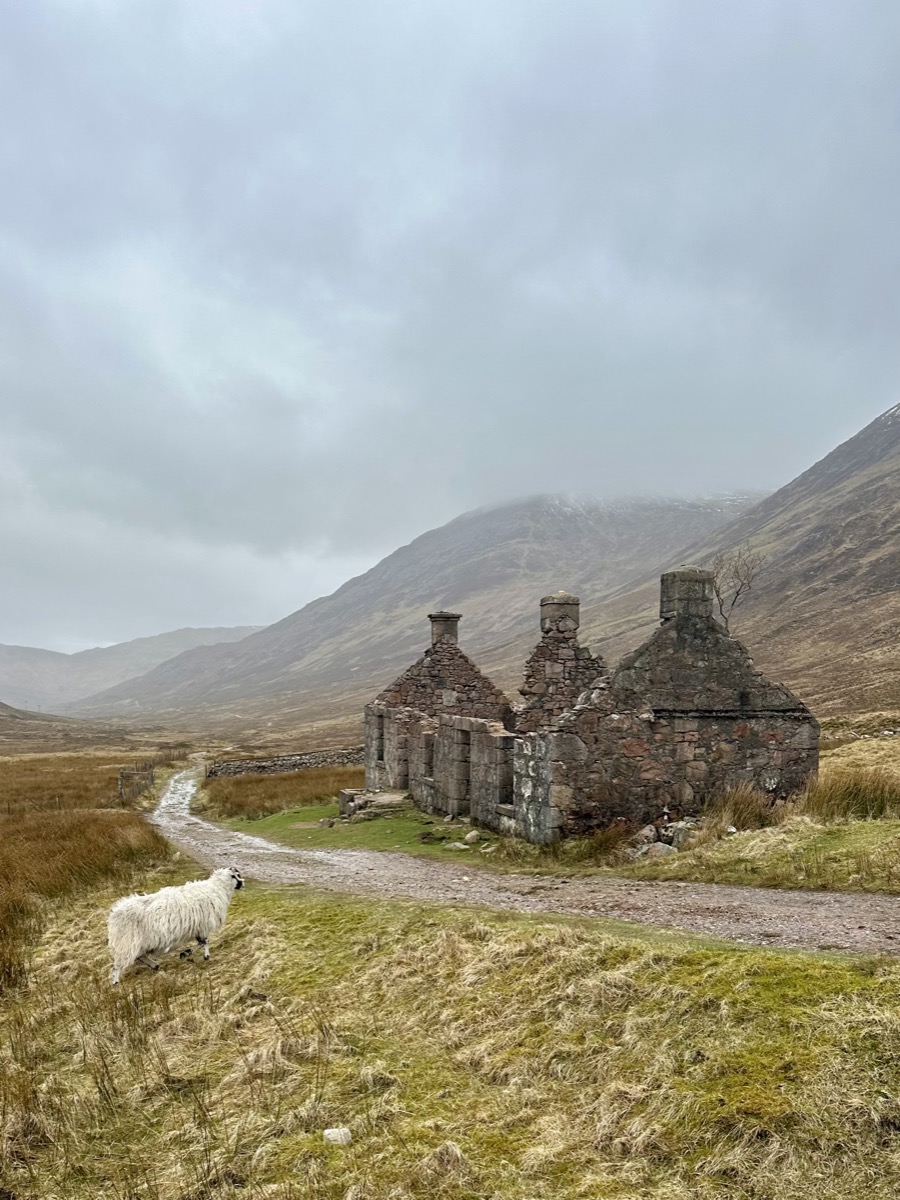
After resupplying I pushed out of town on a steep climb out of the valley. I checked my AllTrails map for marked campsites as I went. Along the way I passed two sets of old ruins and found them genuinely fascinating, imagining what life would have looked like out here in the Highlands centuries ago.
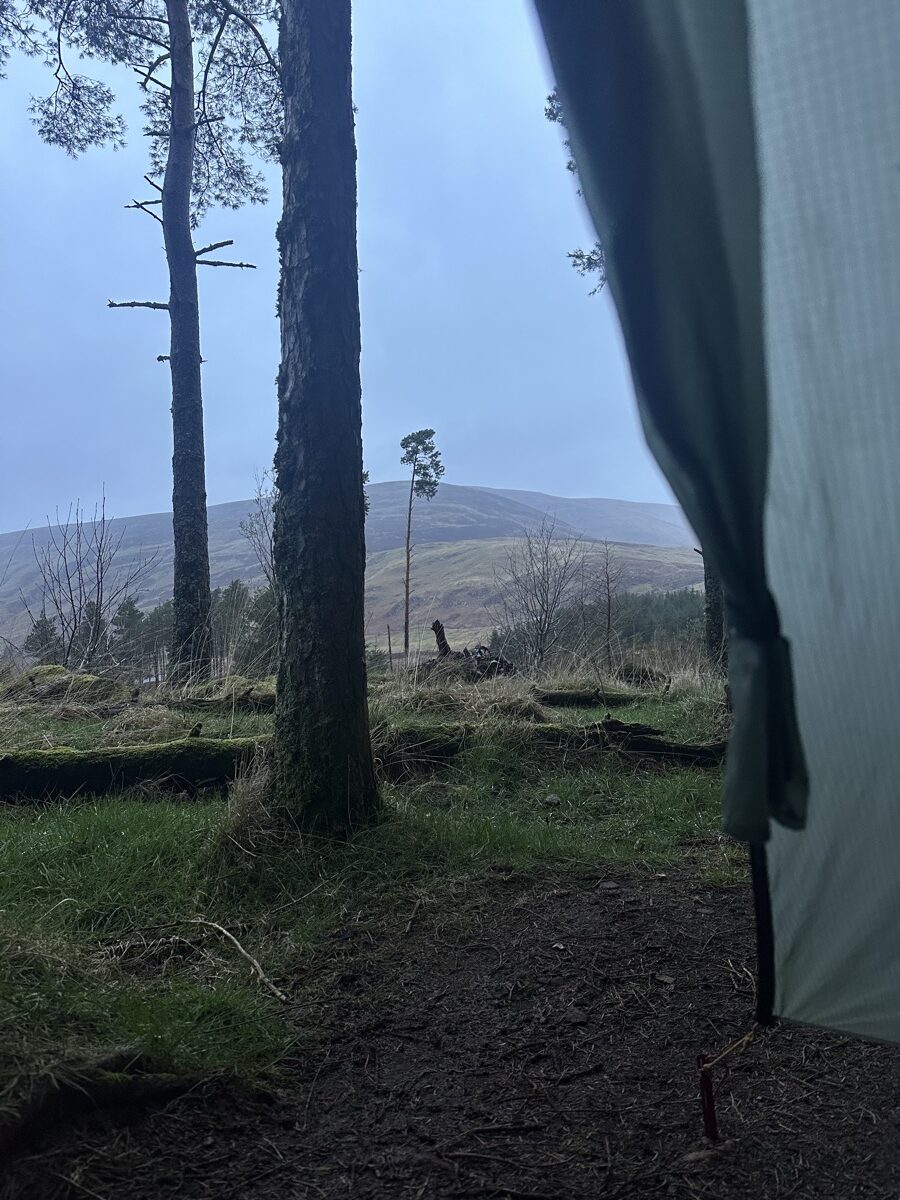
About seven miles out of Kinlochleven, just past the second set of ruins, I found a well protected wooded campsite tucked in among the trees. Quiet, sheltered, with a beautiful view out over the moorland from the tent door. I made my freeze dried dinner, the one I had been carrying since the start, and finished it off with hot chocolate and bars from the Co-op. It was a peaceful night and exactly the kind of ending the trip deserved.
Day 6: Wild Campsite near Lohan Lunn Da-Bhra to Fort William
Distance: 14km | 8.7mi | Time: 5.5hr
End point: Km 156 | Mi 96.9
The Final Morning
I was packed and moving by 7:00. Shortly after that the rain came back, at times heavy but always at least a consistent mist. For much of this section my hood was cinched down as I looked at the two feet of trail in front of me. That is just how it goes sometimes.
Dùn Deardail
Near the end of the trail there is a short detour up to Dùn Deardail, a two thousand year old Iron Age hill fort. On a clear day it would have panoramic views over Glen Nevis and Ben Nevis beyond. The valley below was beautiful and I could see Fort William in the distance. The ruins themselves required a lot of imagination, mostly a hill of grass with a sunken impression in the middle. Still a cool experience and a fitting last look at the Highlands before dropping down into town.
Fort William
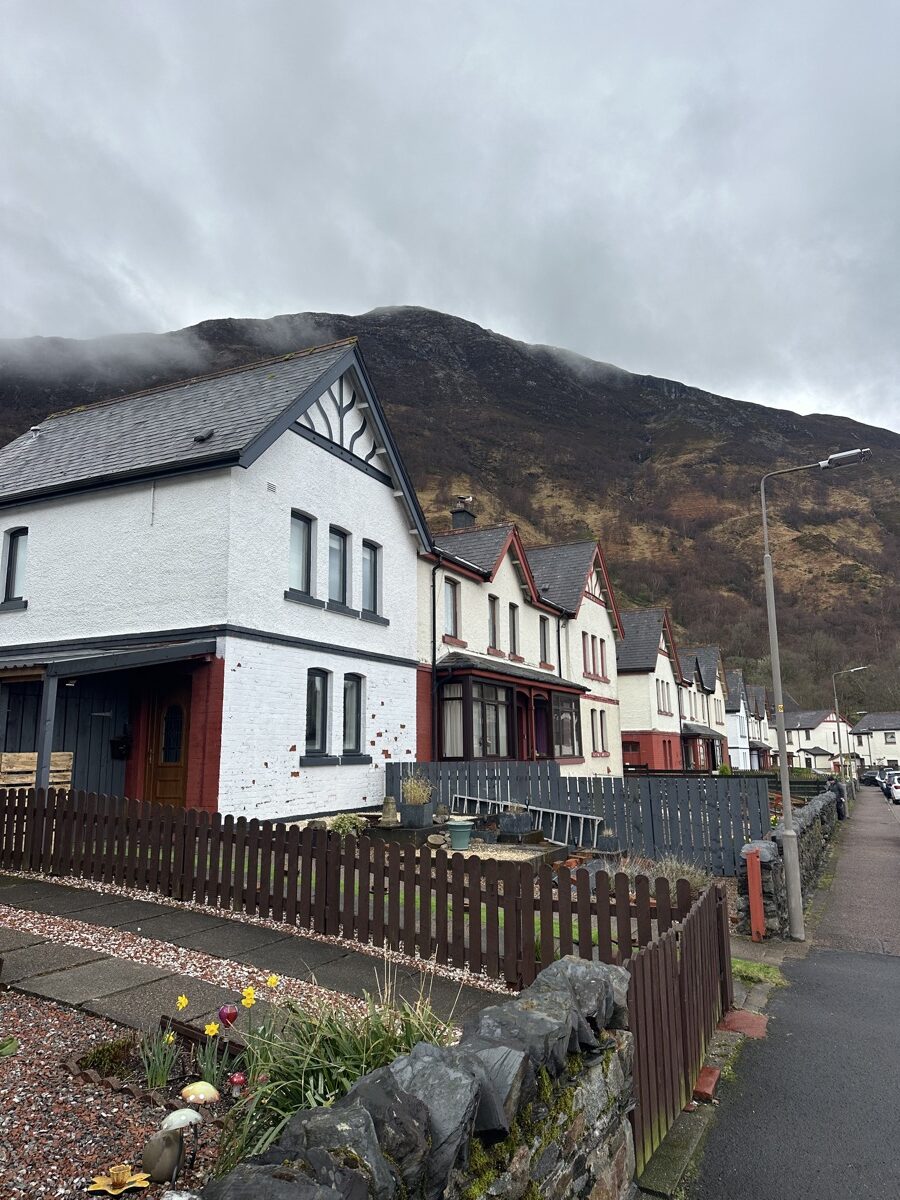
The last few miles into Fort William are a straightforward road walk. Not exciting, but you are finishing a trail so it does not matter. I stopped at the Glen Nevis Campground for a coffee, porridge, and a breakfast sandwich. It was a great facility and I briefly debated staying the night, but it was very wet and I could smell the end of the trail.
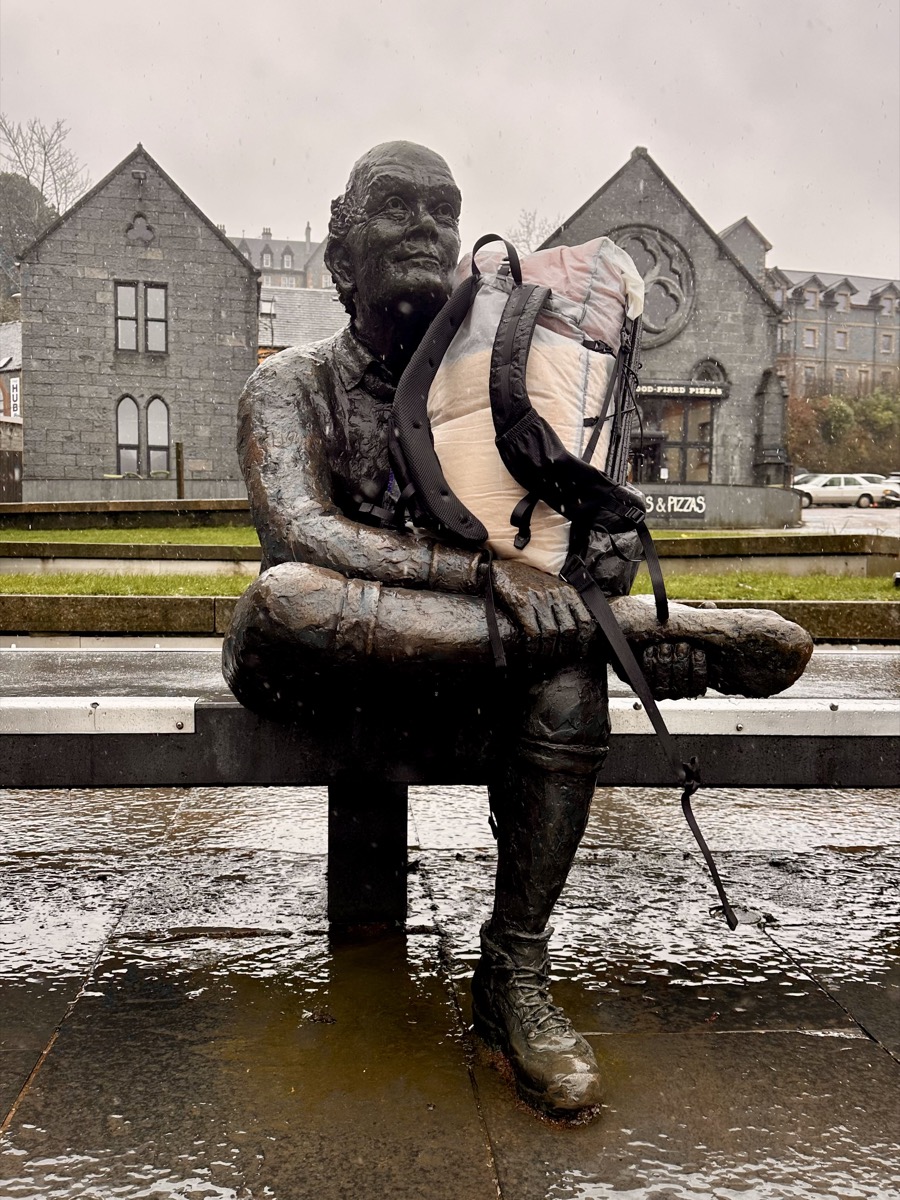
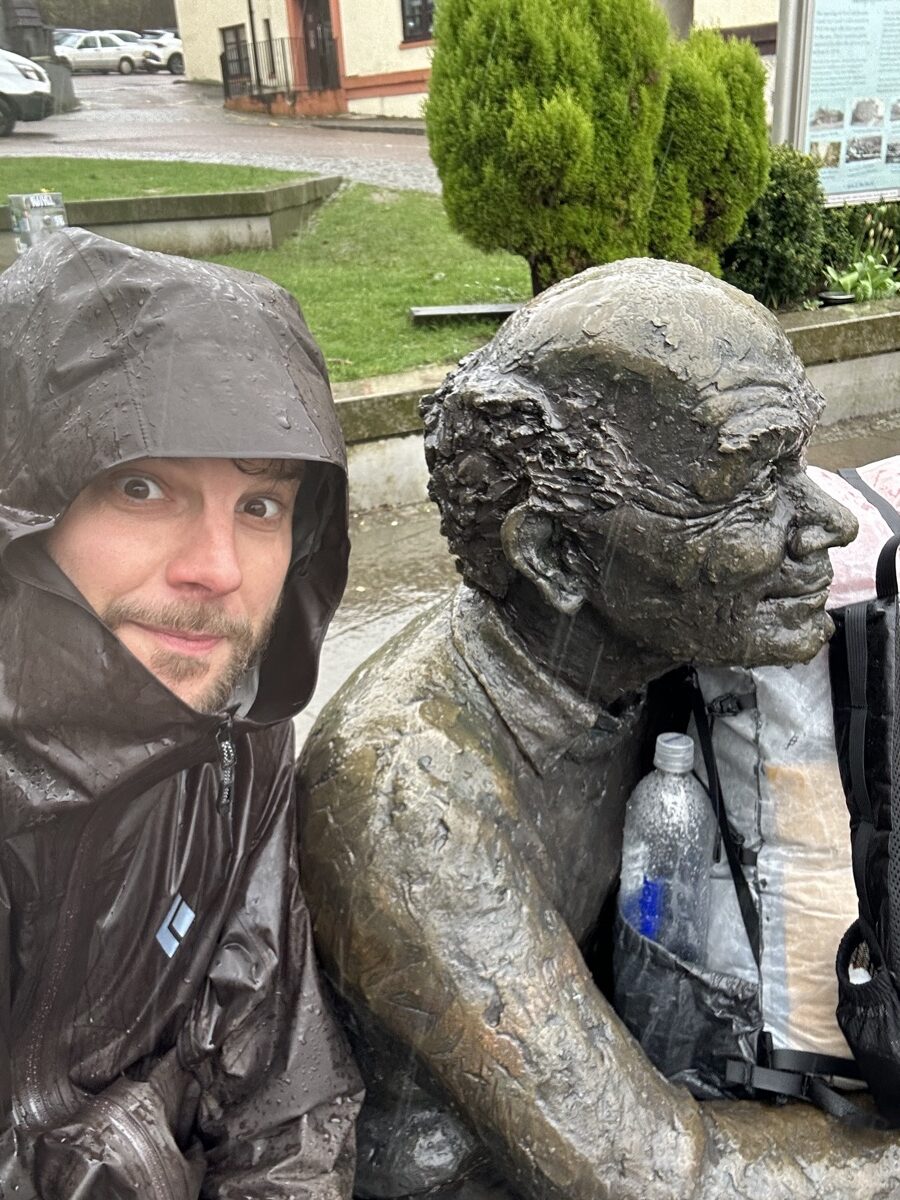
The official end point has been moved to a bench on the main street with a statue of a man sitting on it. The final stroll through the shopping area was enjoyable even in the pouring rain. I arrived completely soaked, probably the heaviest rain of the whole trip. Took my selfies dripping, grinned like an idiot, and went to find my hotel.
The Bus Home
The next morning I caught the Ember bus back to Glasgow on what turned out to be the most beautiful day of the entire week. Blue skies the whole way. The route runs parallel to the trail for much of the journey and I spent the whole ride looking out the window at every place I had walked through. Beinglas, the Loch, Conic Hill, all of it in sunshine.
Thats just how my adventure in the early season unfolded on the West Highland Way.